
In Boise and the Treasure Valley, average water damage restoration projects range from $1,800 to $4,500 for moderate single-room clean water losses, and $5,000 to $12,500+ for extensive multi-room or contaminated sewage flooding. On a per-square-foot basis, emergency extraction and psychrometric structural drying typically cost between $3.50 to $6.00 per sq. ft. for clean supply water (Category 1), $6.00 to $9.50 per sq. ft. for appliance gray water (Category 2), and $10.00 to $24.00+ per sq. ft. for contaminated black water or sewage backups (Category 3).
- Water Contamination Category: The cleanliness of the water source is the single largest cost driver.
- Damage Class (1–4): Deeper saturation requiring cavity drying or subfloor removal increases equipment run-time.
- Hourly & Daily Equipment Rates: Commercial LGR dehumidifiers and high-velocity axial air movers typically run $300 to $650 per day.
- Insurance Deductibles: Standard Idaho homeowners pay their policy deductible ($500 to $2,500); approved carriers cover the rest.
- Rapid Action Reduces Costs: Extracting water within 4 hours prevents secondary mold colonization and costly drywall demolition.
Boise Water Damage Cost & Category Estimator
Calculate estimated standard mitigation cost ranges and required drying timelines based on Idaho industry averages.
Based on standard extraction, industrial dehumidification, and EPA sanitization.
1. Water Damage Restoration Costs by Contamination Category
The Institute of Inspection, Cleaning and Restoration Certification (IICRC) establishes three distinct water categories. The more contaminated the water, the more stringent the required safety gear, antimicrobial sanitization, and porous material demolition.
In Boise, clean water from a ruptured copper supply line or water heater tank requires basic extraction and structural dehumidification. However, if that water sits unmitigated for more than 48 hours, bacterial colonization transforms it into Category 2 or Category 3 water, doubling or tripling restoration expenses.
Below is the standard pricing breakdown per square foot typically utilized across Treasure Valley residential and commercial insurance claims following standardized Xactimate pricing metrics.
The 48-Hour Category Shift
Category 1 clean water naturally degrades into Category 2 gray water within 24 to 48 hours as it dissolves drywall dust, carpet adhesives, and skin cells. After 48 hours in warm indoor microclimates, it becomes Category 3 black water containing active mold spores and pathogenic bacteria.
Treasure Valley Water Damage Restoration Cost per Square Foot
| Water Category | Typical Cost / Sq. Ft. | Common Intrusion Sources |
|---|---|---|
Category 1 (Clean Water) Minimal health hazard. Salvages most drywall and carpet if mitigated promptly. | $3.50 – $6.00 / sq. ft. | Supply pipe ruptures, overflowing sinks, clean rainwater, failed water heater tanks. |
Category 2 (Gray Water) Contains chemical or biological contaminants. Carpet padding must typically be discarded. | $6.00 – $9.50 / sq. ft. | Dishwasher overflows, washing machine discharge, sump pump failures, toilet overflows with urine. |
Category 3 (Black Water) High biohazard. Requires full personal protective equipment (PPE), demolition of porous building materials, and hospital-grade sanitizers. | $10.00 – $24.00+ / sq. ft. | Main sewer backups, Boise River flooding, canal overflow, groundwater crawlspace inundation. |
2. The Four Classes of Water Destruction Explained
While categories describe water purity, 'Classes of Water' determine how much water has soaked into the building structure and how much evaporative drying power is necessary to restore moisture equilibrium.
Class 1 (Easiest to Dry): Affects only part of a single room. Porous materials like drywall and carpet have absorbed minimal moisture. Typically requires 2 to 3 days of localized drying ($250 to $1,000).
Class 2 (Fast Evaporation Rate): Water has spread across an entire room, carpet and cushion are completely saturated, and moisture has wicked up structural drywall between 12 to 24 inches. Requires commercial air movers and dehumidifiers running for 3 to 5 days ($1,500 to $4,500).
Class 3 (Deep Saturation from Overhead): Water originating from ceiling plumbing, second-floor bathroom floods, or burst vertical risers saturating ceilings, insulation, wall cavities, subfloors, and structural framing. Requires extensive moisture mapping and cavity drying systems ($5,000 to $12,000+).
Class 4 (Specialty Drying): Deeply bound moisture trapped within low-permeance materials such as hardwood flooring, concrete subfloors, plaster walls, or brick masonry. Requires desiccant dehumidifiers and specialty vacuum drying mats ($8,000 to $25,000+).
3. Itemized Equipment Rental & Labor Rates in Boise
Professional restoration invoices in Idaho are itemized following strict line-item guidelines recognized by insurance carriers. Understanding standard daily equipment charges helps property owners evaluate restoration estimates:
Standard Equipment Daily Run Rates
- Low-Grain Refrigerant (LGR) Dehumidifiers: $110 to $165 per day per unit (extracts 15 to 30 gallons of water vapor daily).
- High-Velocity Axial Air Movers: $35 to $55 per day per fan (circulates high-velocity laminar air to break surface tension).
- HEPA Air Scrubbers: $90 to $140 per day per unit (filters airborne microbial spores and particulates during demolition).
- Injectidry Hardwood Floor Vacuum Mats: $180 to $320 per day (pulls subfloor moisture without tearing up custom wood floors).
- Submersible Sump Pumps & Extraction Wands: $150 to $350 per project setup.
Restoration Labor & Emergency Rates
Standard certified restoration labor in Ada and Canyon counties typically ranges from $75 to $140 per hour for standard daytime hours, and $125 to $195 per hour for emergency after-hours, holiday, or weekend dispatch. Dedicated biohazard and hazardous material abatement carries additional hazardous duty premiums.
4. How Idaho Homeowner Insurance Policies Cover Restoration Costs
In the vast majority of sudden and accidental water emergencies—such as an unexpected pipe burst, supply hose failure, or water heater rupture—homeowners insurance covers the bulk of water mitigation and structural repair costs.
Homeowners are responsible only for their designated policy deductible, which commonly ranges from $500 to $2,500 in Idaho. Once the deductible is satisfied, your insurance carrier covers approved emergency water extraction, psychrometric drying, contaminated material disposal, and reconstruction.
Insurance Policy Exclusions to Know
Standard HO-3 policies do NOT cover exterior overland flooding (such as rising Boise River floodwaters or overflowing irrigation ditches) without a separate NFIP flood policy. Similarly, backup from city municipal sewer mains requires an optional 'Water Backup and Sump Overflow' endorsement.
5. How to Minimize Water Damage Restoration Costs Immediately
Taking immediate action before restoration technicians arrive can save thousands of dollars in secondary demolition and rebuild expenses.
Long before an emergency strikes, proactive maintenance is your single best investment. For major household units like washing machines, dishwashers, and refrigerators, routine appliance inspections and prompt servicing from certified technicians like Appliance Repair Orland Park catch hairline cracks in solenoid inlet valves, failing float switches, and aged supply hoses before they trigger thousands in structural flood remediation.
Immediate Cost-Reduction Protocol
Tap items to track reading progressEvery minute pressurized water sprays adds gallons of liquid into subflooring and wall cavities.
Place aluminum foil or wood blocks under furniture legs to prevent wood tannins and rust from permanently staining wet carpet.
If water involves sewage or ceiling leaks, turn off forced air heating/AC to avoid blowing mold spores through ductwork.
Waiting 24 hours often means drywall and carpet padding must be cut out and discarded rather than dried in place.
Related Water Restoration Services in Boise
Water Damage Restoration
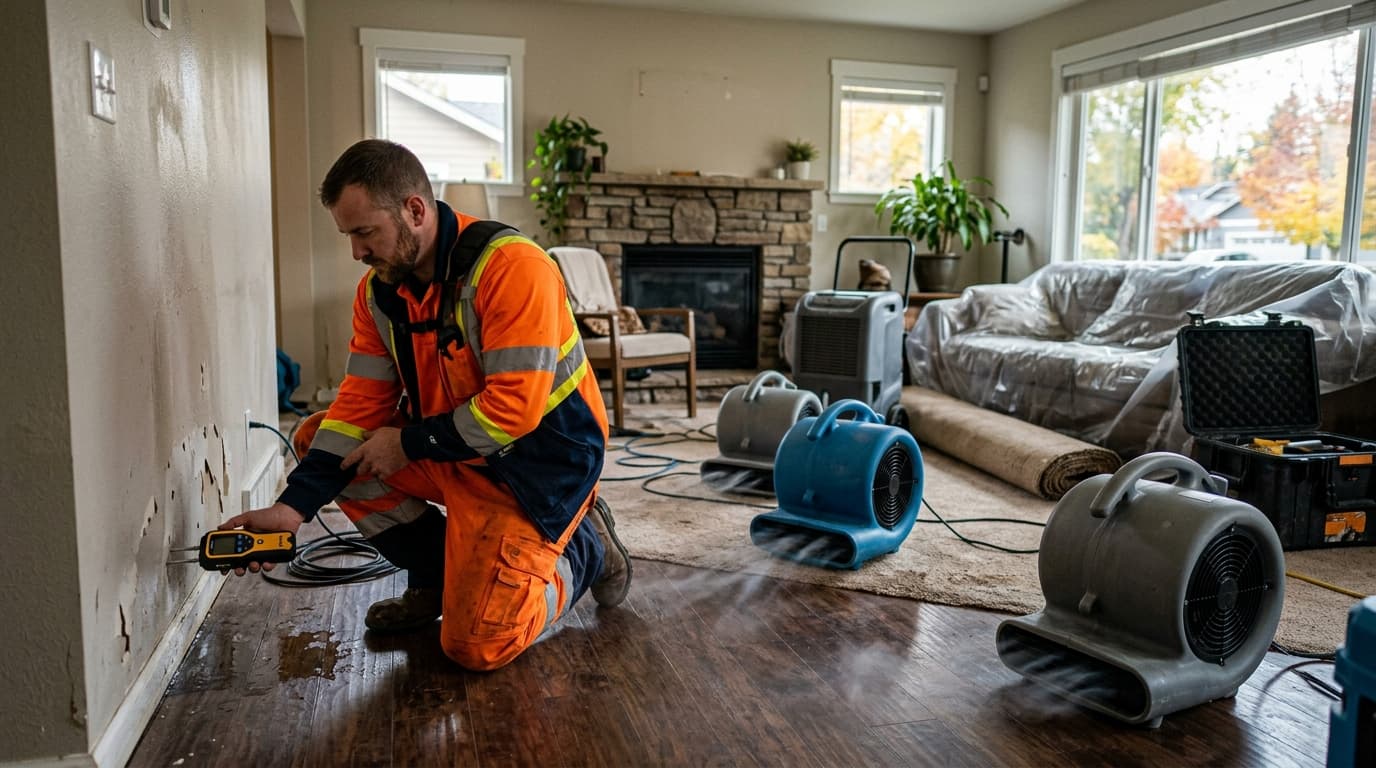
When water compromises your Boise property, full restoration requires more than removing surface liquid. Our network connects Treasure Valley property owners with technicians who handle diagnostic moisture mapping, controlled material removal, structural psychrometric drying, and antimicrobial sanitization.
Water Extraction & Removal
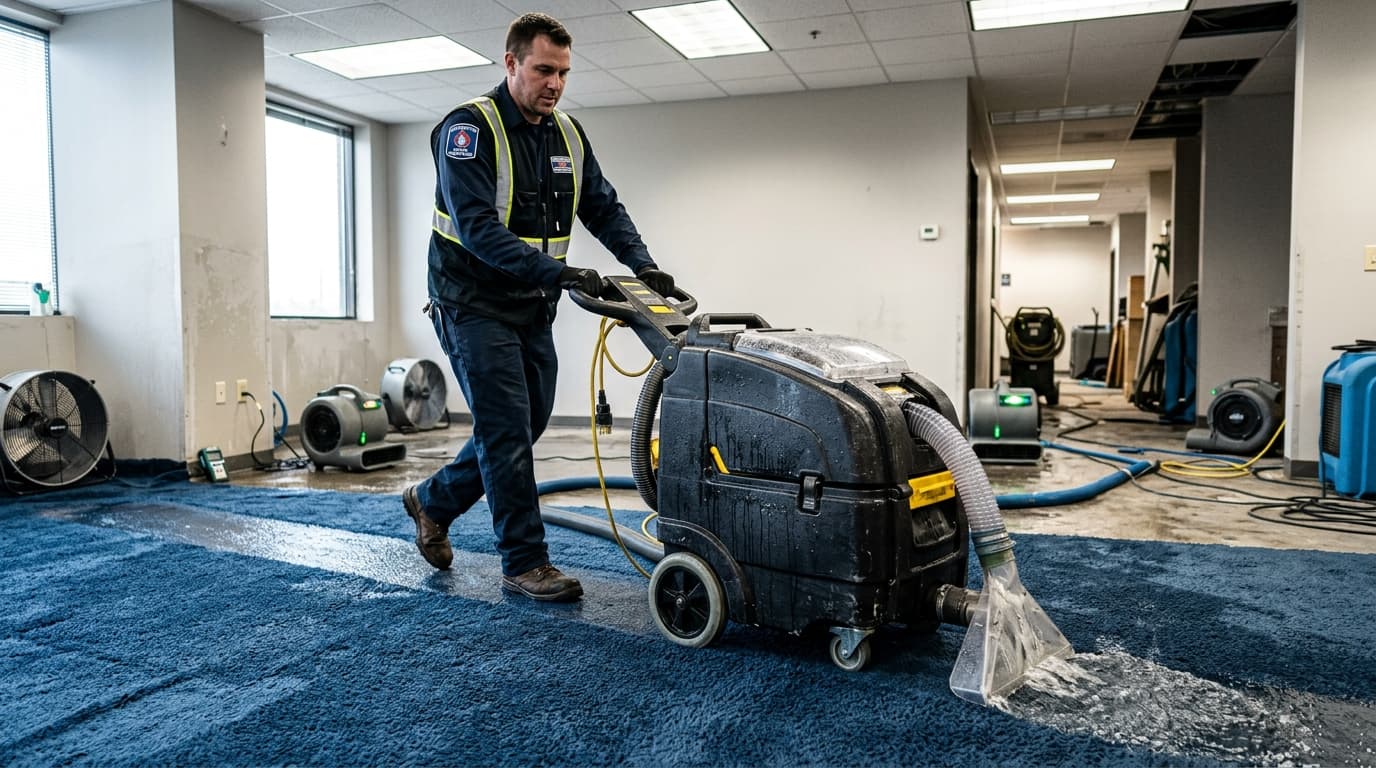
Physical extraction is 1,200 times faster than evaporation. When standing water accumulates on hardwood, tile, carpet, or concrete subfloors, commercial truck-mounted extraction wands and submersible pumps pull thousands of gallons out before deeper structural absorption occurs.
Structural Drying & Dehumidification
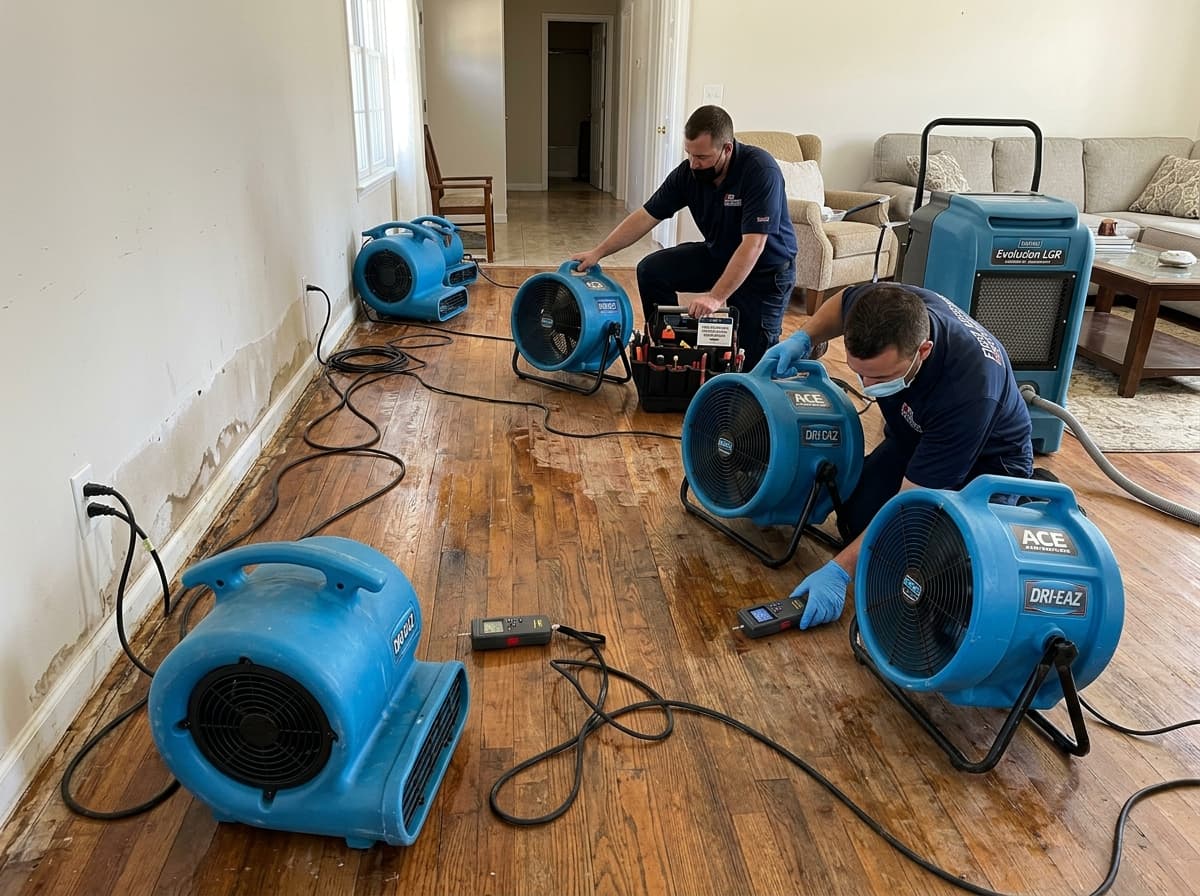
Removing standing liquid is only the first step. Microscopic water remains bound inside wooden studs, subfloors, and concrete foundations. Connect with Boise structural drying specialists who deploy industrial LGR dehumidifiers, high-velocity axial air movers, and daily grains-per-pound (GPP) moisture monitoring.
Nearby Treasure Valley Service Areas
Written by Boise Restoration Editorial Team
Editorial TeamLocal educational and resource team providing water damage mitigation guidance for Boise and the Treasure Valley.
Sources & References
The factual recommendations, contamination categories, and psychrometric principles in this guide are directly grounded in the following official government disaster protocols and ANSI/IICRC restoration standards:
- 1ANSI/IICRC S500 Standard and Reference Guide for Professional Water Damage RestorationInstitute of Inspection, Cleaning and Restoration Certification (IICRC) • 2026
- 2Consumer Guide to Property & Casualty Insurance ClaimsIdaho Department of Insurance (DOI) • 2026
- 3National Flood Insurance Program (NFIP) Flood Damage GuidanceFederal Emergency Management Agency (FEMA) • 2026
Frequently Asked Questions
The average cost to clean and dry a flooded basement in Boise ranges from $2,500 to $7,000 for clean plumbing failures, and $5,000 to $12,000+ if the flood involves exterior groundwater seepage or raw sewage backup requiring heavy sanitization and drywall removal.
Continue Learning About Water Damage
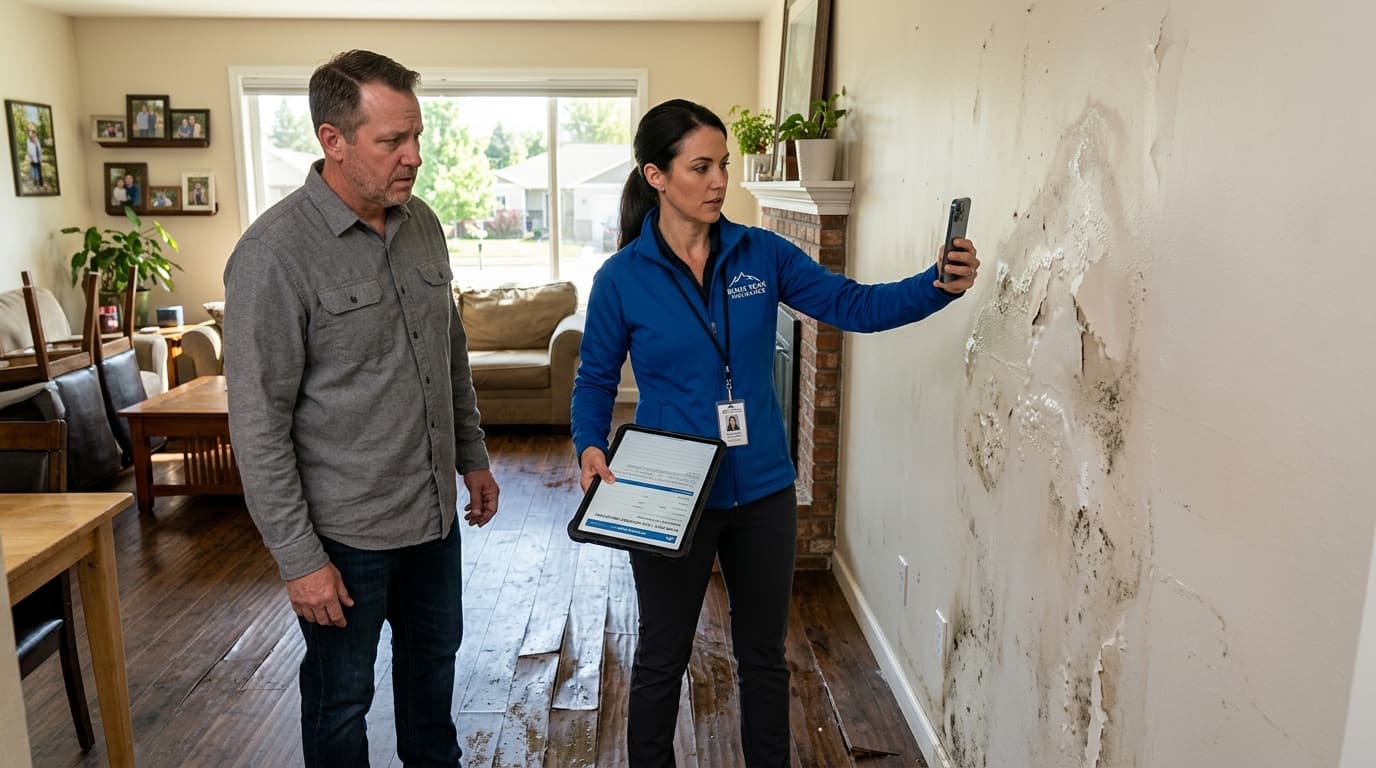
Does Homeowners Insurance Cover Water Damage in Idaho? Complete Claim Guide
When facing thousands in water damage repairs, your first question is: Will insurance pay for this? Here is the exact breakdown of covered vs non-covered water losses under Idaho homeowner policies.
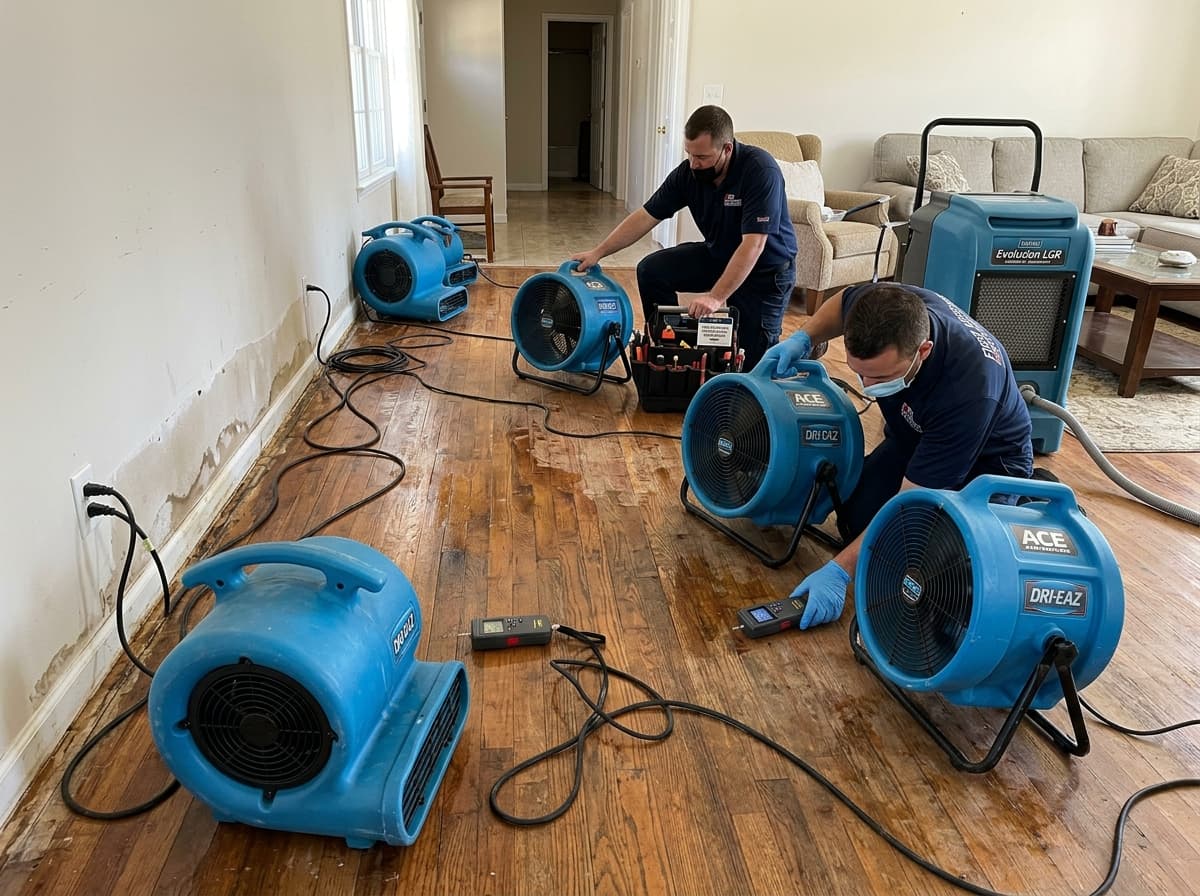
How Long Does Water Damage Take to Dry? Timelines, Science & Factors
While surface water may vanish in 24 hours, deep structural framing, subflooring, and wall cavities require 3 to 5 days under controlled industrial dehumidification. Here is the engineering science behind drying timelines.
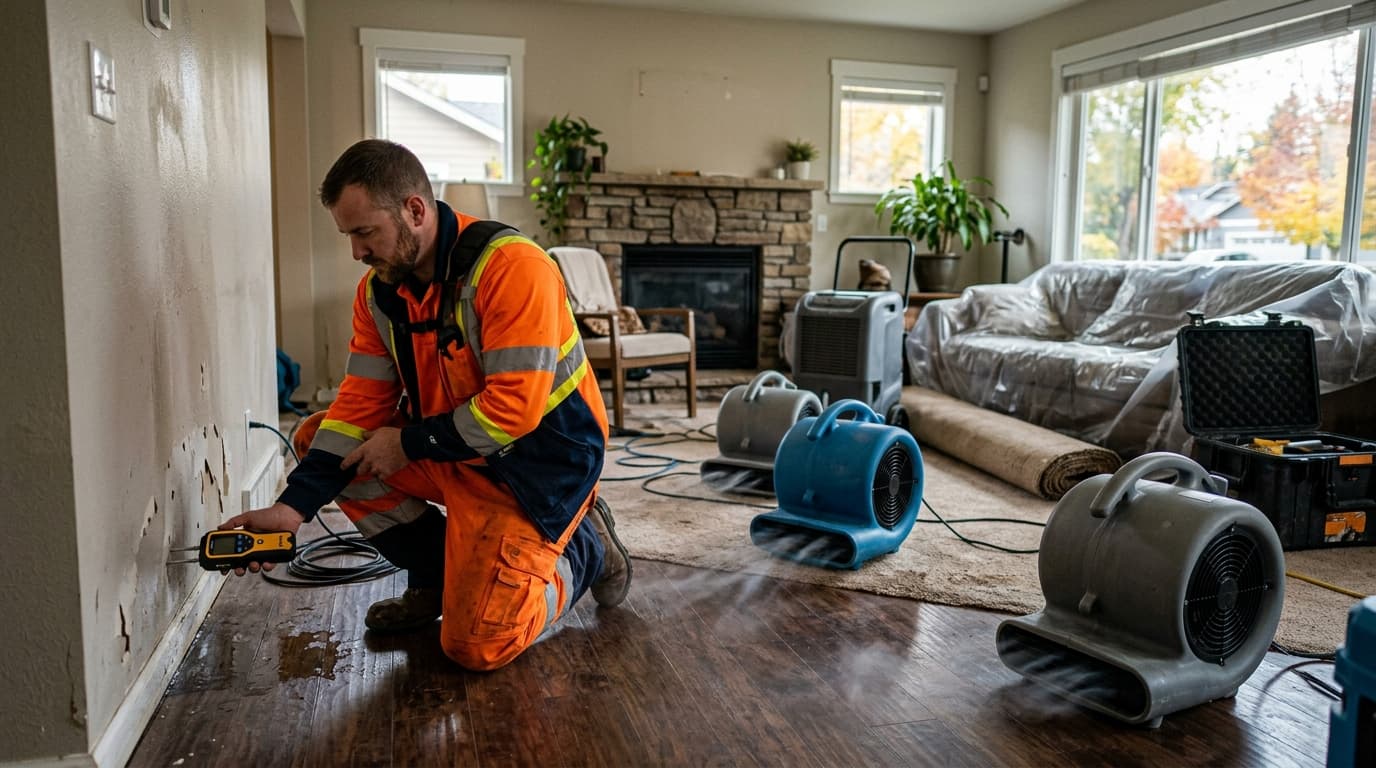
What to Do After Water Damage: A Step-by-Step Emergency Guide
When water intrudes into your living space, the first 24 to 48 hours determine whether your floors, framing, and drywall can be preserved or if destructive mold and rot take hold. Here is the verified emergency recovery sequence from certified restoration specialists.