24/7 Rapid Dispatch:
(208) 314-1188
Boise Water Damage Restoration Services Logo
Boise Water DamageRestoration Services
Subterranean Moisture Mitigation

Basement Water Removal & Cleanup in Boise, ID

Basements lack natural cross-ventilation, creating the ideal environment for standing water to saturate cold concrete slabs, rot perimeter sill plates, and trigger severe mold colonies. Connect with Boise basement water extraction crews equipped with heavy-duty submersible pumps and commercial desiccant dryers.

Call for Basement Water Removal(208) 314-1188
On-Call 24/7 • ~45m Boise Arrival
Direct Boise Dispatch
Ada & Canyon Counties
Immediate Phone Intake
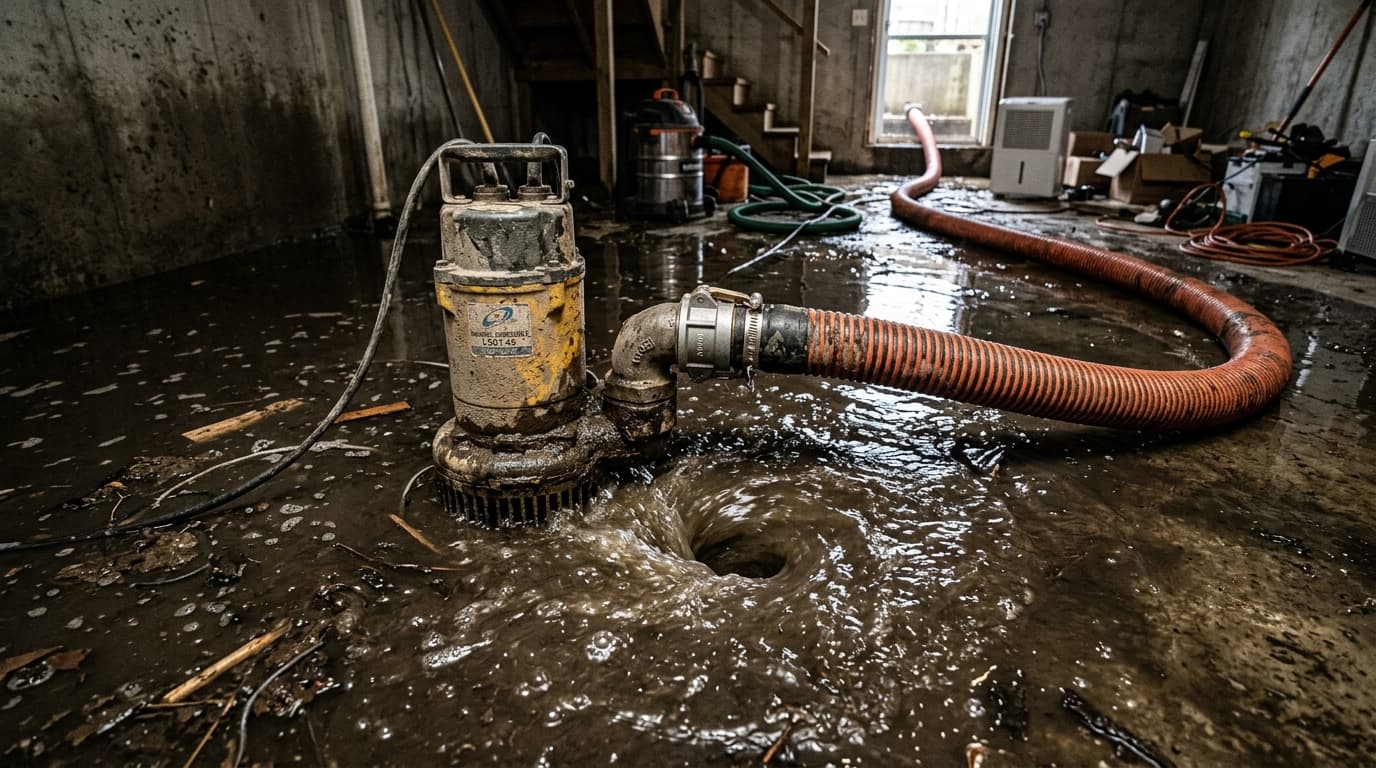
Technician deploying submersible pump and extraction tools in flooded Boise basement
Boise Dispatch Active
Basement Water Removal CapabilityIndustrial Standard
Sump Pump RecoveryConcrete Slab DryingFoundation SeepageVapor Control
Deep Pumping

Submersible Fleet

Heavy-duty pumps evacuating standing basement water down to the slab.

Concrete Care

Slab Moisture Control

High-capacity LGR dehumidifiers pulling deep moisture from porous concrete.

Mold Defense

Subterranean Antimicrobial

Treating foundation perimeters and sill plates to prevent hidden mold.

Live Contact

Direct Phone Line

Speak with a local basement water specialist without waiting for email replies.

Priority Response Zones:
Boise MetroMeridianEagleGarden CityKunaNampaStarCaldwell
Subterranean Drying Specialists

What Is Professional Basement Water Removal?

A flooded basement presents unique structural and environmental challenges. Because basements are located below grade and surrounded by damp soil, cool temperatures and high subterranean humidity prevent natural evaporation. When a sump pump fails, a foundation seam leaks, or a water heater ruptures, standing water pools across concrete slabs and soaks into wall bases.

Professional basement water removal begins with deploying high-volume submersible pumps to remove standing water swiftly. Technicians then inspect finished basement components, removing water-soaked baseboards, tack strips, and ruined padding to expose foundation sill plates.

Because concrete is a porous mineral that absorbs gallons of water, standard residential fans cannot dry a subterranean room. Technicians deploy commercial Low-Grain Refrigerant (LGR) dehumidifiers and directed axial blowers to create high-velocity airflow across cold concrete surfaces, drawing bound moisture out and venting humid air outdoors.

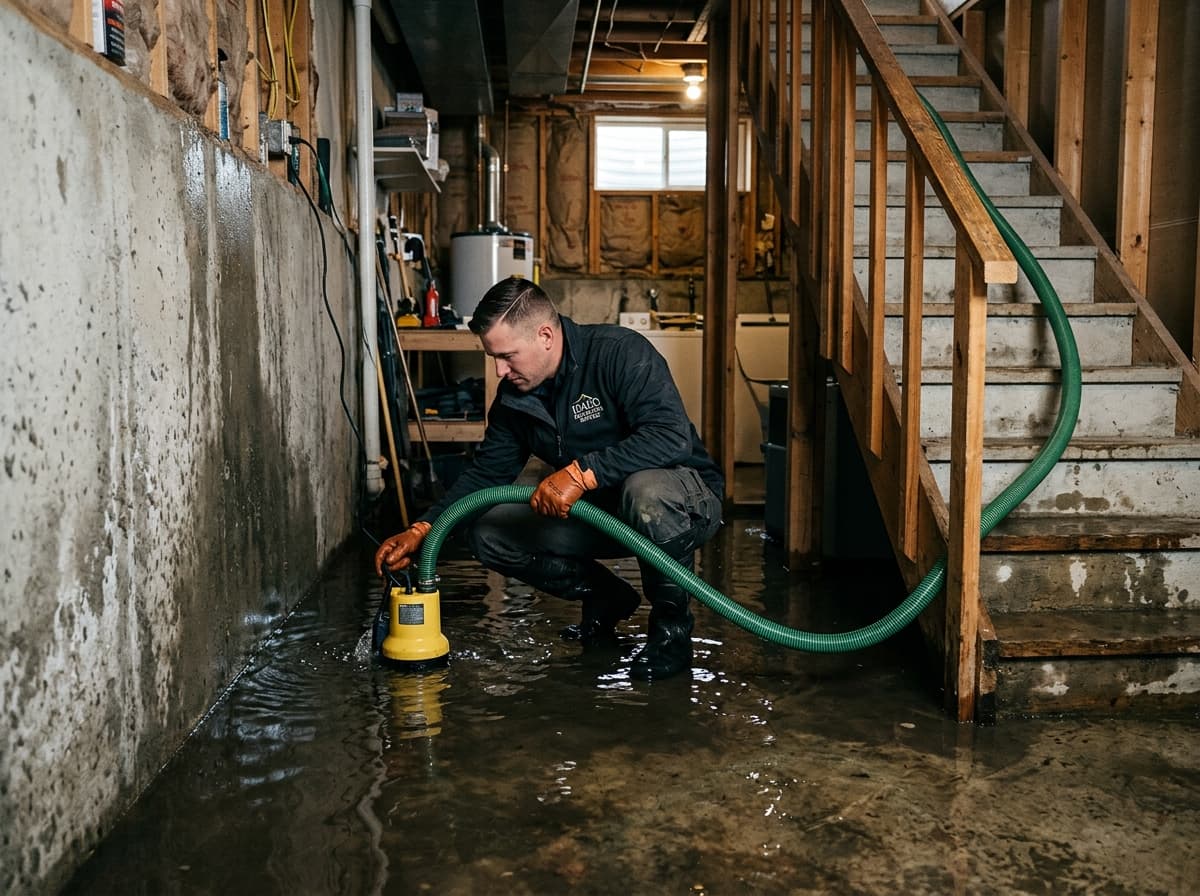
Submersible pump operating to evacuate standing water from basement floor

Key Technical Capabilities

Pumping: Submersible trash pumps evacuate high volumes of standing water
Porous Concrete: Industrial LGR dehumidifiers extract moisture bound in concrete slabs
Sill Plates: Treated perimeter wood framing inspected for moisture absorption
Vapor Barriers: Checking subterranean vapor integrity to prevent future seepage
Basement Vulnerabilities

Common Causes of Basement Water Damage in Boise

Southwest Idaho's seasonal high water tables, spring snowmelt, and winter freezes make local basements particularly susceptible to water intrusion.

Primary Risk

Sump Pump Mechanical Failures

Aging pumps, float switch jams, or sudden power outages during heavy spring rains cause sump basins to overflow onto finished basement carpets.

Professional Evaluation Recommended•

Hydrostatic Foundation Pressure

Rising groundwater during spring snowmelt pushes moisture through micro-cracks in poured concrete walls, floor-wall joints, and mortar lines.

Professional Evaluation Recommended•

Basement Water Heater Ruptures

Water heaters frequently installed in basement utility alcoves release 50 to 80 gallons of scalding water directly onto lower living areas when tanks fail.

Professional Evaluation Recommended•

Window Well Seepage & Overflow

Uncovered or clogged basement window wells collect rainwater and roof runoff, eventually spilling through window frames into finished bedrooms.

Professional Evaluation Recommended•

Main Sewer Line Backups

Municipal sewer surges or tree root blockages push raw blackwater back up through basement floor drains and bathroom fixtures.

Professional Evaluation Recommended•

Frozen Pipe Ruptures Along Rim Joists

Exterior water bib lines or uninsulated rim joist pipes burst during winter freezes, sending pressurized water cascading down basement walls.

Professional Evaluation Recommended•
Safety Protocol

What to Do When Your Boise Basement Floods

Basements carry the highest electrocution and structural collapse risks in water damage events. Exercise extreme caution and do not enter deep water.

Safety Precaution

Do Not Risk Personal Safety

Electrical shock, structural drywall collapse, and biohazardous water present genuine hazards. If an area feels unsafe, evacuate and let professional crews assess the site.

Call for Basement Water Removal(208) 314-1188
01

Do Not Step Into Standing Water

If water levels reach electrical outlets, extension cords, or the bottom of major appliances, do not enter the basement. Electrocution risks are acute.

Never touch an electrical panel while standing on wet surfaces or in water.
02

Shut Off the Circuit Breakers from Upstairs

If your main breaker box is located upstairs on a dry main level, disconnect power to the basement before approaching the stairs.

03

Halt the Water Influx If Possible

If water is coming from an interior plumbing pipe or ruptured water heater, turn off the home's main shutoff valve immediately.

04

Avoid Touching Contaminated Drain Water

If water bubbled up from a floor drain or basement toilet, treat it as hazardous blackwater containing dangerous pathogens.

05

Call Our Direct Boise Line

Call (208) 314-1188 to arrange emergency submersible pumping, extraction wands, and high-capacity dehumidifiers.

Remediation Workflow

Our 6-Step Flooded Basement Recovery Process

Subterranean drying requires systematic extraction, thermal diagnostic mapping, and targeted dehumidification.

Phase 1: Emergency Stabilization & Assessment (Steps 1–3)Phase 2: Scientific Drying & Verification (Steps 4–6)
Step 01
Phase 1

Immediate Safety & Electrical Clearance

Hazard Check

Crews inspect electrical safety, measure standing water depth, and determine water source classification.

Step 02
Phase 1

Submersible Pump Evacuation

Bulk Pumping

High-volume trash pumps discharge standing water outside through heavy lay-flat hoses, draining water down to the slab level.

Certified Mitigation Protocol
Step 03
Phase 1

Weighted Wand Extraction & Debris Removal

Floor Clearing

Technicians vacuum remaining puddles, remove saturated carpet padding, and clear soaked cardboard and organic debris.

Certified Mitigation Protocol
Step 04
Phase 2

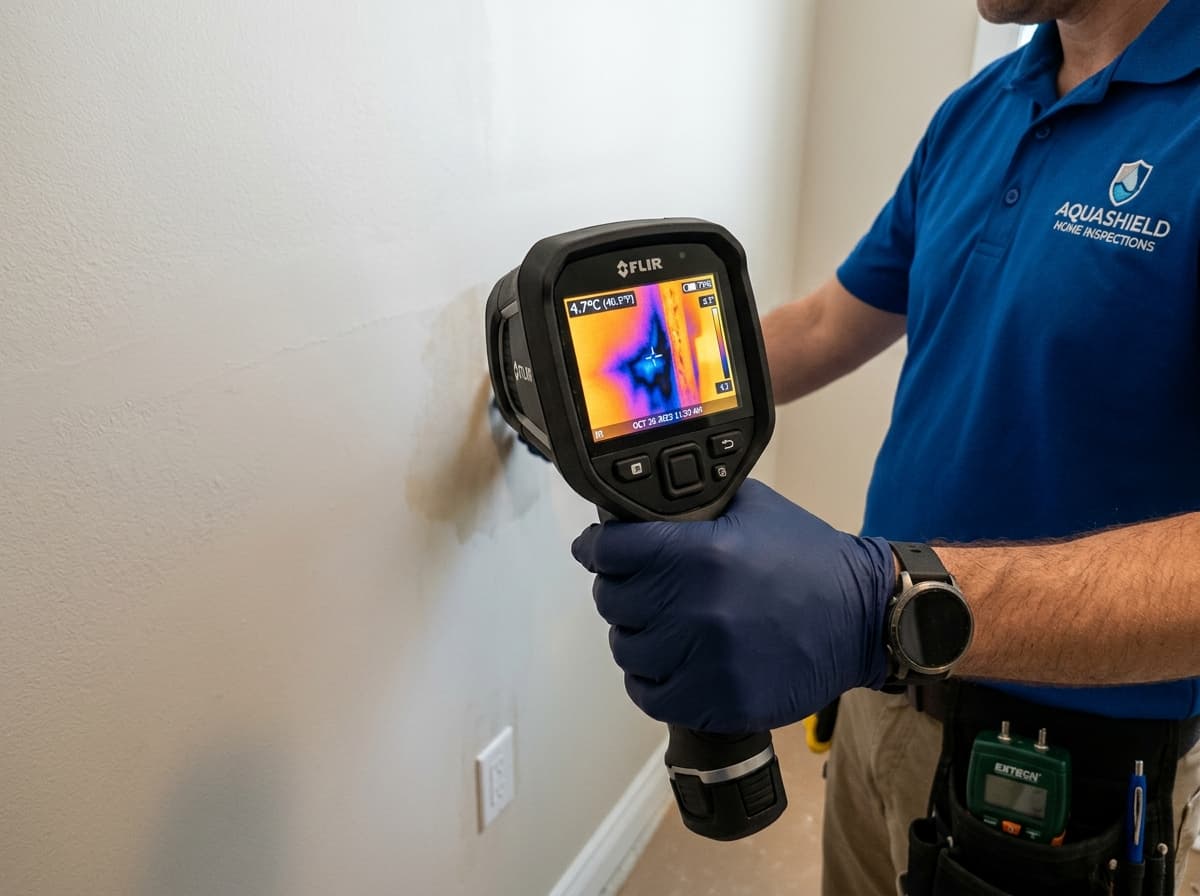
Thermal Imaging of Wall Cavities

Moisture Scans

Infrared thermography scans determine how far water has wicked up behind finished basement drywall and insulation.

Certified Mitigation Protocol
Step 05
Phase 2

Antimicrobial Application on Concrete & Sills

Pathogen Defense

Sill plates and concrete slabs are treated with EPA-registered botanical antimicrobials to prevent mold growth in the damp environment.

Certified Mitigation Protocol
Step 06
Phase 2

High-Capacity LGR Dehumidification

Subterranean Drying

Commercial LGR dehumidifiers and axial air movers run continuously, logging moisture daily until the concrete slab and framing are certified dry.

Certified Mitigation Protocol

Ready to Initiate Basement Water Removal?

Step 1 starts with an immediate phone intake. Local Boise crews deploy the right equipment directly to your site.

Call for Step 1 Intake(208) 314-1188
Why Property Owners Call Us

Why Professional Basement Water Removal Matters

A wet basement will not dry on its own. Here is why Boise homeowners rely on our direct line for comprehensive subterranean restoration.

Standardized Mitigation Standards
Certified Protocols

Local restoration crews follow scientific structural drying principles with digital moisture mapping, thermal imaging, and calibrated air exchange rates.

Psychrometric DryingFLIR Thermal MappingEPA Antimicrobial ProtocolsDaily GPP Tracking
Our Referral Commitment

Boise Water Damage Restoration Services is an independent referral and marketing service connecting residential and commercial property owners in the Treasure Valley with vetted, licensed, and insured local water damage restoration contractors. All restoration, remediation, and repair work is performed directly by independent third-party service providers. When you call, you will be connected with a qualified local specialist available to assess your situation.

Submersible Fleet

Deep Pumping Capacity

Our network connects you with crews carrying industrial submersible pumps capable of emptying flooded basements in hours.

Low-Temp LGRs

Cold Concrete Drying Tech

Specialized LGR dehumidifiers operate effectively even in cool subterranean basement environments where standard consumer units fail.

Mold Prevention

Aggressive Mold Prevention

Basements are prime mold incubators. Crews apply botanical antimicrobials to eliminate spores before colonies can amplify.

Local Response

Fast Treasure Valley Response

Prompt dispatch across Boise, Meridian, Eagle, Kuna, Garden City, Nampa, and Caldwell for residential and commercial basements.

Basement Gallery

Basement Flooding Recovery in Action

Visuals demonstrating subterranean pumping, moisture mapping, and commercial drying equipment deployed in flooded Boise basements.

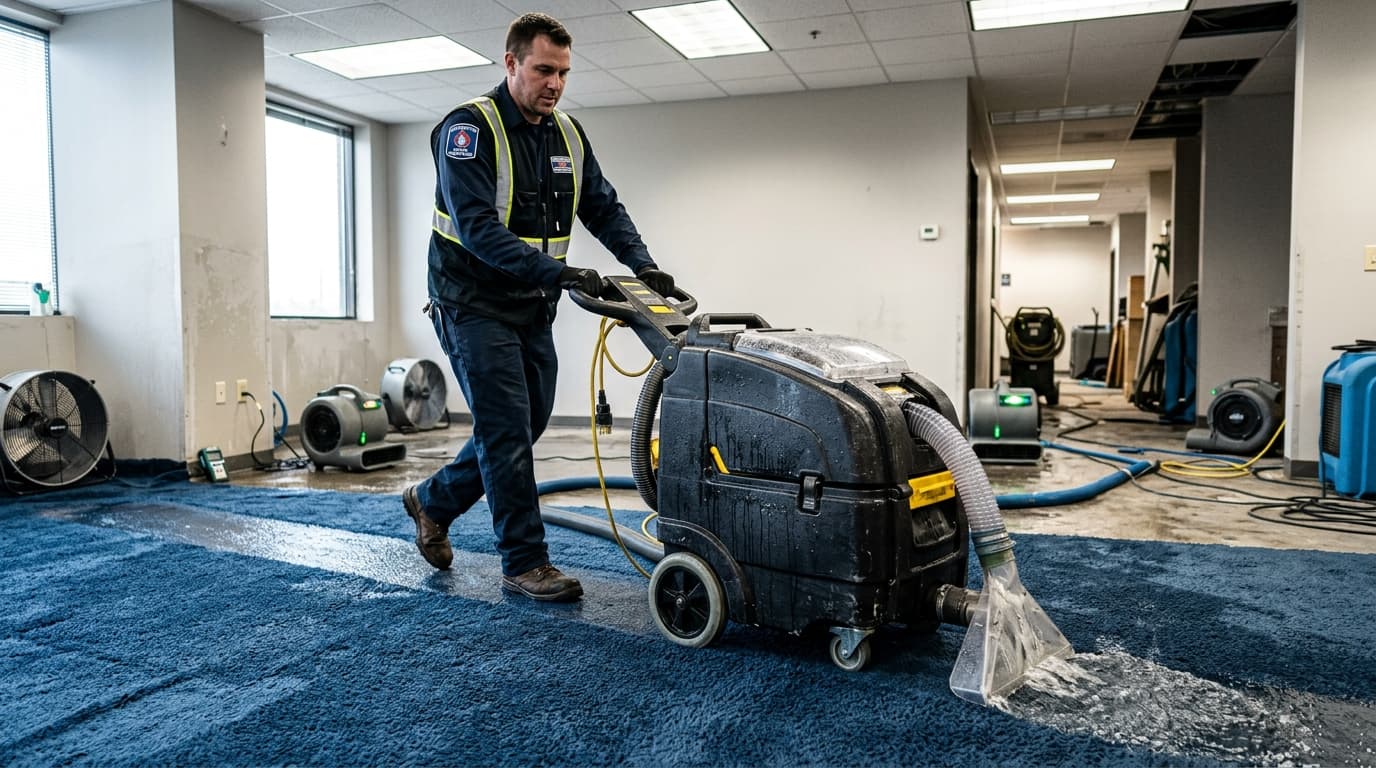
Technician operating extraction equipment in a flooded residential basement
On-Site Restoration

Submersible pump evacuation removing standing water from finished basement floor.

Commercial submersible pump removing water

High-volume submersible pump discharging bulk water away from property foundation.

Thermal imaging inspection of basement walls

Infrared thermal inspection identifying moisture migration behind finished basement drywall.

Comprehensive Restoration Network

Related Water Damage Services in Boise

Water damage rarely occurs in isolation. Explore closely related restoration and mitigation solutions commonly coordinated alongside this service.

Technician operating commercial water extraction wand removing water from saturated residential flooring in Boise
Water Extraction

Water Extraction & Removal

Water extraction is the physical removal of standing and trapped liquid water from finished flooring, subflooring, and structural surfaces. In any water loss event, extracting water physically is dramatically faster and more efficient than relying solely on dehumidifiers to evaporate standing pools.

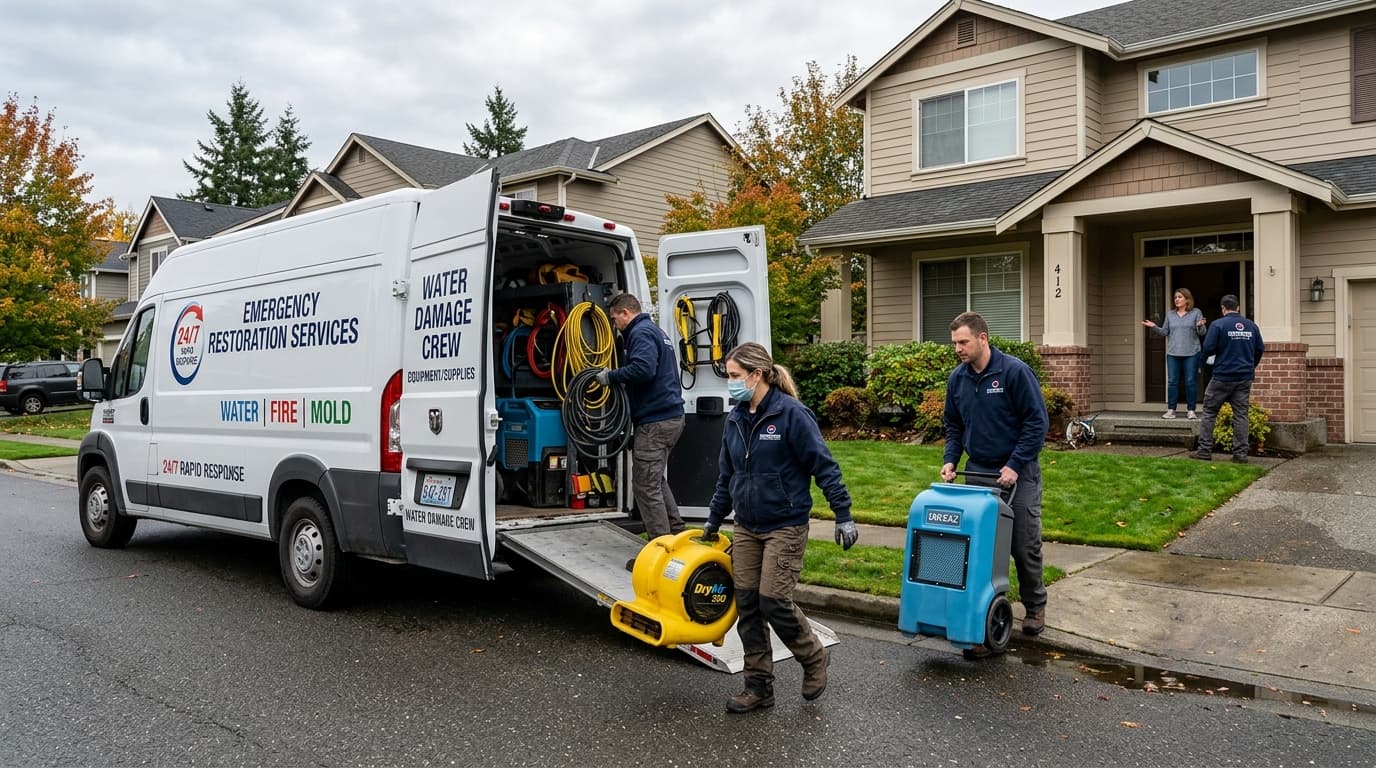
Emergency water damage restoration technician assessing active water loss in a Boise residence
Emergency Restoration

Emergency Water Damage Restoration

A sudden water loss is a high-stakes emergency. Water flows along the path of least resistance, rapidly migrating beneath baseboards, down interior wall cavities, and into structural floor joists. Within hours of exposure, drywall softens, wood framing begins absorbing liquid, and carpets delaminate from secondary backing.

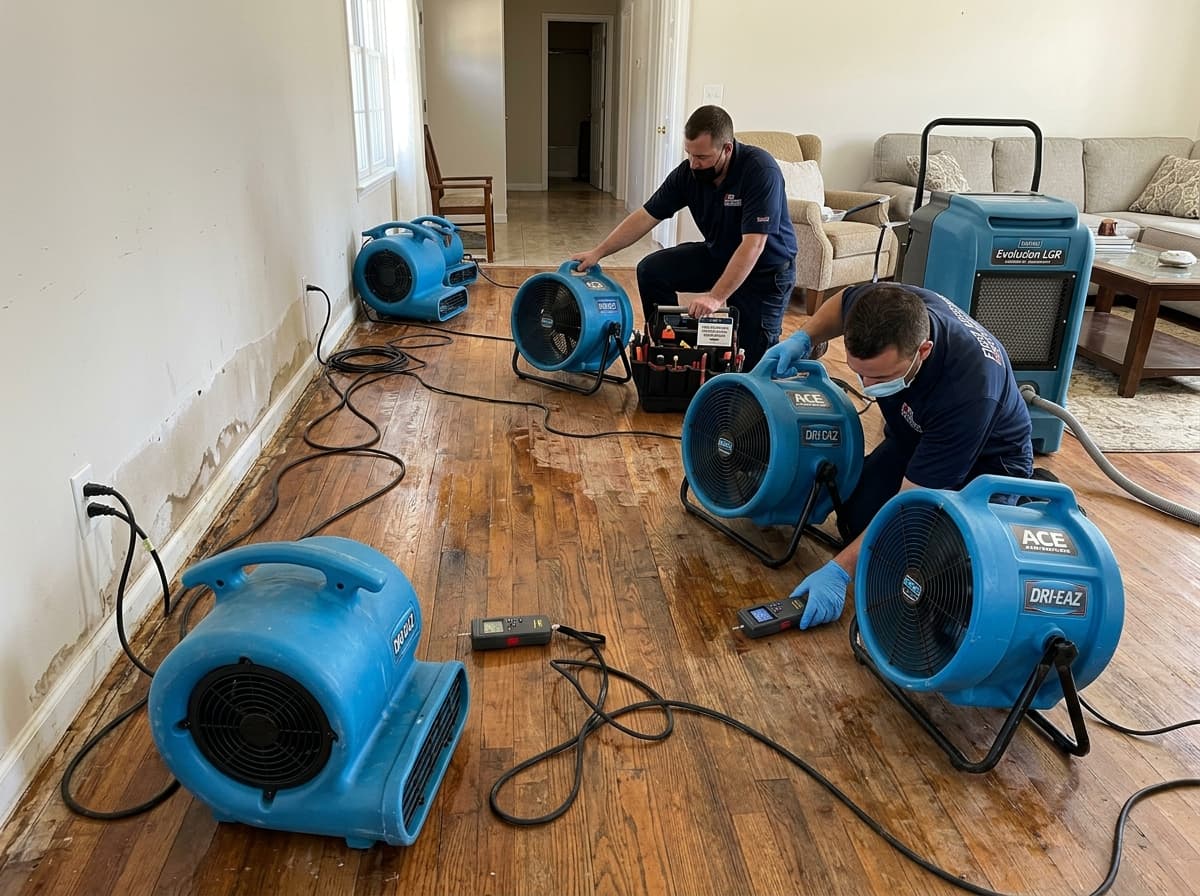
Array of commercial air movers and LGR dehumidifiers drying structural flooring in Boise home
Structural Drying

Structural Drying & Dehumidification

Structural drying is the scientific process of extracting bound moisture from deep inside porous and semi-porous building materials—including wooden framing studs, subfloors, drywall, concrete slabs, and masonry. Even when a room feels dry to the touch, structural framing can harbor dangerous moisture levels that cause wood rot, warping, and hidden mold colonies.

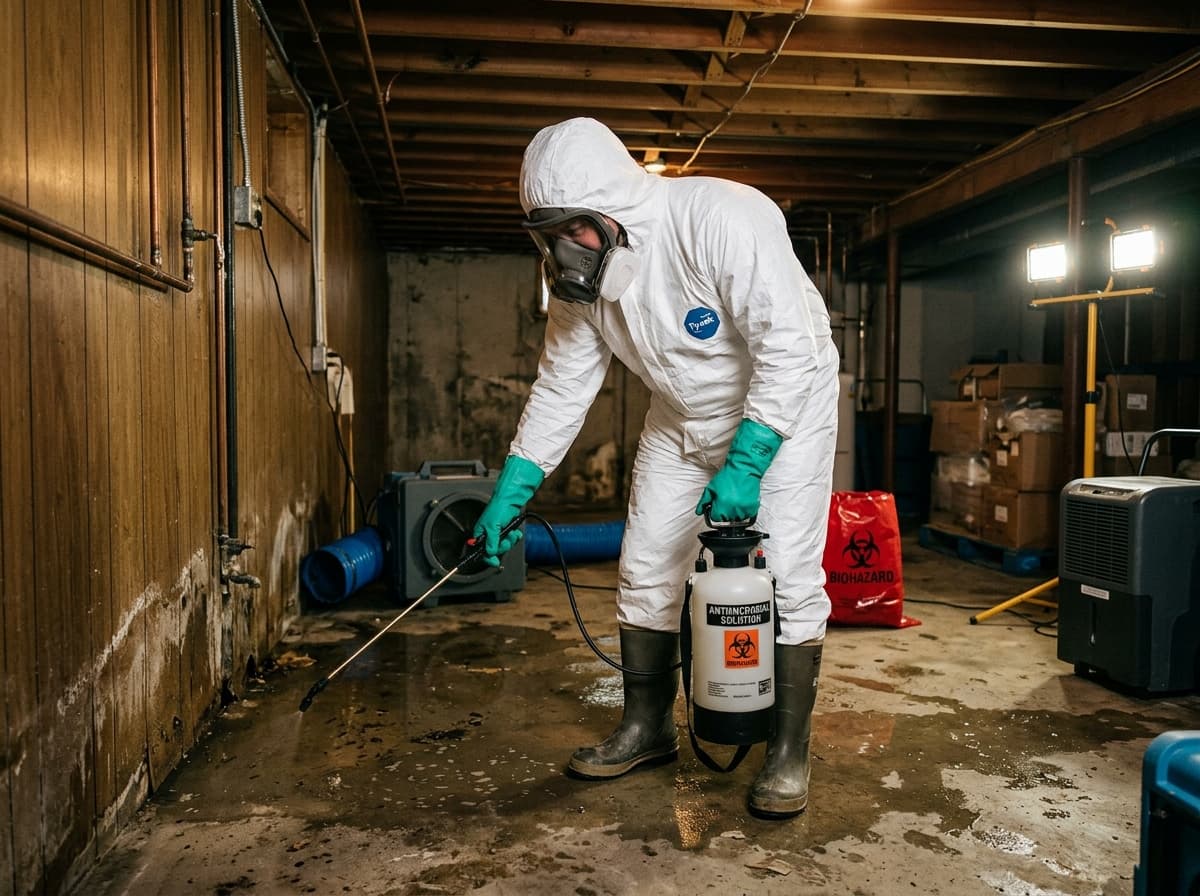
Restoration technician in full PPE protective suit spraying antimicrobial disinfectant in basement in Boise
Sewage Cleanup

Sewage Backup Cleanup

A sewage backup is a biological emergency that requires immediate hazardous material handling. Classified by the IICRC as Category 3 (blackwater), sewage contains pathogenic agents including Salmonella, E. coli, Norovirus, hepatitis, and parasitic protozoa that present severe health risks upon contact or inhalation.

Basement Water Removal Service Coverage

Basement Water Removal in Boise & Nearby Communities

Basements throughout Boise's North End, the Bench, Southeast Boise, Meridian, and Eagle face seasonal groundwater pressure and plumbing failures. Our network provides prompt basement recovery across the valley.

18 Live Dispatch Hubs20–45 Min Avg ResponseAda & Canyon County Mobile Fleet
Select Your City or Area:
Click to inspect map
Boise Mobile Response Unit
Ada County

Dedicated water extraction truck and moisture detection specialists on standby for Boise residences and commercial facilities.

Typical Arrival:
20–30m
Key Boise Neighborhoods:
Downtown BoiseNorth EndBoise BenchSoutheast BoiseWest BoiseHighlandsHarris RanchCollisterWarm SpringsColumbia Village
Natural Geographic Coverage Map

Loading Natural Treasure Valley Map...

Plotting 18 live dispatch zones across Ada & Canyon County

Expert Answers

Frequently Asked Questions About Basement Water Removal

Have questions about timelines, equipment, or what happens during basement water removal in Boise? Here are direct, practical answers to common homeowner inquiries.

Have Another Question?

Speak Directly With a Specialist

Every water loss is unique. Call our direct Boise line to discuss your specific property situation with zero waiting.

Direct Boise Emergency Line(208) 314-1188
Call With Your Question(208) 314-1188

First, ensure personal safety by staying out of standing water if electrical outlets or cords are submerged. Shut off the home's main water supply if the leak is from a plumbing fixture, turn off the power to the basement from an upstairs panel if safely accessible, and call our direct line at (208) 314-1188.

BOISE DISPATCH ON-CALL 24/7/365

Dealing With a Flooded Basement in Boise?

Subterranean moisture rots framing and fosters mold within 24 to 48 hours. Call our direct Boise line right now for immediate basement water removal.

Immediate Phone Intake • No Waiting
Call for Basement Water Removal(208) 314-1188
Average on-site arrival: under 45 minutes across Ada & Canyon
Licensed & Vetted Local Crews24/7/365 On-Call Crews4.9★ Local Boise Rating