
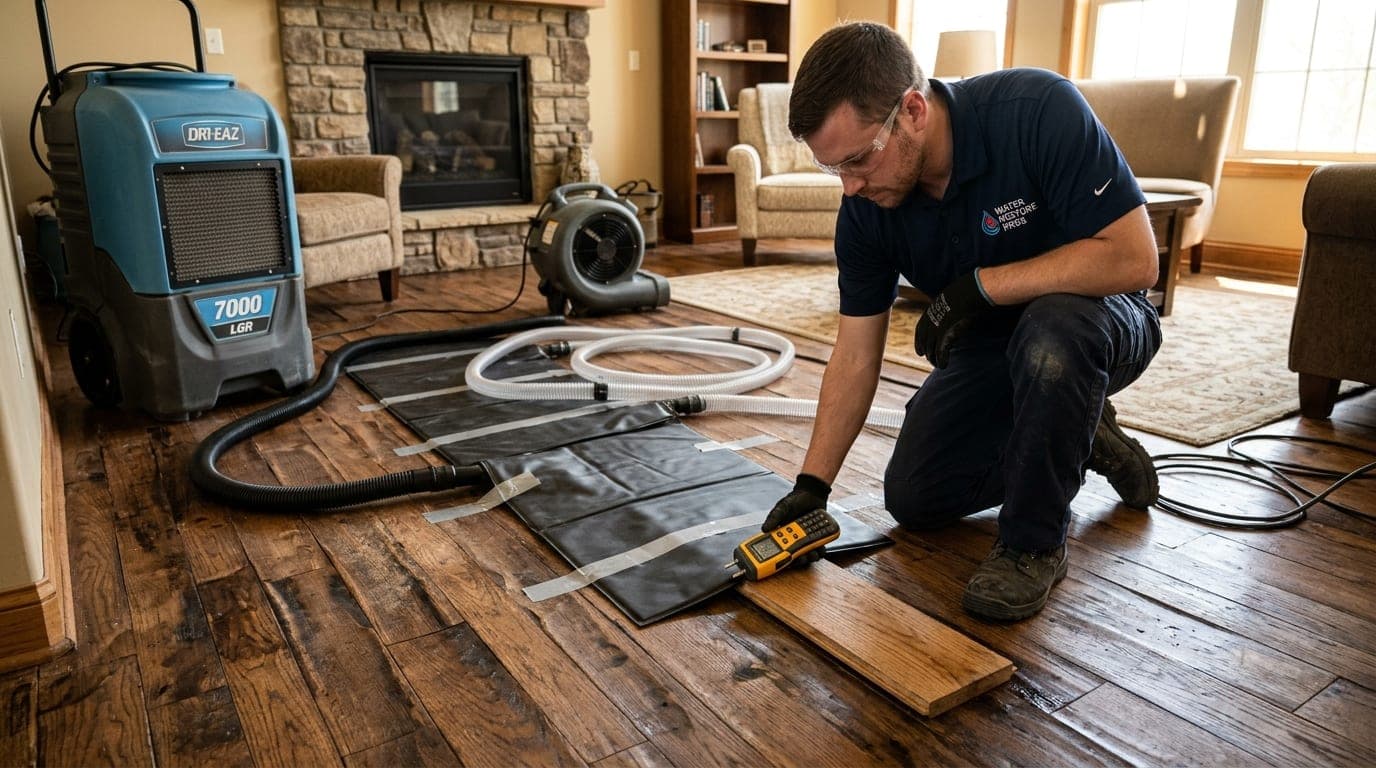
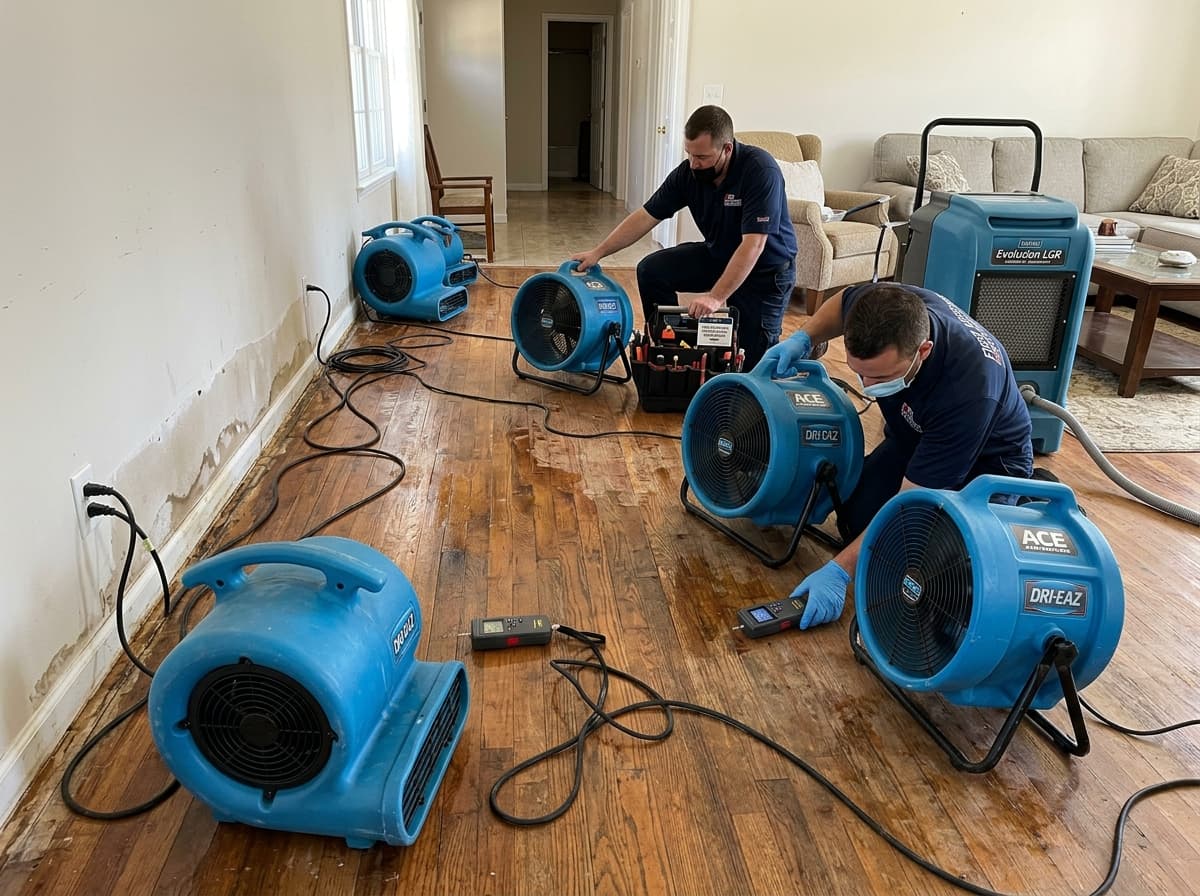
Yes, water-damaged hardwood floors can frequently be saved if professional mitigation begins within the first 24 to 48 hours of exposure and the water source is Category 1 (clean water from a supply pipe or appliance line). Using negative-pressure injection floor drying mats (such as Dri-Eaz Rescue Mat systems) and industrial low-grain refrigerant (LGR) or desiccant dehumidifiers, certified technicians pull trapped water out from beneath the planks and subfloor. However, if the floor has buckled completely off the subfloor nails, has absorbed Category 3 sewage or flood water, or has remained saturated beyond 72 hours, demolition and replacement are typically required.
- Cupping vs. Buckling: Cupped floorboards (edges raised higher than the center) are almost always salvageable; buckled boards torn from subfloor fasteners usually require replacement.
- The 24–48 Hour Critical Window: Fast extraction prevents cellulose fiber cellular collapse and halts microbial mold colonies from colonizing the damp subfloor.
- Never Sand a Cupped Floor While Wet: Sanding raised board edges prematurely causes permanent crowning once the bottom of the plank finally dries out.
- Subfloor Moisture Is the True Enemy: Wood flooring will continue to cup until the 3/4-inch plywood or OSB subfloor underneath reaches its dry standard EMC (6%–9% in Boise).
- Specialty Mat Systems Eliminate Tear-Outs: High-suction vacuum panels pull moisture vapor vertically through wood pores, salvaging original historic and custom-stained floors.
Dealing with Active Water Intrusion?
Reading guides takes time—standing water causes framing damage within hours. Speak directly with a local Boise specialist.
1. The Anatomy of Hardwood: How Water Alters Wood Structure
To understand whether your floor can be salvaged, you must first understand how wood interacts with moisture at a cellular level.
Hardwood is an organic, hygroscopic material. Its cellular structure is composed of millions of microscopic cellulose fibers that naturally expand and contract as ambient relative humidity rises and falls. In the high desert climate of [Boise](/) and the surrounding Treasure Valley, indoor equilibrium moisture content (EMC) typically hovers between 6% and 9% during the winter heating months and 8% to 11% during summer.
When an indoor pipe burst, refrigerator ice-maker line rupture, or dishwasher overflow discharges hundreds of gallons of water, the moisture content of the flooring spikes to 25%–35% or higher. When wood reaches its Fiber Saturation Point (FSP)—typically around 28% to 30% moisture content—the cell walls become completely saturated with 'bound water', and any excess liquid begins filling the hollow cell cavities with 'free water'.
As cell walls engorge, the planks swell across their width (tangential and radial expansion). Because the boards are tightly nailed together along their tongue-and-groove edges, they have nowhere to move. The resulting lateral pressure forces the edges upward, producing the classic ripple effect known as cupping. Prompt, professional water extraction services are critical before structural cell collapse takes place.
The Physics of Wood Swelling
Wood expands roughly twice as much tangentially (parallel to the growth rings) as it does radially (perpendicular to the rings). This differential expansion is why flat-sawn planks cup much more dramatically than quarter-sawn boards when exposed to plumbing leaks.
2. Cupping vs. Crowning vs. Buckling: Diagnosing the Severity
Restoration specialists categorize hardwood moisture distortion into three distinct phases. Identifying which phase your floor is in determines the appropriate restoration protocol.
Phase 1: Cupping (Highly Salvageable)
Cupping occurs when the underside of the wood plank absorbs moisture faster than the finished top surface. The bottom swells and widens, causing the outer edges of each board to lift higher than the center. When you walk across a cupped floor, it feels washboarded underfoot.
Because the wood fibers have not ruptured and the flooring cleats or staples remain securely anchored to the subfloor, cupped hardwood can almost always be dried completely flat using negative-pressure suction mats and commercial dehumidification.
Phase 2: Crowning (The Danger of Premature Sanding)
Crowning is the exact inverse of cupping: the center of the board bulges upward while the edges remain lower. While crowning can occasionally occur if the top surface was flooded while the subfloor stayed dry, it most frequently occurs as a man-made error caused by premature floor sanding.
If an uninformed homeowner or contractor sands down the raised edges of a cupped floor before the wood has reached its dry equilibrium moisture standard, the floor appears flat while wet. However, once the bottom of the board finally gives up its trapped moisture weeks later, the edges shrink below the over-sanded center, permanently ruining the floor profile.
Never Sand Damp Hardwood Floors
Never allow a flooring contractor to sand or refinish hardwood floors until daily non-penetrating moisture meter readings confirm that both the flooring planks and the underlying subfloor have stabilized within 2% to 4% of their dry baseline standard.
Phase 3: Buckling (Severe Structural Failure)
Buckling represents the terminal stage of severe water saturation. When planks swell beyond the maximum compressive strength of the wood and the physical holding capacity of the flooring fasteners, the entire floor system tears free from the subfloor.
Buckled boards can lift several inches off the subfloor, creating massive tents and hollow voids. Once the tongue-and-groove joints split and the cleats pull out of the plywood, the floor cannot be pulled back down with vacuum suction and must be surgically extracted and reinstalled.
3. Solid Hardwood vs. Engineered Planks vs. Subflooring
The construction of your flooring system dictates how it tolerates moisture and whether in-place drying is mathematically feasible.
In many homes across Meridian, Eagle, and Nampa, modern builders utilize 3/4-inch tongue-and-groove OSB subflooring topped with engineered or prefinished solid hardwood. Tar paper or rosin paper is typically placed between the subfloor and the finish floor as a vapor retarder.
While this paper barrier prevents normal moisture from migrating up from the crawl space, it works against you during a flood: it traps spilled water underneath the hardwood planks, creating an airtight moisture pocket that ordinary fans cannot evaporate. Specialized negative-pressure systems are required to overcome this vapor barrier.
Hardwood & Subfloor Material Salvageability Comparison
| Flooring Material | Moisture Behavior | Salvage Protocol & Feasibility |
|---|---|---|
Solid Hardwood (Oak, Maple, Hickory) Pre-finished polyurethane finishes slow down top evaporation, requiring higher vacuum suction. | Expands across width; cups readily; fibers remain structurally intact under prolonged moisture. | 85%–95% salvageable with vacuum injection mats if caught within 48 hours; returns to flat profile upon drying. |
Engineered Hardwood (Veneer over Plywood Core) Thin veneer layers (<2mm) cannot be re-sanded if cupping creates surface ripples. | Dimensional stability is higher; cross-ply layers resist cupping until glue bonds fail. | Moderate salvageability (60%–70%). If adhesive delaminates between veneer and core, replacement is necessary. |
Plywood Subfloor (3/4" CDX or T&G) Standard construction across most quality Boise and Meridian residential framing. | Absorbs water slower than OSB; retains fastener holding strength when dried properly. | High salvageability (90%+). Can be dried in place from above and below (via crawl space access). |
OSB Subfloor (Oriented Strand Board) Requires intensive crawl space drying to prevent sag and floor squeaks. | Edge swelling occurs rapidly; resins break down under standing water; permanent thickness swelling. | Lower salvageability (40%–50%). Once edges swell past 15% thickness, subfloor must be cut out and patched. |
4. The Professional In-Place Hardwood Drying Protocol
When certified restoration crews arrive at a water-damaged property, they execute an advanced psychrometric drying protocol standardized under IICRC S500 guidelines.
Diagnostic Moisture Mapping & Dry Standard Benchmarking
Establishing baseline moisture levels using non-destructive meters and thermal imaging.
- Technicians scan the entire room using FLIR infrared thermal cameras to delineate the precise perimeter of subfloor moisture migration.
- A dry standard is established by testing unaffected wood planks in an adjacent room (e.g., 7.5% EMC).
- Deep-probe pin meters are driven into plank joints and subfloor joists to record baseline depth moisture percentages.
Immediate Bulk Water Extraction
Removing all standing surface water to prevent continued saturation.
- Truck-mounted extraction units and weighted floor squeegee tools draw standing water off the finish surface.
- Water trapped along wall perimeters is addressed by removing shoe molding and drilling discrete relief holes behind baseboards.
Deployment of Vacuum Injection Mat Systems
Applying negative pressure directly to the surface of the cupped planks.
- Clear, heavy-duty floor drying panels (Rescue Mats) are taped securely across the saturated floorboards perpendicular to the grain.
- High-pressure vacuum blowers pull 5 to 7 inches of mercury vacuum, creating a powerful pressure differential.
- The vacuum draws trapped water vapor straight out from the subfloor, through the wood pores, and into the containment ducting.
Balanced Psychrometric Dehumidification
Lowering ambient specific humidity to accelerate evaporative potential.
- Commercial Low-Grain Refrigerant (LGR) dehumidifiers or desiccant units are positioned to drive ambient relative humidity below 30%.
- Centrifugal air movers circulate dry air across the room to break the boundary layer of humid air sitting above the floor.
- Target grain depression (grains per pound) is maintained to maximize the vapor pressure differential between the wet wood and dry room air.
Sub-Floor Cavity Drying (Crawl Space Integration)
Attacking trapped moisture from both above and below.
- In homes with raised foundations, technicians enter the crawl space to inspect floor joists, fiberglass batt insulation, and subfloor sheathing.
- Wet insulation is removed, and air movers are ducted directly into the floor joist bays beneath the wet room to dry the subfloor from underneath.
- For properties facing [crawl space water damage](/services/crawl-space-water-damage-boise-id/), commercial sump pumps and dehumidifiers are installed.
Progressive Monitoring to Dry Standard Equilibrium
Verifying complete moisture clearance before equipment release.
- Daily psychrometric logs record ambient temperature, relative humidity, dew point, and exact wood moisture content.
- Equipment remains active until both the surface hardwood and the subfloor test within 2% to 4% of the original dry baseline standard.
- Planks gradually relax and settle back down into a flat, stable profile.
5. When Can Hardwood Floors Not Be Saved?
While specialty injection drying saves the vast majority of clean water losses, certain scenarios mandate complete demolition and replacement.
Restoration is not always feasible or safe. Factors such as contamination category, extended dwell time, and structural decay require physical material removal to protect household air quality and structural integrity.
Indicators That Hardwood Flooring Requires Replacement
0 of 5 completedFlooding involving raw sewage, municipal drain backups, or river/canal overland runoff permeates deep into porous wood fibers with toxic pathogens. Solid wood cannot be sterilized internally without destruction.
When boards have sheered tongue-and-groove joints or pulled completely away from subfloor nails, the physical mechanical fasteners cannot be re-seated without lifting the floor.
If water has sat for 72+ hours and active black mold colonies have colonized the backside of the hardwood and subfloor, [mold remediation](/services/mold-remediation-boise-id/) requires removing contaminated planks.
When the top decorative wear layer of engineered hardwood bubbles, blisters, or peels away from the inner plywood core due to waterproof glue failure.
When moisture causes chemical reactions between wood tannins and steel fasteners, dark black rings bleed into the wood grain that cannot be sanded out.
6. Emergency Action Plan: What to Do in the First 2 Hours
What you do immediately following a water loss dramatically influences whether your hardwood floors can be salvaged.
Every minute that standing water sits on finished wood, it moves deeper through seams, absorbs into the subfloor, and increases the risk of permanent fiber damage. Refer to our water damage restoration timeline to see how damage compounds hour by hour.
Immediate Homeowner Action Checklist
1. Immediately shut off the main water valve to stop the source of intrusion. 2. Mop up all standing surface liquid with cotton bath towels and microfiber cloths. 3. Remove area rugs, furniture, and wet cardboard immediately to expose the wood to airflow. 4. Do NOT turn home heat up to 85°F—excess heat cooks wet wood and causes severe cracking. 5. Call a 24/7 IICRC-certified restoration company equipped with injection mat systems.
Have Cupped or Wet Hardwood Floors in Boise?
Our local emergency technicians are equipped with commercial floor injection drying mats, thermal cameras, and high-capacity LGR dehumidifiers to save your hardwood before irreversible damage occurs.
Related Water Restoration Services in Boise
Water Extraction & Removal
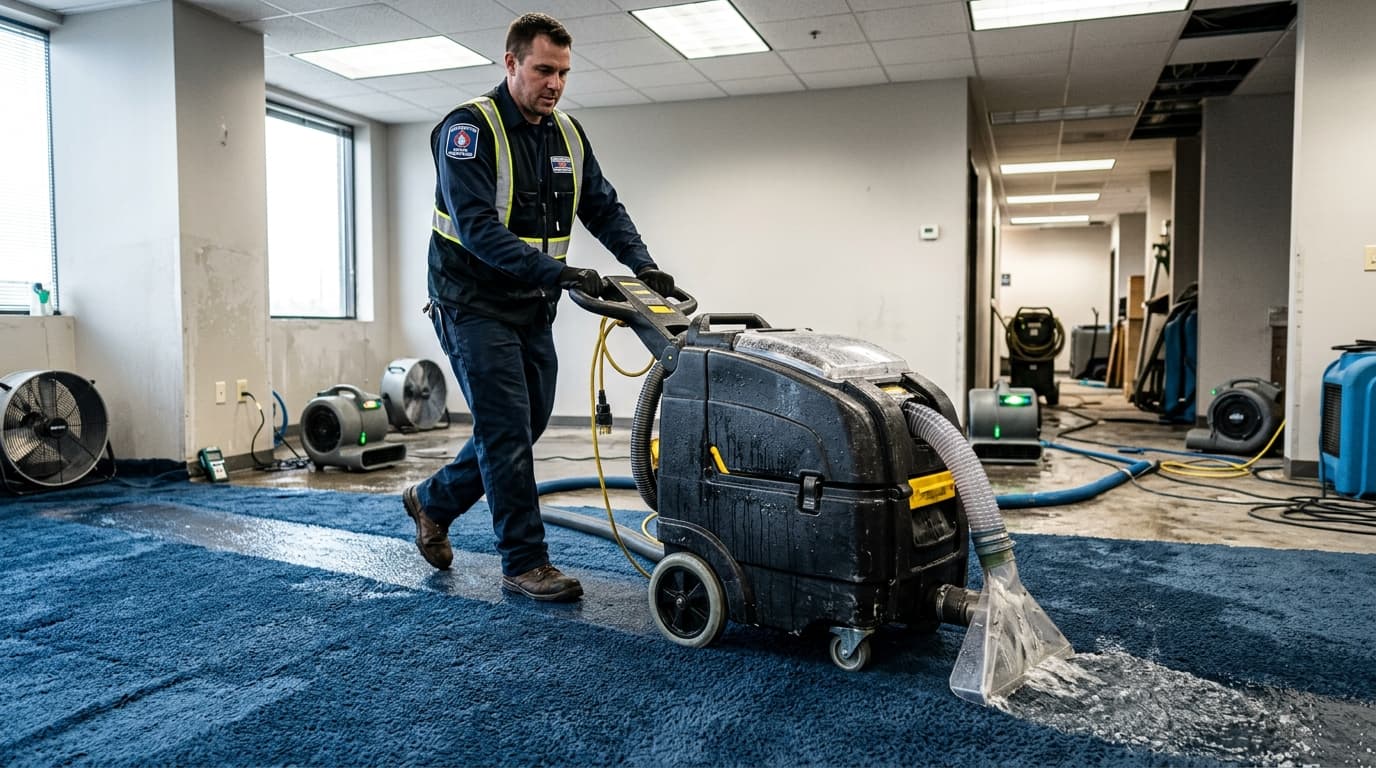
Physical extraction is 1,200 times faster than evaporation. When standing water accumulates on hardwood, tile, carpet, or concrete subfloors, commercial truck-mounted extraction wands and submersible pumps pull thousands of gallons out before deeper structural absorption occurs.
Structural Drying & Dehumidification
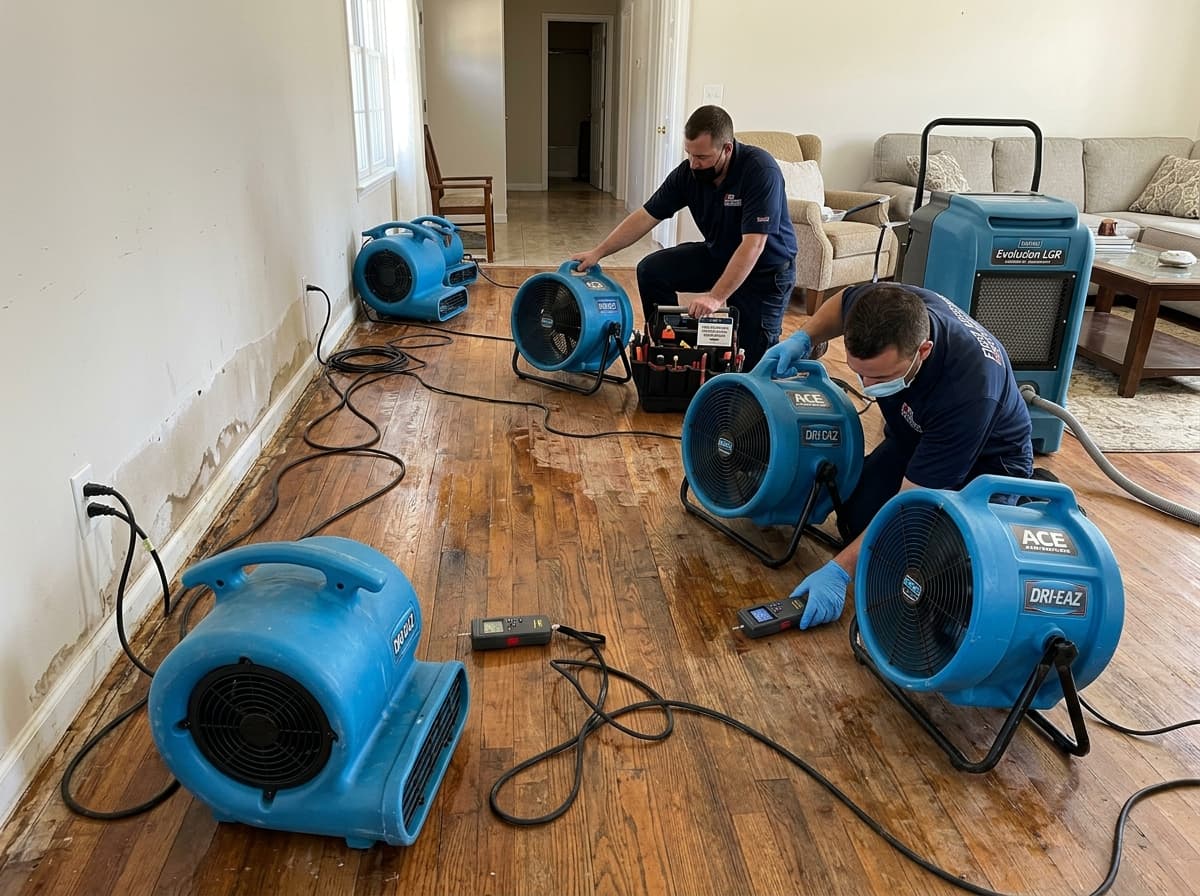
Removing standing liquid is only the first step. Microscopic water remains bound inside wooden studs, subfloors, and concrete foundations. Connect with Boise structural drying specialists who deploy industrial LGR dehumidifiers, high-velocity axial air movers, and daily grains-per-pound (GPP) moisture monitoring.
Emergency Water Damage Restoration
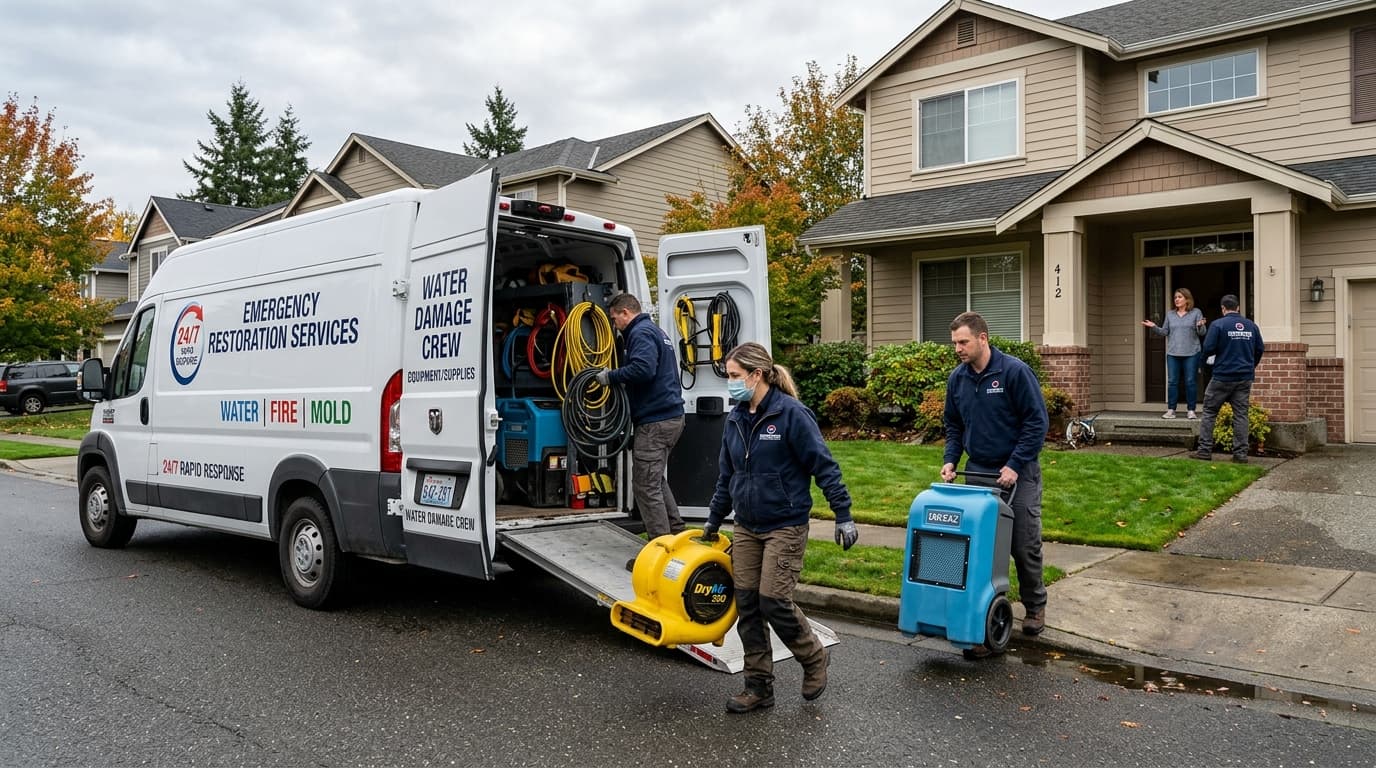
When pressurized plumbing ruptures or violent storms send torrents into your property, every minute counts. Connect with local Boise emergency water restoration crews on-call 24 hours a day, 7 days a week, 365 days a year.
Nearby Treasure Valley Service Areas
Written by Boise Restoration Editorial Team
Structural Drying SpecialistsIICRC-certified restoration specialists focusing on psychrometric structural drying, hardwood floor preservation, and precision moisture mapping across Ada and Canyon counties.
Sources & References
The factual recommendations, contamination categories, and psychrometric principles in this guide are directly grounded in the following official government disaster protocols and ANSI/IICRC restoration standards:
- 1ANSI/IICRC S500 Standard and Reference Guide for Professional Water Damage RestorationInstitute of Inspection, Cleaning and Restoration Certification (IICRC) • 2026
Authoritative standard for psychrometric structural drying and specialty hardwood injection extraction.
- 2Wood Handbook: Wood as an Engineering Material (General Technical Report FPL-GTR-190)USDA Forest Service, Forest Products Laboratory • 2021
Scientific reference on wood moisture equilibrium, fiber saturation point, and dimensional expansion.
- 3Technical Guidelines for Water and Wood Flooring InteractionNational Wood Flooring Association (NWFA) • 2024
Industry guidelines on cupping, crowning, subfloor moisture limits, and sanding recovery standards.
- 4A Brief Guide to Mold, Moisture, and Your HomeUnited States Environmental Protection Agency (EPA) • 2025
Guidelines on the 24 to 48 hour timeline for microbial amplification under wet building materials.
Frequently Asked Questions
Using commercial negative-pressure injection drying mats and industrial LGR dehumidifiers, most residential hardwood floors require 3 to 7 days of continuous drying. The exact timeframe depends on the wood species (oak dries faster than dense maple or exotic hardwoods), subfloor thickness, and how quickly mitigation began after the initial leak.
Continue Learning About Water Damage
Water Damage Timeline: What Happens in 1 Hour, 24 Hours, 48 Hours, and 1 Week
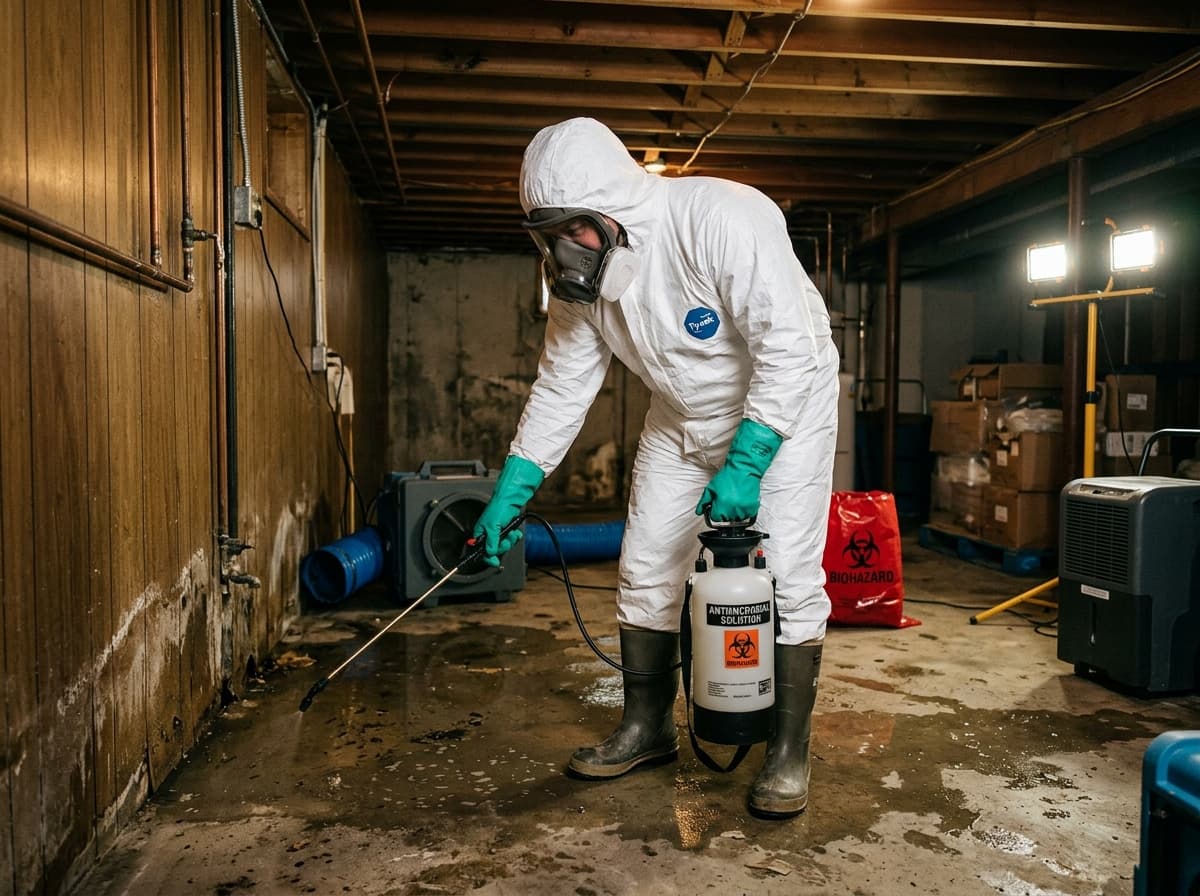
When a pipe bursts or an appliance overflows, damage does not stay static. Within minutes, water wicks into baseboards; within 24 hours, drywall weakens; and within 48 hours, microbial colonization begins. Here is the verified timeline of structural water destruction.
How Long Does Water Damage Take to Dry? Timelines, Science & Factors
While surface water may vanish in 24 hours, deep structural framing, subflooring, and wall cavities require 3 to 5 days under controlled industrial dehumidification. Here is the engineering science behind drying timelines.
Categories of Water Damage Explained: Clean, Gray, and Black Water Cleanup Protocols
Not all water is created equal. A supply line break requires a completely different recovery protocol than a dishwasher overflow or sewage backup. Here is how IICRC standards classify water damage and why category dictates whether your drywall can be saved.