
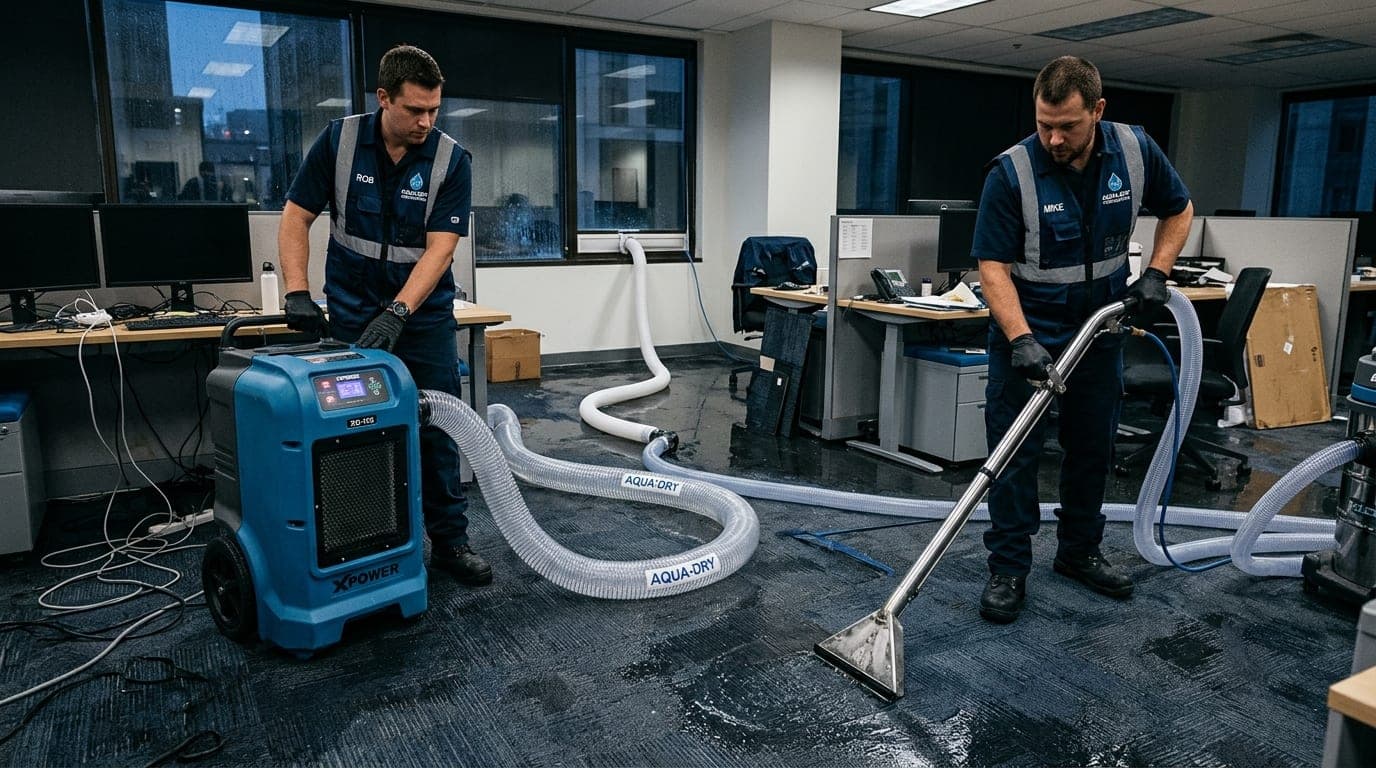
Commercial water damage requires an immediate, engineered response prioritizing business continuity, employee life safety, and critical asset preservation. Unlike residential jobs, commercial losses involve three-phase electrical power distribution, multi-floor vertical water migration, fire sprinkler depressurization, and high-dollar electronic data protection. IICRC-certified commercial restoration crews deploy trailer-mounted desiccant dehumidifiers capable of driving indoor relative humidity below 15%, execute phased off-hours containment drying so tenant businesses remain open, and maintain meticulous moisture mapping logs to ensure commercial insurance claims and business interruption coverage are fully supported.
- The Downtime Multiplier: The true cost of commercial water damage is not building repair, but business interruption—averaging $3,000 to $15,000+ per day in lost operational revenue.
- Desiccant vs. Refrigerant Drying: Large commercial spaces and server rooms require trailer-mounted desiccant dehumidification, which performs at deep vapor pressures where standard units fail.
- Multi-Story Vertical Migration: Water leaking on the 4th floor cascades down elevator shafts, electrical busways, and drywall chases, affecting dozens of tenant suites simultaneously.
- CAM & Lease Liabilities: Commercial restoration requires clear coordination between building owners, property managers, and tenant lease agreements regarding Common Area Maintenance (CAM).
- Off-Hours Phased Mitigation: Certified crews work nights and weekends using whisper-quiet negative air scrubbers to allow staff to work safely in unaffected wings.
Dealing with Active Water Intrusion?
Reading guides takes time—standing water causes framing damage within hours. Speak directly with a local Boise specialist.
1. The High Stakes of Commercial Downtime: Revenue Loss vs. Physical Damage
In commercial real estate, time is directly denominated in dollars. A water loss that closes an office or retail facility for a week can cripple an enterprise.
In growing commercial centers across [Boise](/) (such as Downtown Boise, the Broadway corridor, and Boise Research Center) and Meridian (along the Ten Mile corridor and Eagle Road), commercial square footage houses high-density operations: corporate headquarters, law firms, healthcare clinics, financial services, and retail businesses.
When a water emergency strikes, the physical cost of replacing soggy ceiling tiles or carpet is secondary. The primary financial threat is **Business Interruption (BI)**. Every day employees cannot work, billable hours vanish, inventory spoils, patient appointments are canceled, and clients migrate to competitors.
Commercial restoration demands a strategic, agile workflow engineered around **business continuity**. Professional commercial water damage restoration focuses on isolating wet zones, powering critical server networks, and deploying high-capacity drying systems so unaffected departments can continue working without disruption.
The Business Continuity Target
By deploying targeted containment barriers, negative-pressure air scrubbers, and overnight drying protocols, certified crews help commercial tenants resume partial or full operations within 12 to 24 hours of an emergency call.
2. Commercial Flood Triggers: Why Facilities Flood
Commercial building infrastructure operates under higher pressures, larger pipe diameters, and heavier usage cycles than single-family homes.
Commercial Fire Sprinkler Discharges
Commercial wet-pipe fire sprinkler systems operate under high pressure (often 100 to 175 PSI). A single damaged sprinkler head or a freeze-induced pipe rupture in an unheated warehouse loading dock discharges **20 to 60 gallons of black, stagnant water every minute**.
Within 15 minutes, thousands of gallons of rust-laden, chemical-heavy water flood multiple office floors before the municipal fire department can locate and close the main OS&Y riser control valve.
Multi-Story Vertical Plumbing Stack Blowouts
In multi-story corporate buildings, vertical sanitary waste and potable water supply stacks run through central drywall chases. If a 3-inch or 4-inch supply line joint fails on the fourth floor, gravity directs water straight down.
Water tracks horizontally along corrugated metal decking, saturating acoustic suspended ceiling grids, cascading through recessed fluorescent lights, and soaking electrical panel rooms on every level below.
Commercial HVAC Chiller & Boiler Line Failures
Large facilities utilize closed-loop hydronic heating and cooling systems running pressurized chilled or boiling water across rooftop air handlers. A ruptured coil or frozen condenser line spills glycol-treated chemical water directly into building return air plenums.
3. Commercial vs. Residential Restoration: A Scale Comparison
Commercial water mitigation cannot be executed using residential equipment or standard procedures.
Commercial vs. Residential Water Restoration Comparison
| Operational Factor | Commercial Facility Restoration | Residential Restoration |
|---|---|---|
Power Infrastructure Commercial power boxes prevent tripping tenant circuit breakers. | Requires 208V / 480V 3-phase commercial power distribution or on-site diesel generators. | Operates on standard 120V 15A / 20A residential branch circuits. |
Drying Technology Desiccants achieve super-low grains per pound (GPP <15) required for large volumes. | Trailer-mounted industrial desiccant dehumidifiers (5,000–15,000 CFM) with external ducting. | Portable Low-Grain Refrigerant (LGR) dehumidifiers (100–150 pints/day). |
Flooring Assemblies Carpet tiles can be extracted in place with weighted ride-on rovers. | Direct-glue commercial carpet tile, broadloom over slab, or raised computer access flooring. | Stretch-in carpet over cushion pad, solid hardwood, or floating LVP. |
Regulatory Compliance Emergency exits and fire egress corridors must remain 100% unobstructed. | Strict OSHA commercial standards, ADA clearance corridors, and local fire marshal egress rules. | Standard residential IICRC guidelines and homeowner approvals. |
4. Server Rooms & Data Center Triage: Protecting Critical IT Assets
A business can replace wet drywall, but losing proprietary database servers, client records, or network switches can permanently shutter a company.
Server rooms and telecom closets require surgical, non-destructive moisture intervention:
Power Precaution
Never attempt to power down or reboot water-exposed server racks until certified electrical thermographers have verified zero moisture inside power distribution units (PDUs).
Sub-Floor Air Plenum Drying
Many enterprise data centers in the Boise area feature raised access computer flooring (hollow metal pedestals supporting 2x2-foot tiles). Water flows into the underfloor void, which also serves as the air return plenum and electrical wire raceway.
Technicians remove select access tiles and deploy positive-pressure desiccant ducting directly into the underfloor cavity, driving moisture out without powering down sensitive servers.
Precision Psychrometric Control to Prevent Static & Condensation
Drying an IT environment is a delicate balancing act. If relative humidity is allowed to stay above 60%, moisture condenses onto high-voltage motherboards, causing short circuits and corrosion. However, if air is dried below 20% too rapidly without ionization, electrostatic discharge (ESD) risks spike.
Our certified crews monitor server room dew points hourly, ensuring rapid water clearance while maintaining safe environmental ranges for enterprise electronics.
5. The Professional Commercial Large-Loss Recovery Protocol
Certified commercial restoration teams follow an organized incident command structure designed to restore facility operations quickly and safely.
Initial Hazard Assessment & Site Containment
Securing the facility, verifying electrical safety, and establishing clean corridors.
- Restoration project managers coordinate with facility engineers to shut off main building risers and lockout/tagout compromised electrical switchgear.
- Heavy plastic containment walls are erected to isolate flooded suites from unaffected operational tenant spaces.
Massive Extraction & Debris Removal
Deploying high-volume extraction rovers and commercial pump-outs.
- Ride-on commercial extraction units extract up to 1,000 gallons per hour directly from commercial carpet tiles and concrete slabs.
- Waterlogged acoustic ceiling tiles and compromised drywall are stripped to open framing cavities.
High-Capacity Desiccant Dehumidification
Ducting trailer-mounted desiccant air streams into the building envelope.
- Large industrial desiccant dehumidifiers (powered by external generators) supply high-velocity, ultra-dry air through temporary window penetrations.
- Desiccant technology pulls water out of concrete slabs, metal decking, and dense commercial casework twice as fast as standard equipment.
Daily Commercial Psychrometric Monitoring
Logging data for building management, tenants, and commercial insurance adjusters.
- Daily moisture maps, thermal images, and psychrometric logs are generated and emailed to property managers and risk managers.
- Transparent documentation accelerates commercial insurance approvals and business interruption claim disbursements.
Antimicrobial Sanitization & Rebuild Hand-Off
Certifying indoor air quality and structural clearance.
- Hospital-grade EPA-registered biocides are applied to all exposed framing to prevent post-loss microbial growth.
- Certified dry standard clearance is issued, allowing commercial tenant improvement (TI) contractors to complete reconstruction.
Commercial Water Emergency in Boise or the Treasure Valley?
Minimize downtime and preserve your business assets. Our certified commercial large-loss response team arrives within 35 to 45 minutes with industrial extraction and desiccant drying systems.
Related Water Restoration Services in Boise
Commercial Water Damage Restoration
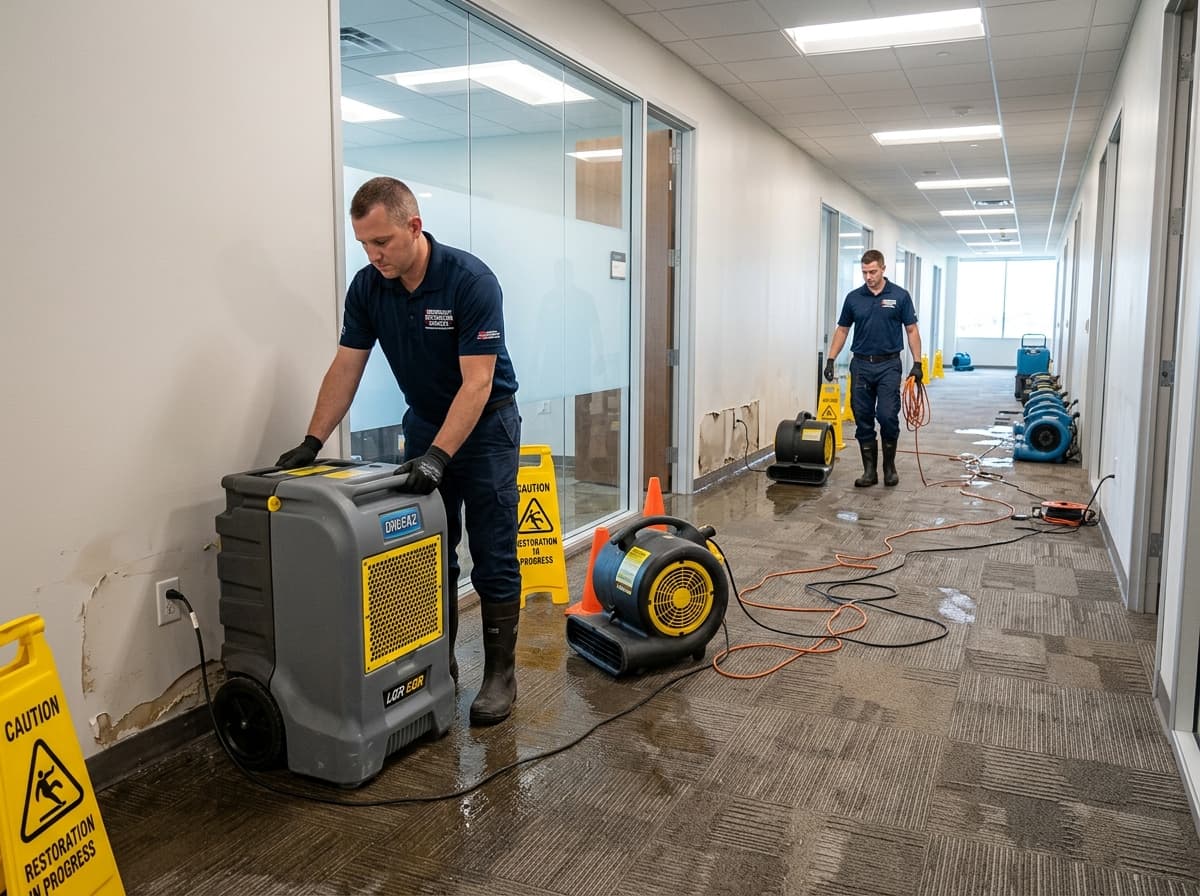
When water intrusion strikes your commercial facility, business interruption costs and operational downtime immediately threaten revenue, tenant safety, lease obligations, and valuable inventory. Boise Water Damage Restoration Services connects Treasure Valley property managers, facility directors, and enterprise business owners with certified commercial water damage restoration specialists. Equipped with industrial trailer-mounted desiccant dehumidifiers, heavy-duty truck-mounted water extraction fleets, and advanced negative-air containment barriers, our crews execute phased mitigation and 24/7 rapid drying designed to keep unaffected commercial operations open while restoring your building to pre-loss condition.
Water Extraction & Removal
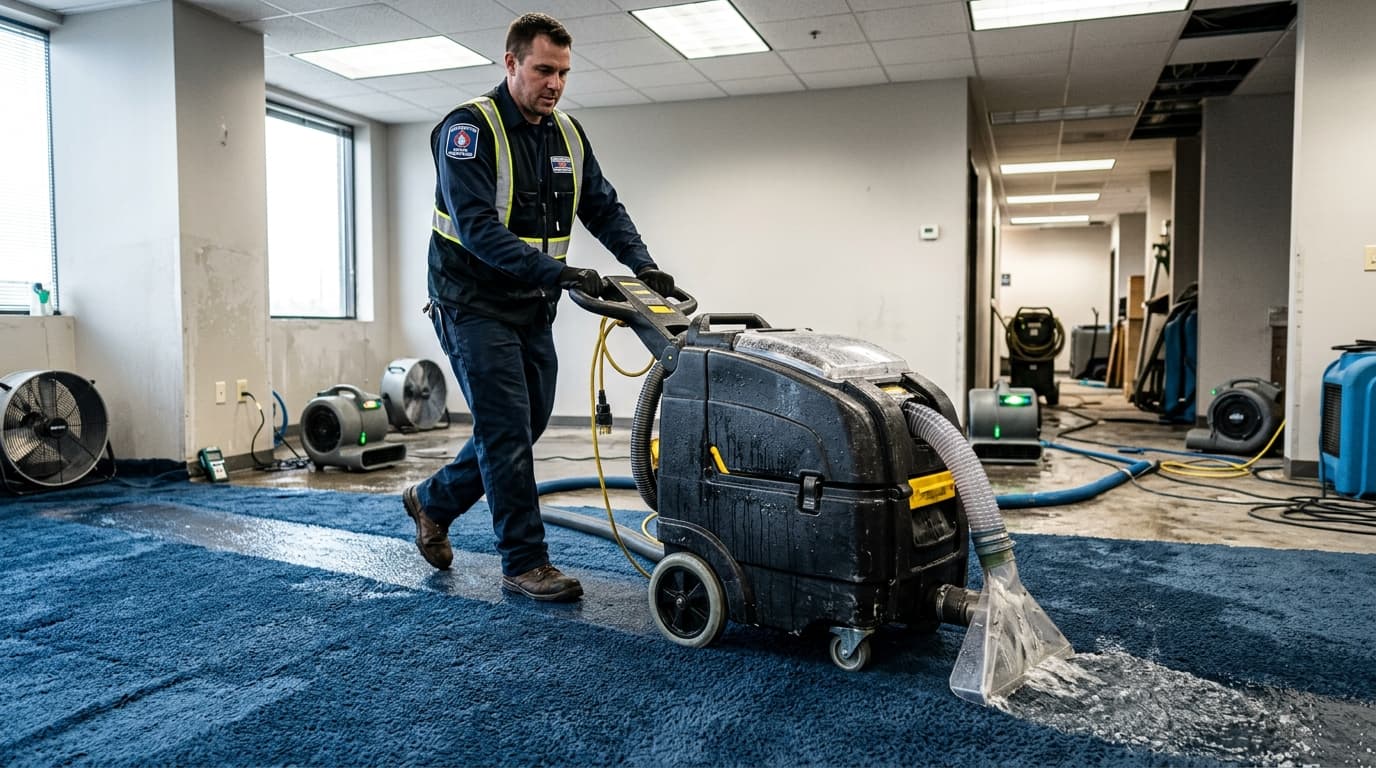
Physical extraction is 1,200 times faster than evaporation. When standing water accumulates on hardwood, tile, carpet, or concrete subfloors, commercial truck-mounted extraction wands and submersible pumps pull thousands of gallons out before deeper structural absorption occurs.
Structural Drying & Dehumidification
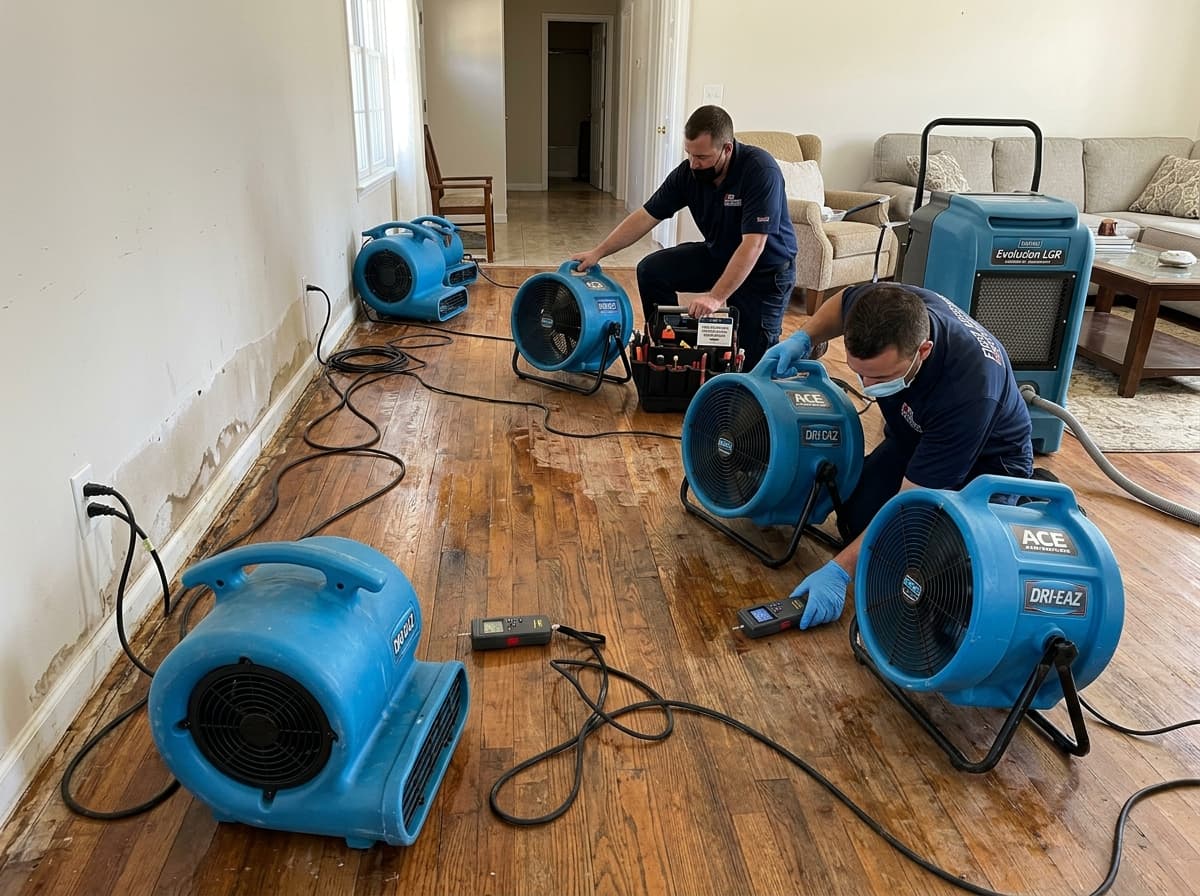
Removing standing liquid is only the first step. Microscopic water remains bound inside wooden studs, subfloors, and concrete foundations. Connect with Boise structural drying specialists who deploy industrial LGR dehumidifiers, high-velocity axial air movers, and daily grains-per-pound (GPP) moisture monitoring.
Nearby Treasure Valley Service Areas
Written by Boise Restoration Editorial Team
Commercial Large-Loss SpecialistsCertified commercial large-loss restoration directors and IICRC-certified structural drying specialists managing corporate facilities, medical clinics, and industrial recovery across Ada and Canyon counties.
Sources & References
The factual recommendations, contamination categories, and psychrometric principles in this guide are directly grounded in the following official government disaster protocols and ANSI/IICRC restoration standards:
- 1ANSI/IICRC S500 Standard and Reference Guide for Professional Water Damage RestorationInstitute of Inspection, Cleaning and Restoration Certification (IICRC) • 2026
Establishes commercial large-loss management protocols, psychrometrics, and structural drying benchmarks.
- 2Standard for the Installation of Sprinkler Systems (NFPA 13)National Fire Protection Association (NFPA) • 2024
Governing code for commercial fire sprinkler riser shutoffs, pressure standards, and water flow rates.
- 3Commercial Real Estate Building Operations and Environmental RiskBuilding Owners and Managers Association (BOMA) International • 2024
Guidance on business continuity, tenant lease liabilities, and common area maintenance (CAM) water mitigation.
- 4General Industry Safety and Health Regulations (29 CFR 1910)Occupational Safety and Health Administration (OSHA) • 2024
Federal standards for commercial power distribution safety, air quality thresholds, and emergency egress corridors.
Frequently Asked Questions
Yes, in many cases. Professional restoration teams utilize negative-pressure plastic containment barriers, zippered access doors, and whisper-quiet HEPA air scrubbers to isolate the water-damaged zone. Drying equipment can be configured to run overnight or during off-peak hours, allowing staff and clients to utilize unaffected wings of the building safely.
Continue Learning About Water Damage
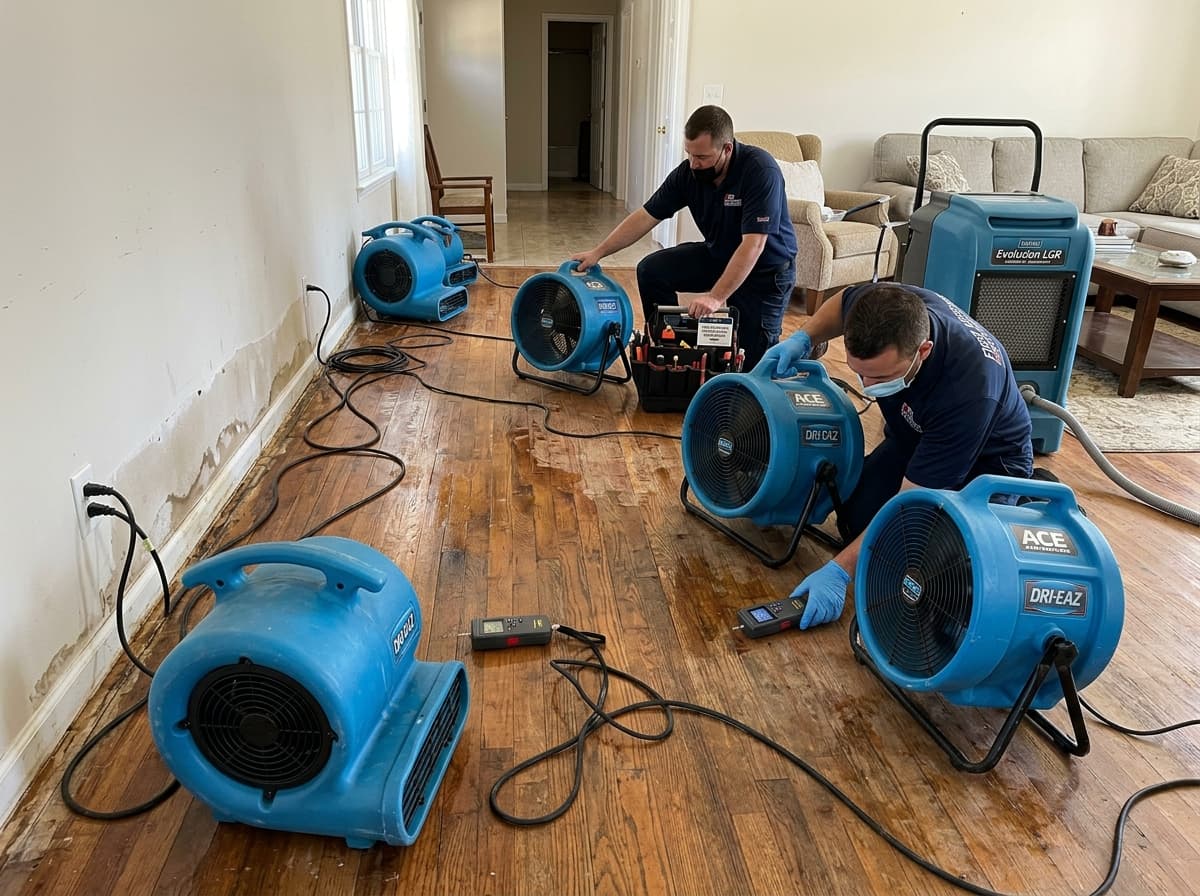
How Long Does Water Damage Take to Dry? Timelines, Science & Factors
While surface water may vanish in 24 hours, deep structural framing, subflooring, and wall cavities require 3 to 5 days under controlled industrial dehumidification. Here is the engineering science behind drying timelines.
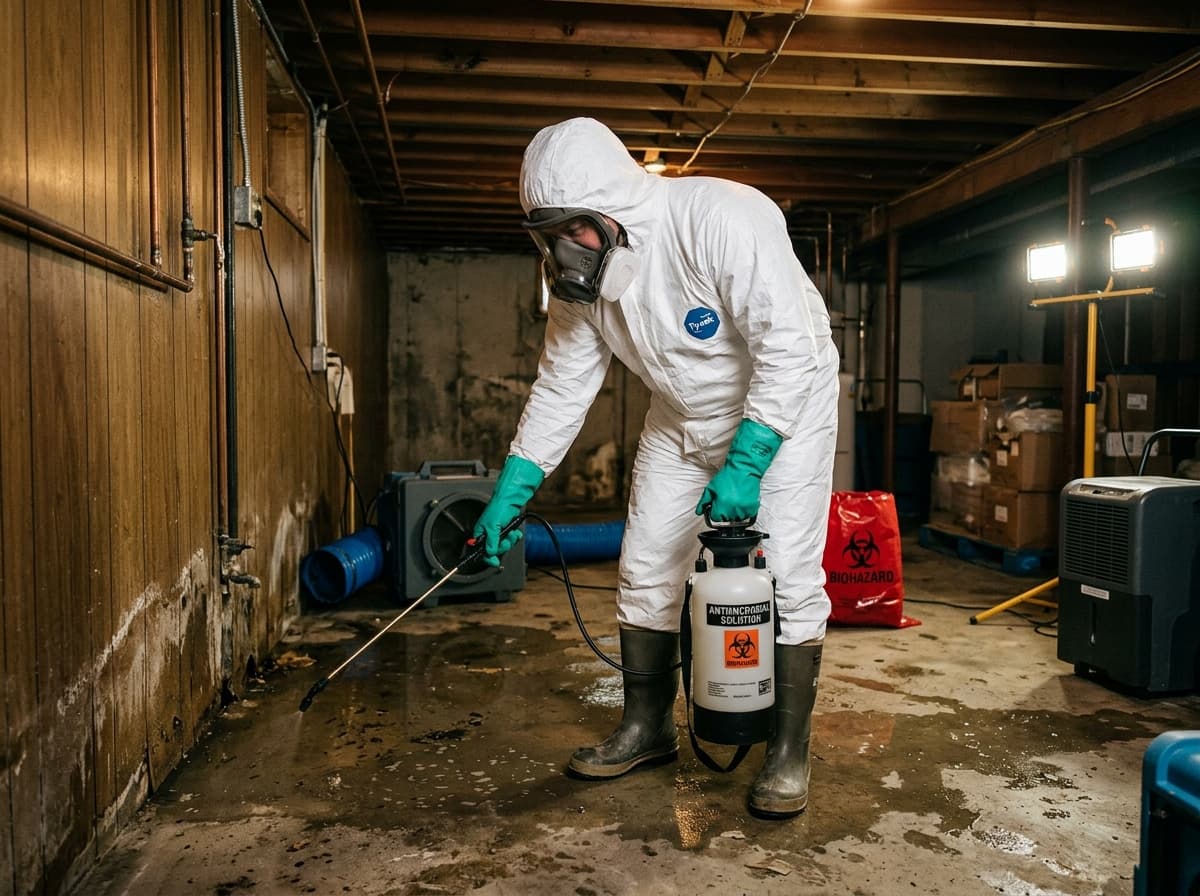
Categories of Water Damage Explained: Clean, Gray, and Black Water Cleanup Protocols
Not all water is created equal. A supply line break requires a completely different recovery protocol than a dishwasher overflow or sewage backup. Here is how IICRC standards classify water damage and why category dictates whether your drywall can be saved.
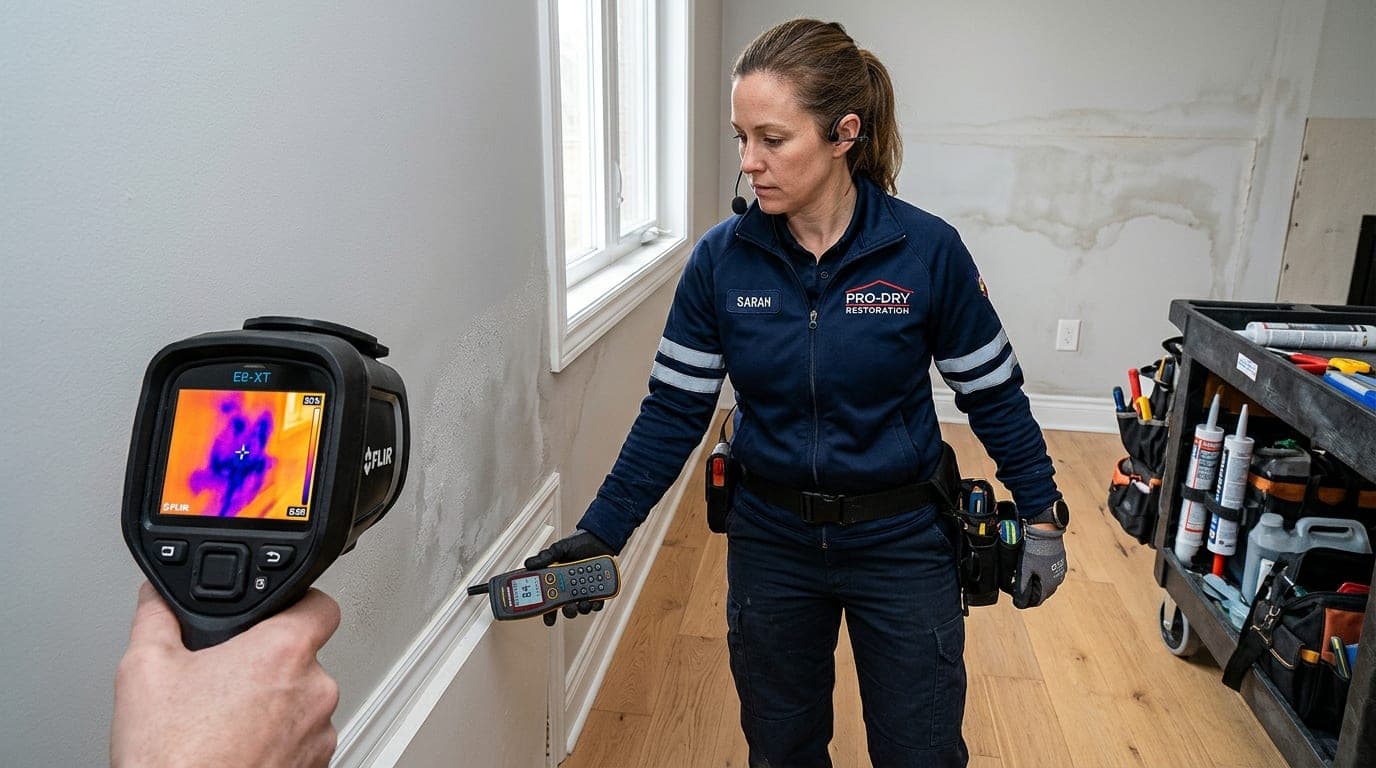
Moisture Detection & Thermal Imaging: How Restoration Crews Find Hidden Water in Boise, ID
Drywall can feel completely dry to the touch while harboring 90% water saturation inside the wall cavity. Discover how certified thermographers use infrared FLIR cameras, radio-frequency meters, and psychrometric science to pinpoint hidden moisture across the Treasure Valley.