
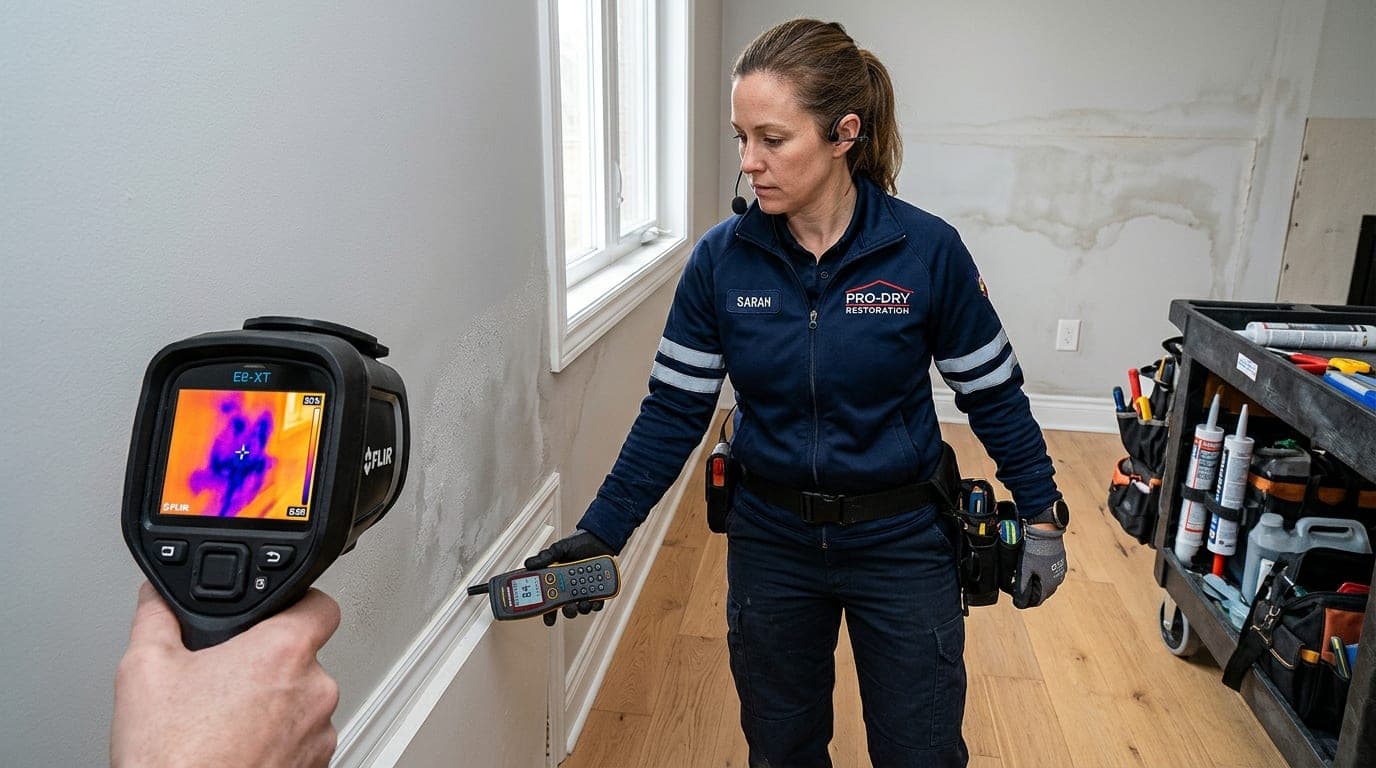
Restoration professionals locate hidden moisture using a multi-tool diagnostic approach combining infrared thermal imaging with electronic moisture meters. Thermal cameras (such as FLIR systems) do not see moisture directly; rather, they detect subtle surface temperature differentials caused by the evaporative cooling of evaporating water. When an infrared scan reveals an anomaly, technicians verify and quantify the moisture using non-destructive pinless radio-frequency meters (which scan up to 1 inch deep without damaging finishes) and deep-wall pin probes that measure electrical resistance. Readings are benchmarked against a 'dry standard' established in an unaffected room, ensuring every drop of trapped water is tracked until structural materials are scientifically certified dry.
- The 'Dry to the Touch' Fallacy: Drywall can feel warm and dry on its painted surface while holding 80% to 100% moisture saturation in its internal gypsum core.
- The Physics of Infrared Thermography: Thermal cameras detect the thermal footprint of evaporative cooling; wet materials appear as distinct dark blue or purple cold plumes.
- Dual Verification Protocol: An infrared cold signature must always be physically verified using an electronic moisture meter to rule out cold drafts or missing insulation.
- Establishing the 'Dry Standard': Technicians test unaffected wood and drywall in a dry room (typically 7%–9% WMC in Boise) to establish the exact target dry benchmark.
- Psychrometric Daily Tracking: Moisture mapping is not a one-time test; daily readings of grains per pound (GPP), relative humidity, and material moisture dictate equipment placement.
Dealing with Active Water Intrusion?
Reading guides takes time—standing water causes framing damage within hours. Speak directly with a local Boise specialist.
1. The Hidden Water Hazard: Why Visual Inspections Fail
Human eyes and fingertips are fundamentally incapable of detecting water once it migrates behind modern building assemblies.
In residential homes across [Boise](/) and Meridian, construction relies on multi-layer wall and floor assemblies: latex paint, paper-faced gypsum drywall, fiberglass batt insulation, polyethylene vapor barriers, and exterior wood sheathing. When a plumbing line leaks inside a wall or an upstairs toilet overflows, water spreads through capillary action.
Because latex paint is semi-impermeable, moisture remains locked inside the wall cavity. You might wipe up standing water on the floor and assume the crisis has passed. Meanwhile, behind the baseboard, saturated insulation acts as a permanent wet compress against wood framing studs.
Within 48 hours, hidden mold begins colonizing the damp cellulose paper backing. Without specialized structural drying and moisture detection instruments, hidden water quietly rots sill plates, corrodes electrical wiring, and degrades household air quality.
The Danger of Guessing
Removing drying fans before subflooring and wall framing have returned to their scientific dry standard leads to secondary structural rot, floor buckling, and recurring mold infestations that insurance carriers may refuse to pay for under a second claim.
2. The Science of Infrared Thermography: How Cameras 'See' Water
Thermal imaging cameras are among the most powerful diagnostic tools in the restoration industry, but how they function is widely misunderstood.
A common myth is that infrared cameras have 'X-ray vision' that penetrates walls to look directly at water droplets. In reality, thermal cameras detect infrared radiation (heat energy) emitted from the surface of objects and convert that thermal data into visible color palettes.
When water is trapped inside a wall or subfloor, it slowly evaporates. The physical process of evaporation requires thermal energy, which cools down the surface of the drywall or flooring directly in contact with the moisture—a phenomenon known as **Evaporative Cooling**.
To a high-resolution FLIR thermal camera, this cold area registers as several degrees cooler than the dry surrounding drywall. On the camera screen, the dry wall displays as warm orange or yellow, while the hidden water plume appears as a sharp, high-contrast dark blue or purple footprint. This allows technicians to trace the exact boundaries of water migration along joists, behind cabinets, and under tile within minutes.
Ruling Out False Positives
A cold blue thermal spot is not always water; it can be caused by missing attic insulation, an air conditioning duct leak, or a structural draft. Certified Level I thermographers never demolish walls based solely on thermal images; every thermal anomaly must be verified with an electronic moisture meter.
3. The Diagnostic Toolkit: Pinless vs. Pin vs. Psychrometric Meters
Professional moisture mapping requires a specialized suite of electronic diagnostic tools, each engineered for specific building materials.
Moisture Detection Equipment Comparison Matrix
| Instrument Type | Operating Principle & Depth | Best Application & Limitations |
|---|---|---|
Infrared Thermal Camera (FLIR) Non-destructive; requires thermal gradient to operate effectively. | Detects infrared surface radiation and evaporative cooling differentials. Scans entire rooms in seconds. | Initial perimeter scouting; rapid water migration tracing behind walls and under ceilings. Cannot measure moisture %. |
Non-Invasive Pinless Meter Provides relative scale readings (0–100); metal studs can cause false high readings. | Emits radio-frequency capacitance signals up to 3/4" to 1" deep. Measures dielectric constant changes. | Scanning finished hardwood, expensive cabinetry, porcelain tile, and vinyl without leaving holes or surface scratches. |
Invasive Pin Moisture Meter The legal industry gold standard for documenting dry standards for insurance adjusters. | Measures electrical resistance between two sharp steel pins or deep insulated probes. Reads exact WME %. | Measuring exact moisture content in wood framing studs, subfloor OSB, and dense structural timbers. |
Thermo-Hygrometer Essential for monitoring daily psychrometric drying progress. | Precision electronic sensors measuring ambient air temperature, relative humidity (RH), and dew point. | Calculating specific humidity (Grains Per Pound - GPP) to evaluate dehumidifier efficiency and drying potential. |
4. The 'Dry Standard': How Technicians Know When Drying Is Done
How dry is dry? In the dry Intermountain West climate of Idaho, building materials naturally maintain different moisture levels than in humid coastal states.
Establishing the Unaffected Baseline
When certified technicians arrive at your home in Eagle, Star, or Nampa, their very first task before turning on equipment is testing an **unaffected room**.
They drive pin meters into drywall and wood framing in an area completely isolated from the leak (such as an opposite bedroom). In Boise's climate, dry drywall typically registers between 0.2% and 0.8% moisture content, while structural pine framing studs register between 7% and 9% Wood Moisture Equivalent (WME). This unaffected reading becomes the official **Dry Standard**.
Tracking Psychrometric Drying Logs
Every 24 hours, technicians revisit predetermined test points across the water-damaged area, recording exact moisture percentages on digital psychrometric logs. Equipment is not removed when the surface feels dry; it remains running until deep-core readings fall within 2% to 4% of the original dry standard.
This documented scientific clearance protects your property value and provides the undeniable proof required by insurance carriers to close your claim without dispute.
5. When Homeowners Need Professional Moisture Mapping
Certain water intrusion scenarios demand professional thermal diagnostic imaging rather than simple guesswork.
Scenarios Requiring Professional Thermal Moisture Mapping
0 of 4 completedIf your Veolia water bill surges but no faucets are dripping, a pinhole leak is actively running behind a wall or beneath a concrete slab. As noted by electronic leak detection contractors like [Santa Ana Plumber Pros](https://santaanaplumberpros.com/), combining infrared thermal imaging with acoustic pipe sensors pinpoints concealed slab leaks with high accuracy without destructive digging.
Earthy, sour odors indicate hidden microbial growth actively thriving on damp insulation or subflooring behind walls.
Water from an upstairs toilet, shower, or washing machine immediately travels through joist bays, requiring thermal ceiling scans below.
Never allow a general contractor to hang new drywall or paint over a repair without verified moisture meter readings confirming the framing is dry.
6. The Step-by-Step Diagnostic Inspection Workflow
When you schedule an emergency inspection, certified technicians execute an organized diagnostic protocol:
Insurance Documentation
Professional thermal inspection reports include side-by-side digital photographs and thermal color maps. Insurance adjusters accept this objective scientific data without question, accelerating claim approvals.
Initial Thermal Perimeter Sweep
Scanning all walls, ceilings, and floors with high-resolution FLIR cameras.
- Technicians scan from ceiling to floor across every room adjacent to the water source.
- Infrared imagery documents the full lateral and vertical spread of moisture migration.
Non-Invasive Surface Meter Verification
Using radio-frequency meters to confirm moisture in highlighted thermal areas.
- Capacitance pads are placed against baseboards, tile, and hardwood to verify that cold spots are liquid water rather than air drafts.
- Relative moisture scales (0–100) delineate the exact perimeter boundary.
Invasive Core Moisture Testing
Recording exact Wood Moisture Equivalent (WME) percentages in structural framing.
- Insulated deep-wall pin probes are inserted beneath baseboards to measure framing studs and subfloor sheathing.
- Readings are cataloged on psychrometric moisture mapping charts.
Targeted Equipment Deployment & Daily Monitoring
Positioning commercial drying equipment precisely where moisture is trapped.
- Commercial Low-Grain Refrigerant (LGR) dehumidifiers and high-velocity air movers are directed at saturated zones.
- Daily moisture logs track evaporative progress until dry standard clearance is achieved.
Need Hidden Moisture Located in Boise?
Do not guess where water traveled. Our certified diagnostic technicians arrive within 35 to 45 minutes equipped with FLIR infrared thermal cameras and digital moisture meters.
Related Water Restoration Services in Boise
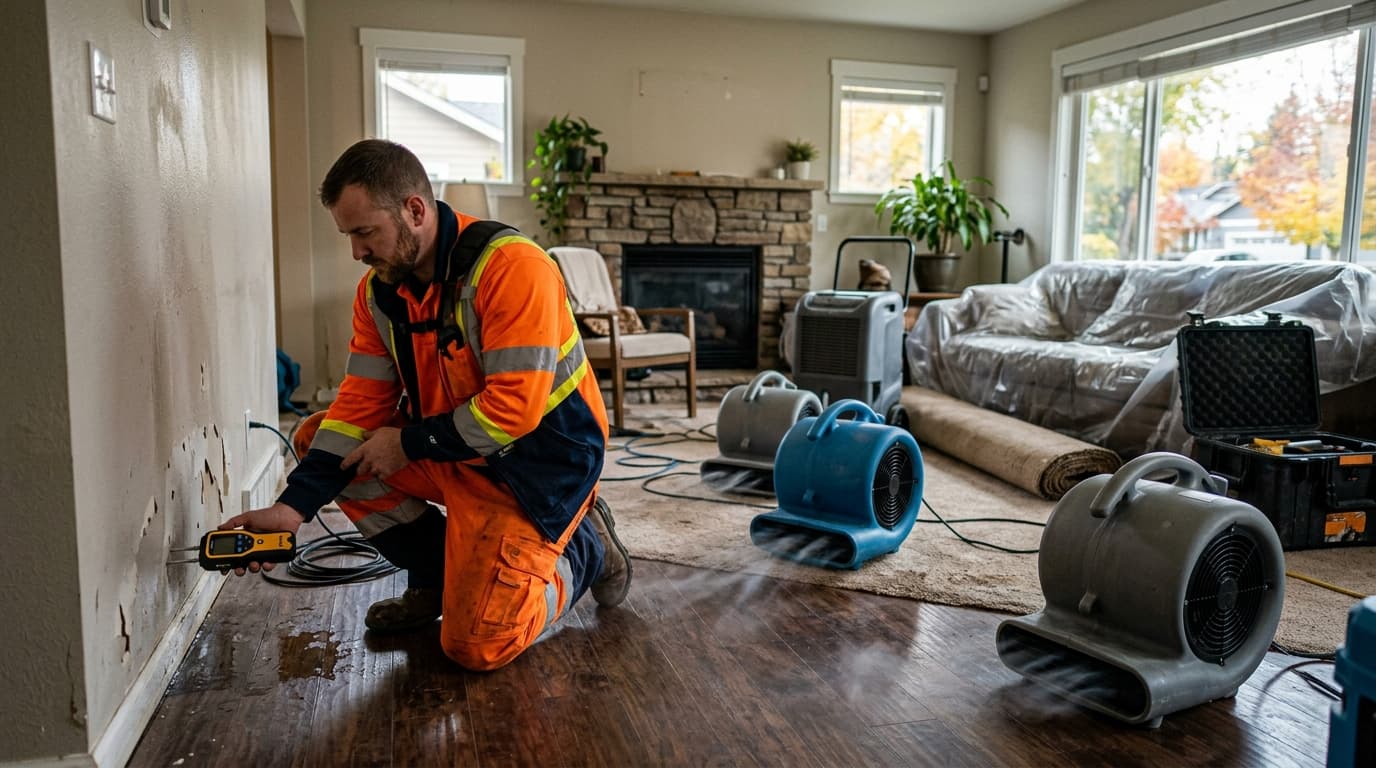
Water Damage Restoration
When water compromises your Boise property, full restoration requires more than removing surface liquid. Our network connects Treasure Valley property owners with technicians who handle diagnostic moisture mapping, controlled material removal, structural psychrometric drying, and antimicrobial sanitization.
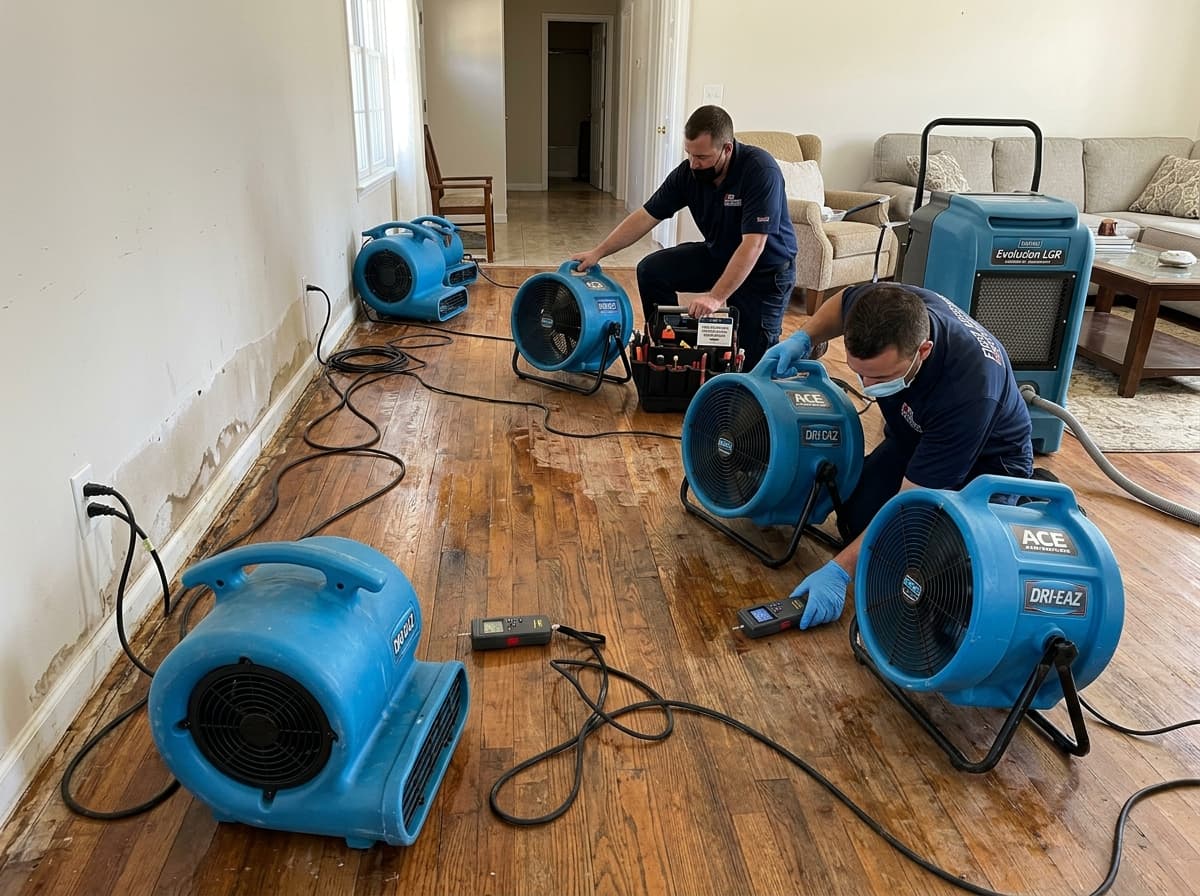
Structural Drying & Dehumidification
Removing standing liquid is only the first step. Microscopic water remains bound inside wooden studs, subfloors, and concrete foundations. Connect with Boise structural drying specialists who deploy industrial LGR dehumidifiers, high-velocity axial air movers, and daily grains-per-pound (GPP) moisture monitoring.
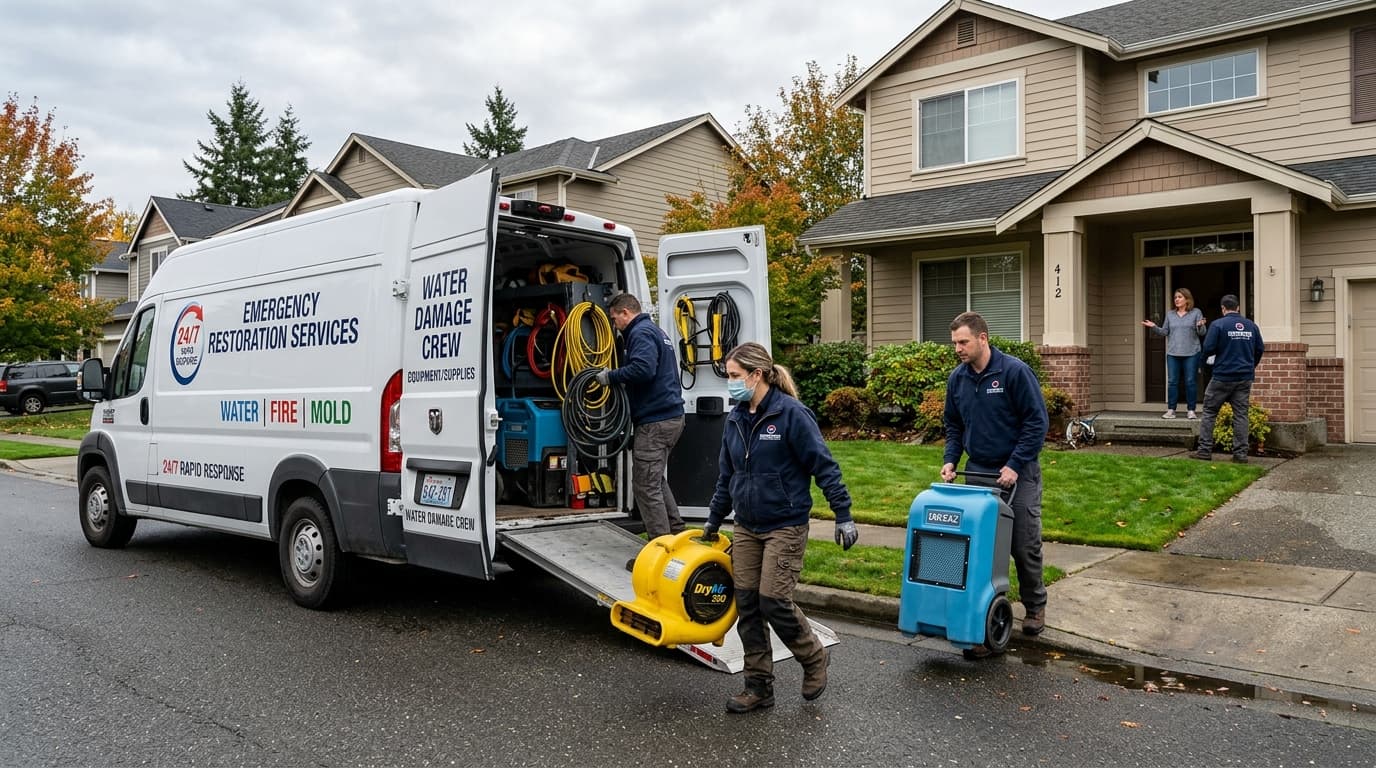
Emergency Water Damage Restoration
When pressurized plumbing ruptures or violent storms send torrents into your property, every minute counts. Connect with local Boise emergency water restoration crews on-call 24 hours a day, 7 days a week, 365 days a year.
Nearby Treasure Valley Service Areas
Written by Boise Restoration Editorial Team
Diagnostic & Thermography SpecialistsCertified Level I infrared thermographers and IICRC-certified structural drying technicians specializing in precision moisture mapping, psychrometrics, and non-destructive diagnostics across Ada and Canyon counties.
Sources & References
The factual recommendations, contamination categories, and psychrometric principles in this guide are directly grounded in the following official government disaster protocols and ANSI/IICRC restoration standards:
- 1ANSI/IICRC S500 Standard and Reference Guide for Professional Water Damage RestorationInstitute of Inspection, Cleaning and Restoration Certification (IICRC) • 2026
Governing standard for moisture mapping protocols, psychrometric calculations, and dry standard benchmarking.
- 2Standard Practice for Measuring Moisture in Concrete and Building Materials (ASTM F2170)ASTM International • 2024
Authoritative engineering specifications on relative humidity probes and capacitance moisture testing.
- 3Thermal Imaging Applications in Building Diagnostics and Moisture DetectionInfraspection Institute • 2023
Technical guidelines on infrared thermography, evaporative cooling physics, and false-positive elimination.
- 4A Brief Guide to Mold, Moisture, and Your HomeUnited States Environmental Protection Agency (EPA) • 2025
Guidelines on moisture thresholds required to stop microbial amplification in concealed building cavities.
Frequently Asked Questions
No. Thermal cameras do not see through physical objects. Instead, they detect subtle surface temperature differences caused by evaporative cooling. When wet drywall or insulation evaporates water, it cools down, creating a distinct cold blue thermal signature on the camera screen that reveals the hidden water pattern behind the wall.
Continue Learning About Water Damage
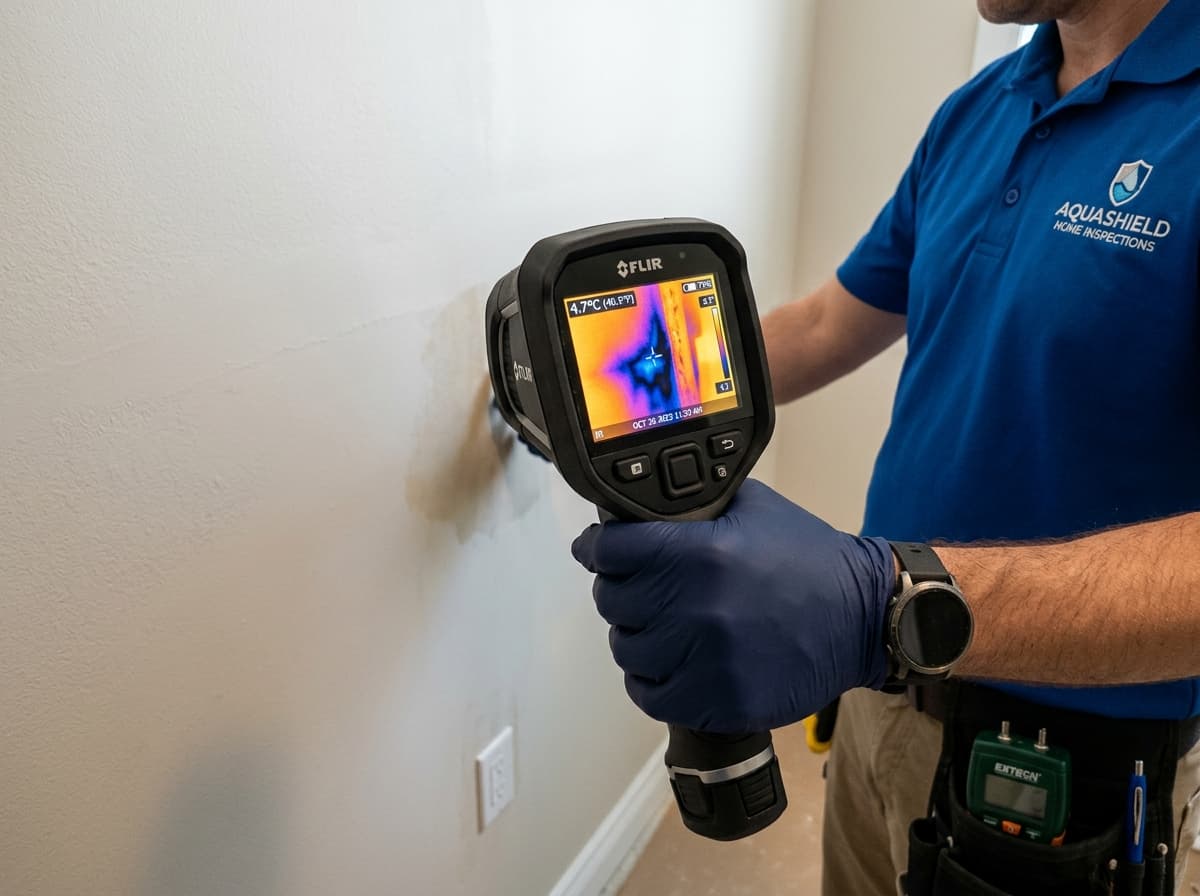
Signs of Water Damage in Walls: How to Detect Hidden Moisture
Water leaks inside wall cavities often remain concealed until peeling paint, warped baseboards, or persistent musty odors reveal hidden moisture. Here is how to diagnose wall leaks before mold and structural rot take hold.
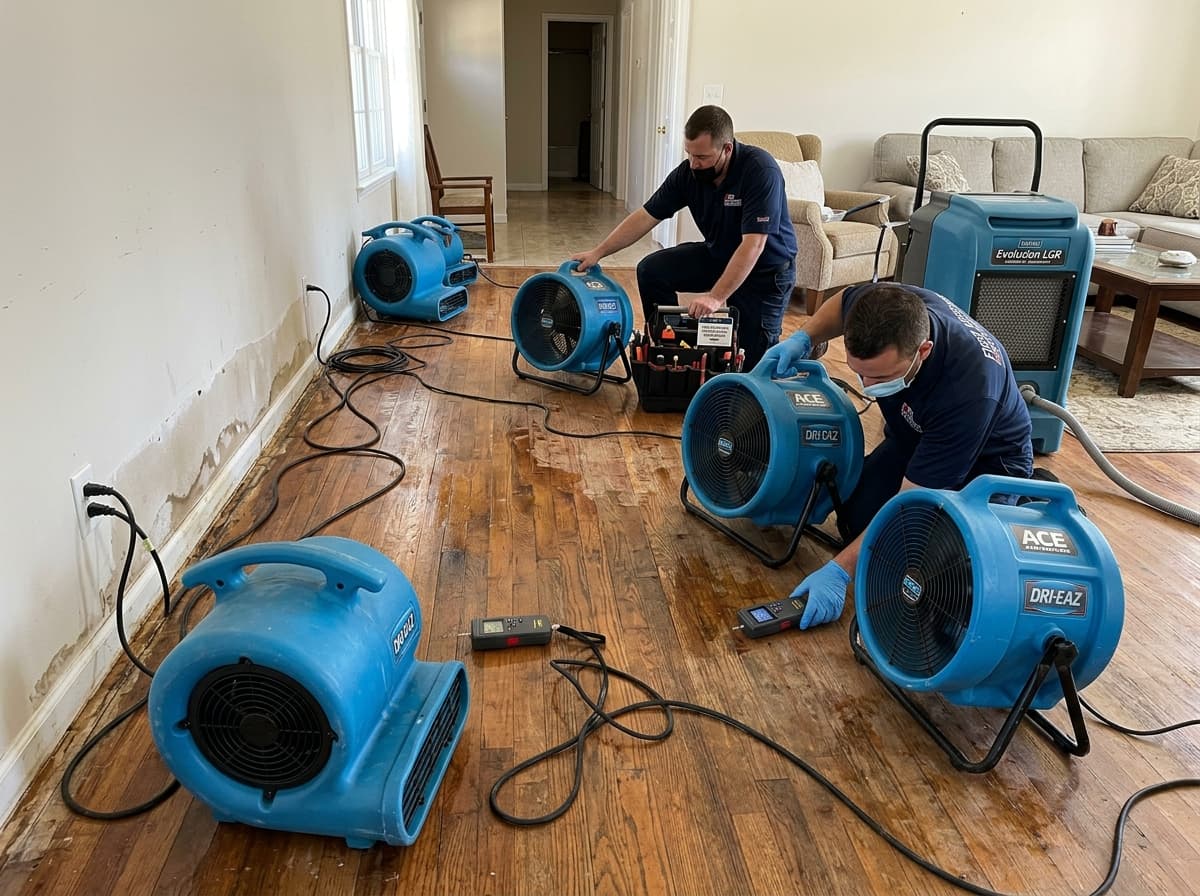
How Long Does Water Damage Take to Dry? Timelines, Science & Factors
While surface water may vanish in 24 hours, deep structural framing, subflooring, and wall cavities require 3 to 5 days under controlled industrial dehumidification. Here is the engineering science behind drying timelines.
Water Damage Timeline: What Happens in 1 Hour, 24 Hours, 48 Hours, and 1 Week
When a pipe bursts or an appliance overflows, damage does not stay static. Within minutes, water wicks into baseboards; within 24 hours, drywall weakens; and within 48 hours, microbial colonization begins. Here is the verified timeline of structural water destruction.