
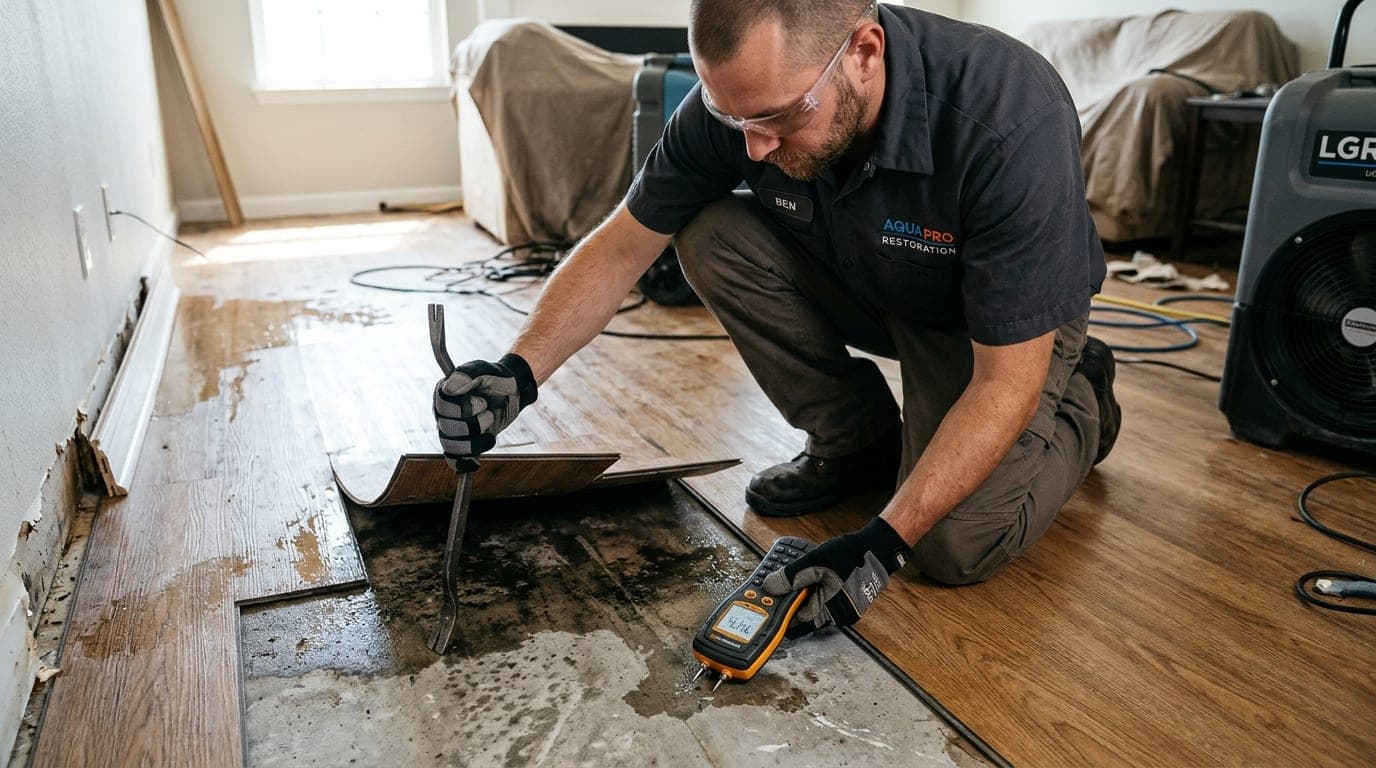
While Luxury Vinyl Plank (LVP) materials are impervious to water, water that leaks through seams becomes trapped between the planks and the subfloor (the 'sandwich effect'). It cannot evaporate naturally through the non-porous vinyl. Within 24 to 48 hours, trapped moisture breaks down OSB and plywood subflooring, dissolves adhesives, and triggers rapid black mold growth. True laminate flooring (which features a wood-fiber HDF core) swells permanently upon contact with water and almost always requires replacement. However, high-end click-lock LVP can frequently be salvaged by having technicians carefully unclick and number the planks, thoroughly dry and disinfect the wooden subfloor with commercial dehumidifiers, and reinstall the original planks once dry standards are met.
- The 'Waterproof' Myth: LVP planks do not degrade in water, but the wood subfloor, pad backing, and framing beneath them will rot.
- The Sandwich Effect: Vinyl acts as a non-permeable vapor barrier that prevents natural air-drying; domestic box fans will never dry water trapped beneath LVP.
- LVP vs. Traditional Laminate: LVP features a synthetic SPC/WPC core that can be dried and reused; laminate features a compressed wood fiber core that swells permanently and must be discarded.
- Hidden Mold Window: Underlayment foam and wood dust provide prime cellulose food for mold spores, creating active colonies within 48 to 72 hours of water entrapment.
- Numbered Disassembly Protocol: Certified technicians can systematically remove click-lock LVP without breaking the micro-beveled tongue edges, saving thousands in material replacement.
Dealing with Active Water Intrusion?
Reading guides takes time—standing water causes framing damage within hours. Speak directly with a local Boise specialist.
1. The '100% Waterproof' Myth: Understanding the Trap
The single most common misconception among Treasure Valley property owners is believing that waterproof flooring prevents water damage.
In modern developments throughout Meridian, Eagle, Kuna, and [Boise](/) subdivisions, builder-grade carpet has largely been replaced with luxury vinyl plank (LVP) or luxury vinyl tile (LVT). Sales brochures prominently advertise these floors as immune to spills, pet accidents, and flooding.
While the chemical polymer core—whether Stone Plastic Composite (SPC) or Wood Plastic Composite (WPC)—will indeed survive submerged in a bucket of water indefinitely without warping, your floor system is not an airtight submarine hull. Floorboards are installed as a floating system with 1/4-inch to 3/8-inch perimeter expansion gaps concealed beneath baseboards and quarter-round molding.
When a dishwasher supply line breaks, a toilet overflows, or an ice-maker PEX tube fails, water flows across the floor and rushes down the perimeter gaps and micro-seams between planks. Once beneath the planks, the water spreads horizontally across the entire room. Because the top vinyl layer is 100% non-porous (zero perm rating), ambient air cannot reach the water. The moisture is hermetically sealed against your wooden subfloor, initiating decay within hours. Immediate emergency water damage restoration is mandatory to prevent structural destruction.
The Zero-Perm Trap
Because vinyl is an impermeable vapor barrier, water trapped underneath LVP has zero evaporation potential into the room. Running household dehumidifiers or ceiling fans above an intact LVP floor will only dry the top wear layer, leaving standing liquid underneath.
2. LVP vs. Traditional Laminate: Why Composition Dictates Salvageability
Homeowners often use the terms 'vinyl' and 'laminate' interchangeably, but their internal core composition determines whether the floor must be thrown in the trash or can be saved.
If your home features true laminate flooring (common in older homes built between 1995 and 2015), any significant water intrusion that causes swelling along plank edges is fatal to the material. Once HDF absorbs moisture, the internal resins break down, causing permanent thickness expansion that cannot be sanded or pressed down.
Conversely, if your home features modern rigid-core SPC luxury vinyl, the planks themselves are virtually indestructible. The primary challenge is not saving the vinyl—it is saving the 3/4-inch OSB or plywood subfloor underneath and preventing toxic fungal amplification.
Core Composition and Water Salvageability: LVP vs. Laminate
| Feature / Component | Luxury Vinyl Plank (LVP) | Traditional Laminate Flooring |
|---|---|---|
Core Material HDF core acts like a dehydrated sponge when water touches joints. | Synthetic virgin PVC with limestone (SPC) or plastic polymers (WPC). Zero organic fibers. | High-Density Fiberboard (HDF) made of compressed wood fibers bound with resin. |
Moisture Reaction Once laminate edges peak, they can never be flattened again. | Planks do not swell, cup, or deteriorate. Physical dimension remains 100% stable. | Edges swell rapidly; joints peak and blister; irreversible thickness swelling occurs. |
Salvage Feasibility Laminate removal is classified as non-salvageable demolition under IICRC S500. | High (80%–90%). Planks can be unclicked, sanitized, dried, and re-laid. | Very Low (<10%). Swollen fiberboard loses mechanical strength and must be replaced. |
Underlayment Behavior Antimicrobial wash must be applied to both subfloor and back of LVP. | Attached IXPE/EVA acoustic foam pads hold moisture against subfloor; requires disinfection. | Separate foam or cork underlayment saturates, breeding mold and requiring complete disposal. |
Fastener Integrity LVP click joints can break if forced during amateur removal. | Floating system; no nails or staples through planks; relies on precision click-lock tongues. | Floating system; tongue-and-groove joints shear off when wet fiberboard softens. |
3. What Happens to Subfloors Trapped Under Vinyl?
When water is trapped beneath an impermeable floor, secondary structural damage accelerates at an alarming rate.
OSB Subfloor Edge Swelling and Delamination
Most residential homes built in Ada and Canyon counties over the last 30 years utilize Oriented Strand Board (OSB) for floor sheathing. OSB consists of compressed wood flakes glued together with wax and adhesive resins.
When OSB remains in contact with trapped water under LVP for more than 48 hours, moisture enters through the cut edges and fastener holes. The wood flakes expand violently, causing 'edge swell' of up to 25% to 35%. Even if the subfloor is eventually dried, severe edge swell creates permanent ridges that will telegraph through your reinstalled floor, requiring heavy floor grinding or subfloor replacement.
The 48-Hour Black Mold Incubator
Molds such as *Aspergillus*, *Penicillium*, and *Cladosporium* require three elements to thrive: moisture, an organic food source, and stagnant warm air. The space beneath an LVP floor provides an ideal environment. The underside of the plank is warm and dark, the wooden subfloor and construction drywall dust provide an abundant cellulose food source, and the trapped water cannot escape.
Within 48 to 72 hours, microbial spores germinate into active hyphae. Because forced-air HVAC systems circulate air across floor perimeters, toxic mold spores and microbial volatile organic compounds (MVOCs) are drawn into your living space, triggering respiratory illnesses, asthma attacks, and eye irritation. Learn more about our specialized mold remediation protocols.
4. Warning Signs: How to Tell if Water Is Trapped Under Your Floors
You do not always see standing water after a plumbing leak. Often, homeowners wipe up a surface spill believing the crisis has passed, unaware of the disaster unfolding underneath.
Telltale Indicators of Subsurface Moisture Under LVP & Laminate
0 of 5 completedStepping on floating planks compresses the underlayment, forcing trapped water up through microscopic click seams or out from under perimeter baseboards.
An unmistakable smell resembling damp soil or dirty laundry that intensifies when the home's heating or air conditioning runs.
MDF baseboards absorb moisture rapidly from the subfloor, swelling into a spongy consistency and popping caulking lines off the drywall.
Moisture vapor trying to escape forces the edges of laminate to flare upward, creating sharp, ridge-like seams that snag on socks.
Indicates that the OSB or plywood subfloor beneath the vinyl has lost structural shear strength due to prolonged saturation.
5. The Professional Restoration & Salvage Process
Saving luxury vinyl flooring requires a disciplined, methodical approach that combines careful deconstruction with industrial psychrometric drying.
Certified restoration contractors do not simply tear up your floors with prybars. For clean water losses, technicians follow a non-destructive recovery process engineered to save material costs.
Cost Savings of In-Place Salvage
Surgically salvaging and reinstalling an intact LVP floor saves homeowners and insurance carriers between $4.50 and $9.00 per square foot in material and installation expenses compared to full demolition.
Phase 1: Precision Moisture Mapping
Using non-penetrating radio-frequency (RF) moisture meters and FLIR thermal imaging cameras, technicians map the exact boundary of moisture migration underneath the flooring without drilling holes. This isolates the affected zone so unaffected rooms are not disturbed.
Phase 2: Numbered, Surgical Plank Disassembly
Technicians remove baseboards carefully and begin unclicking the floating LVP planks starting at the expansion perimeter. Each plank is labeled with a blue painter's tape number indicating its row and column position.
By exercising care not to snap the delicate male/female click-lock tongues, the entire floor can be safely stacked and staged in a dry area for cleaning.
Phase 3: High-Velocity Subfloor Drying & Sanitization
With the impermeable vinyl removed, the saturated OSB or plywood subfloor is exposed. Technicians apply EPA-registered botanical antimicrobials to eliminate mold spores and bacteria.
Industrial Low-Grain Refrigerant (LGR) dehumidifiers and high-velocity axial air movers are deployed across the subfloor. If the home has a crawl space beneath, drying equipment is also installed below to dry the floor joists simultaneously, utilizing specialized structural drying standards.
Phase 4: Certified Dry Clearance & Precision Reinstallation
Moisture readings are logged daily until the subfloor reaches the dry baseline standard (typically 8% to 10% in the Treasure Valley). Once certified dry, the sanitized original LVP planks are re-clicked into place according to their labeled numbers, saving the homeowner thousands of dollars in replacement flooring.
Suspect Water Trapped Under Your Vinyl Plank Flooring?
Do not wait for mold to rot your subfloor. Our Boise-based response team arrives within 35 to 45 minutes equipped with thermal imaging cameras and non-destructive drying systems.
Related Water Restoration Services in Boise
Water Damage Restoration
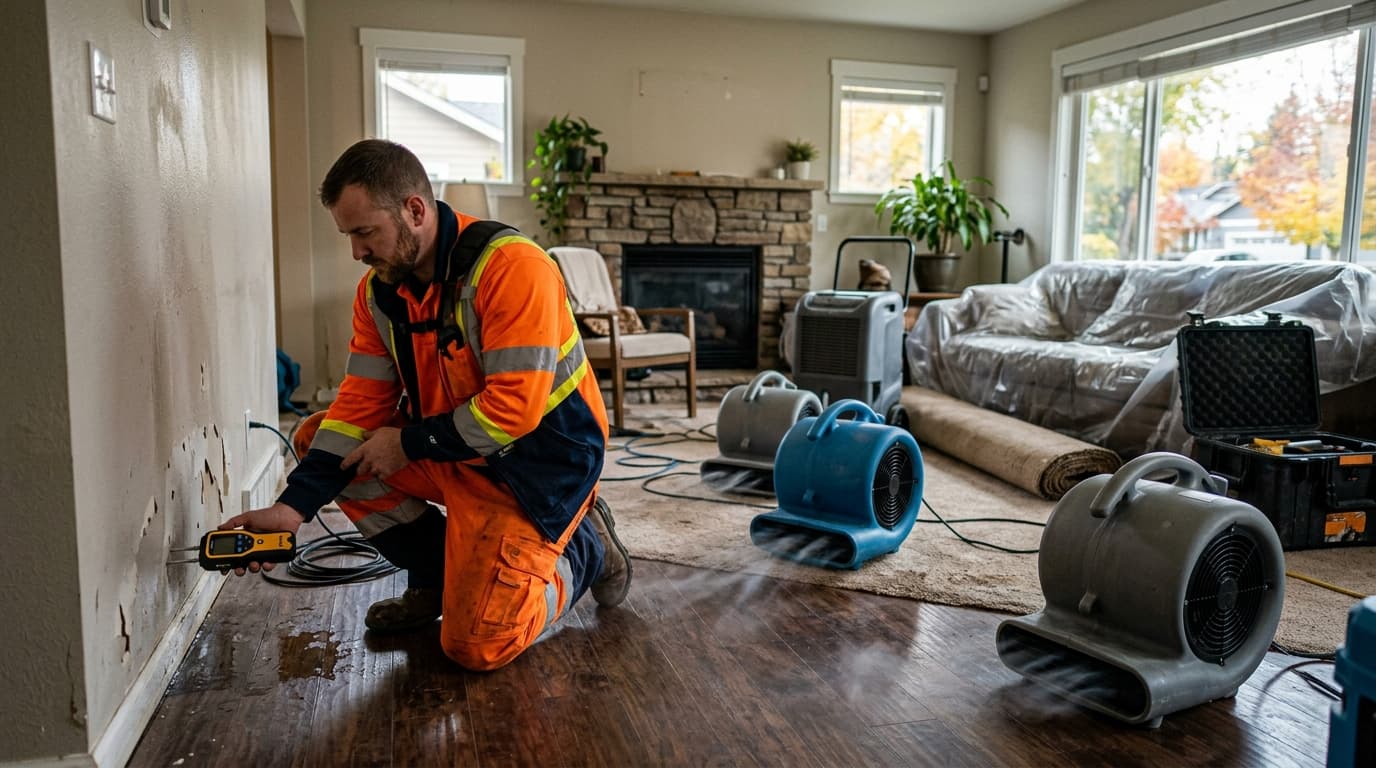
When water compromises your Boise property, full restoration requires more than removing surface liquid. Our network connects Treasure Valley property owners with technicians who handle diagnostic moisture mapping, controlled material removal, structural psychrometric drying, and antimicrobial sanitization.
Structural Drying & Dehumidification
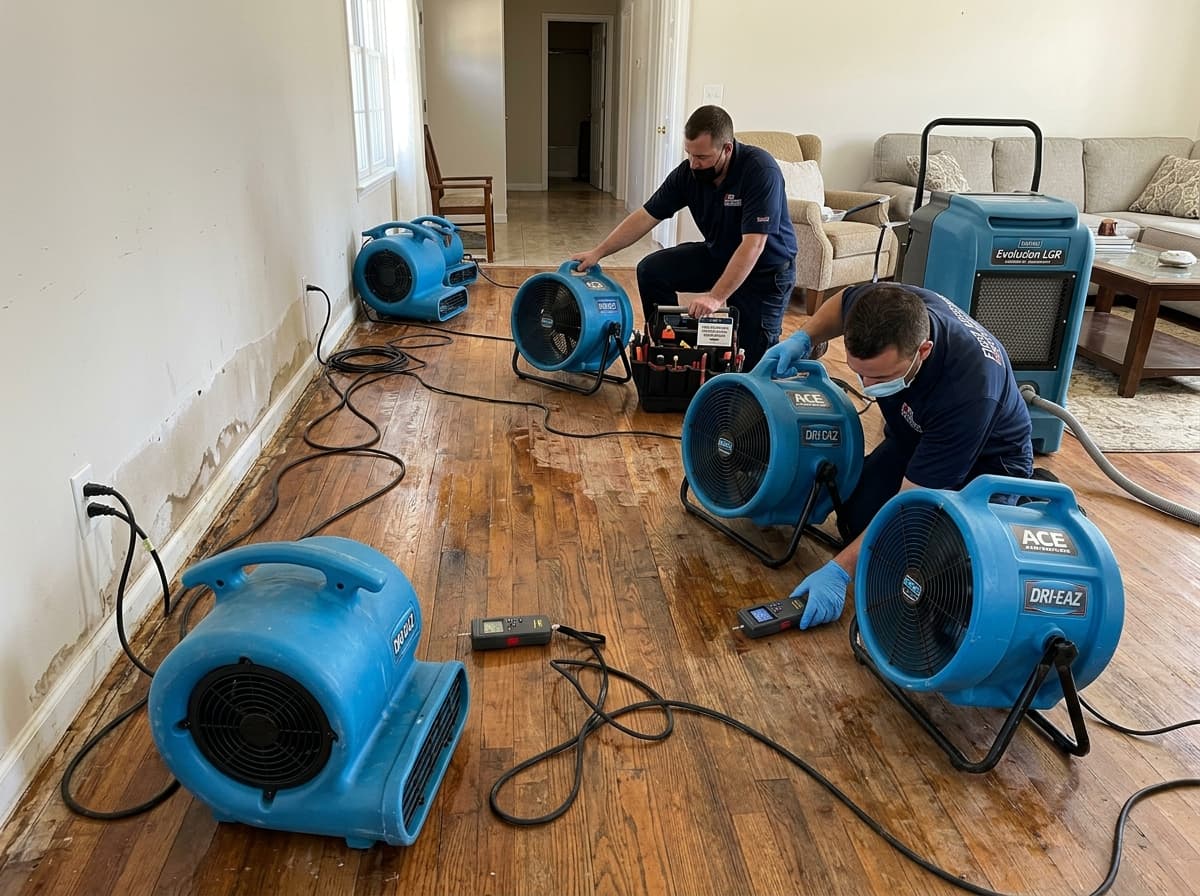
Removing standing liquid is only the first step. Microscopic water remains bound inside wooden studs, subfloors, and concrete foundations. Connect with Boise structural drying specialists who deploy industrial LGR dehumidifiers, high-velocity axial air movers, and daily grains-per-pound (GPP) moisture monitoring.
Mold Remediation & Removal
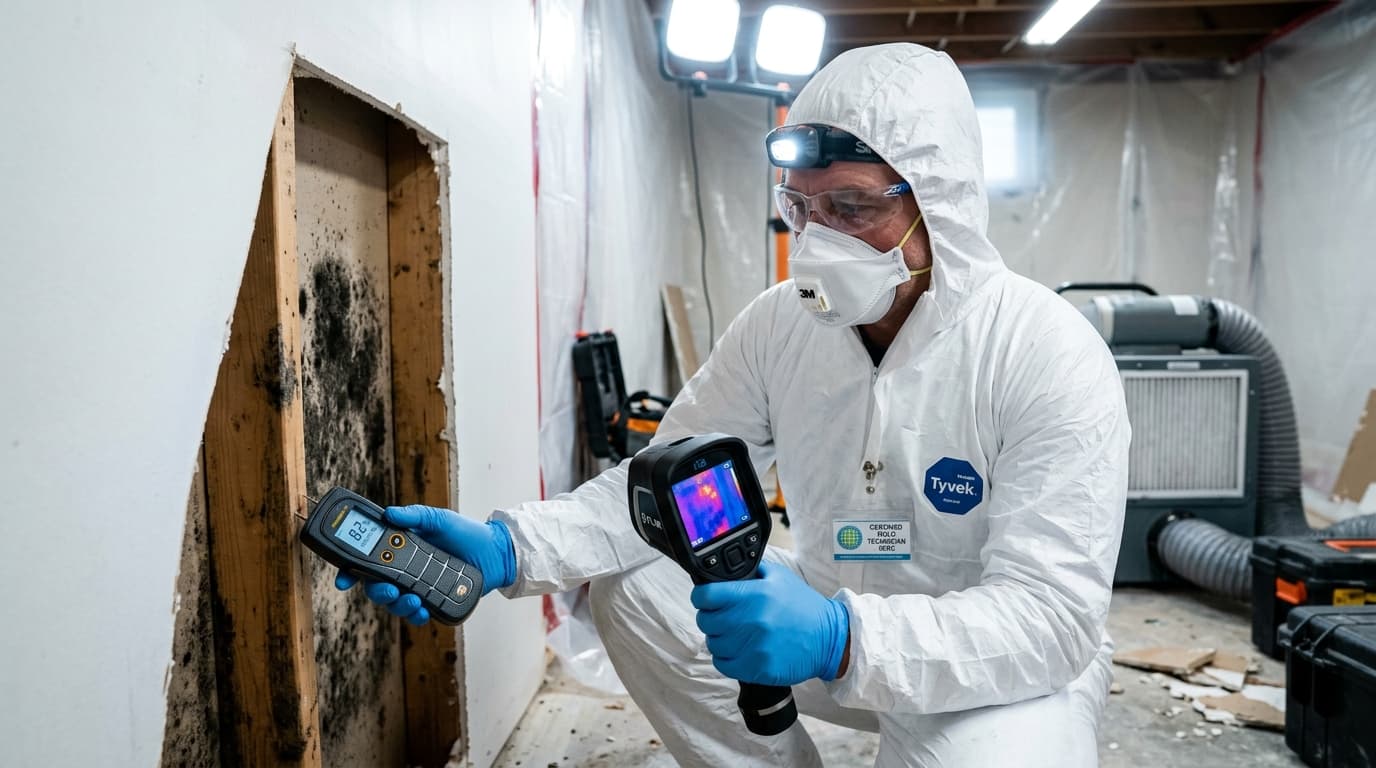
When plumbing leaks, crawl space humidity, or roof intrusion trigger fungal growth in your Treasure Valley property, surface spraying is never enough. Our network connects Boise property owners with certified mold remediation and black mold removal specialists. We provide thermal moisture mapping, negative air containment, HEPA air scrubbing, and attic and crawl space mold remediation to eliminate airborne spores and restore healthy indoor air quality.
Nearby Treasure Valley Service Areas
Written by Boise Restoration Editorial Team
Flooring Remediation SpecialistsCertified technical specialists in resilient flooring recovery, subfloor microbial remediation, and non-destructive drying across Boise and the Treasure Valley.
Sources & References
The factual recommendations, contamination categories, and psychrometric principles in this guide are directly grounded in the following official government disaster protocols and ANSI/IICRC restoration standards:
- 1ANSI/IICRC S500 Standard and Reference Guide for Professional Water Damage RestorationInstitute of Inspection, Cleaning and Restoration Certification (IICRC) • 2026
Defines standards for structural drying, vapor barrier handling, and subfloor microbial control.
- 2Resilient Flooring Installation and Moisture Mitigation StandardsResilient Floor Covering Institute (RFCI) • 2025
Authoritative specifications on vinyl plank moisture permeability, underlayment, and subfloor tolerances.
- 3Wood-Based Composites and Panel Products (Chapter 11)USDA Forest Products Laboratory • 2021
Details the mechanical breakdown, resin failure, and edge swelling of OSB exposed to standing liquid.
- 4Mold Remediation in Schools and Commercial BuildingsUnited States Environmental Protection Agency (EPA) • 2025
Provides critical guidance on the 48-hour moisture cleanup window to prevent microbial colonization.
Frequently Asked Questions
No. Because vinyl is non-porous and acts as a vapor barrier, trapped water cannot evaporate into the room air. Even with fans running, water will remain trapped against the subfloor for weeks or months, resulting in wood decay, structural floor failure, and dangerous black mold colonies.
Continue Learning About Water Damage
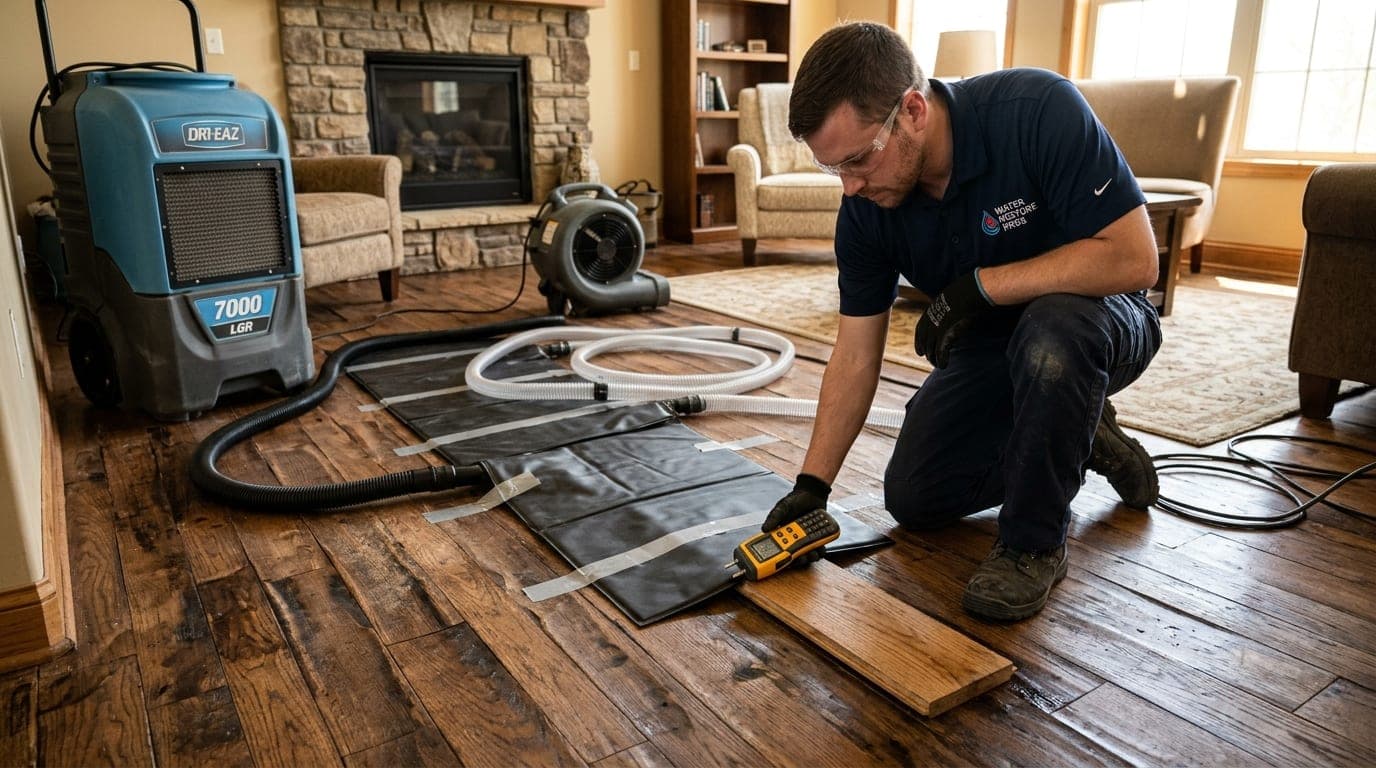
Hardwood Floor Water Damage: Can It Be Saved? Cupping, Crowning, and Drying Protocols in Boise, ID
Discover whether water-damaged hardwood floors can be saved without costly demolition. Learn the science of wood moisture equilibrium, why cupping happens, and how commercial injection mat systems extract trapped subfloor moisture across Treasure Valley homes.
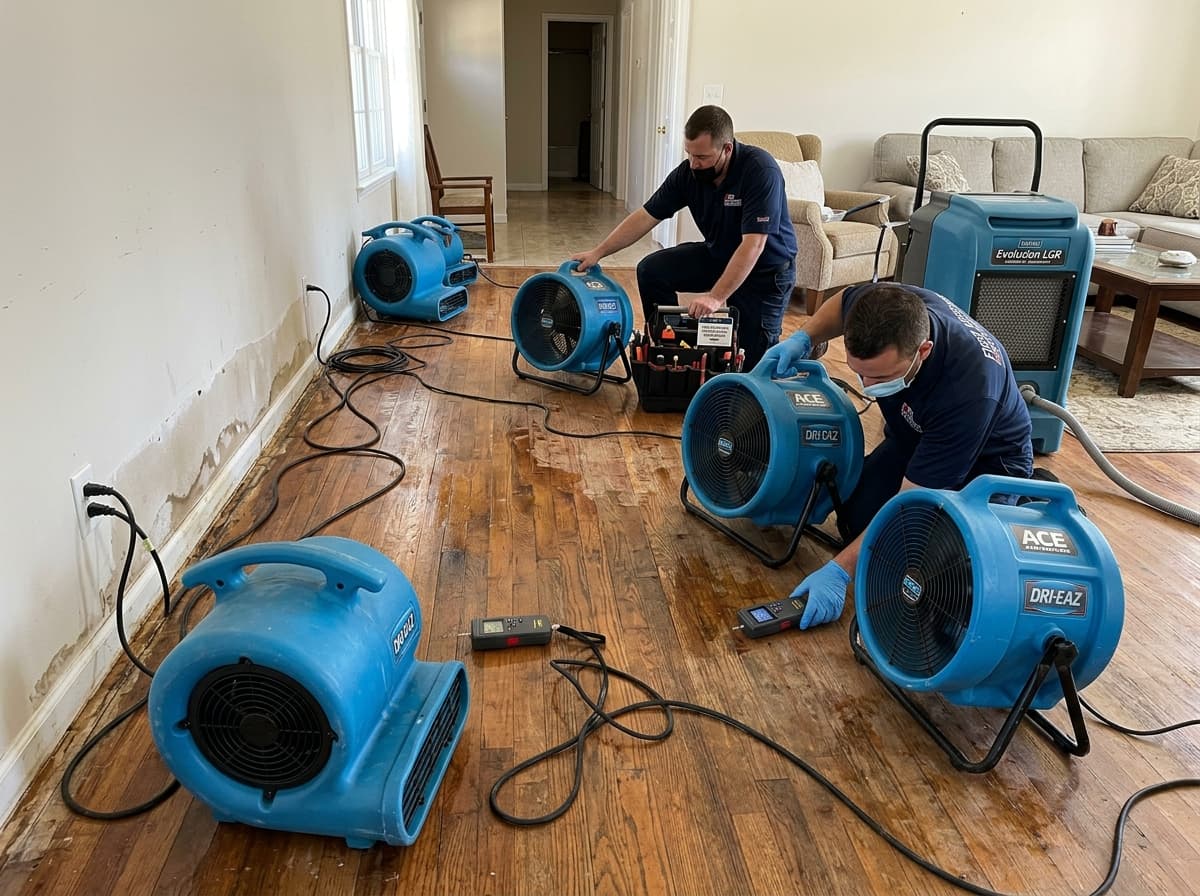
How Long Does Water Damage Take to Dry? Timelines, Science & Factors
While surface water may vanish in 24 hours, deep structural framing, subflooring, and wall cavities require 3 to 5 days under controlled industrial dehumidification. Here is the engineering science behind drying timelines.
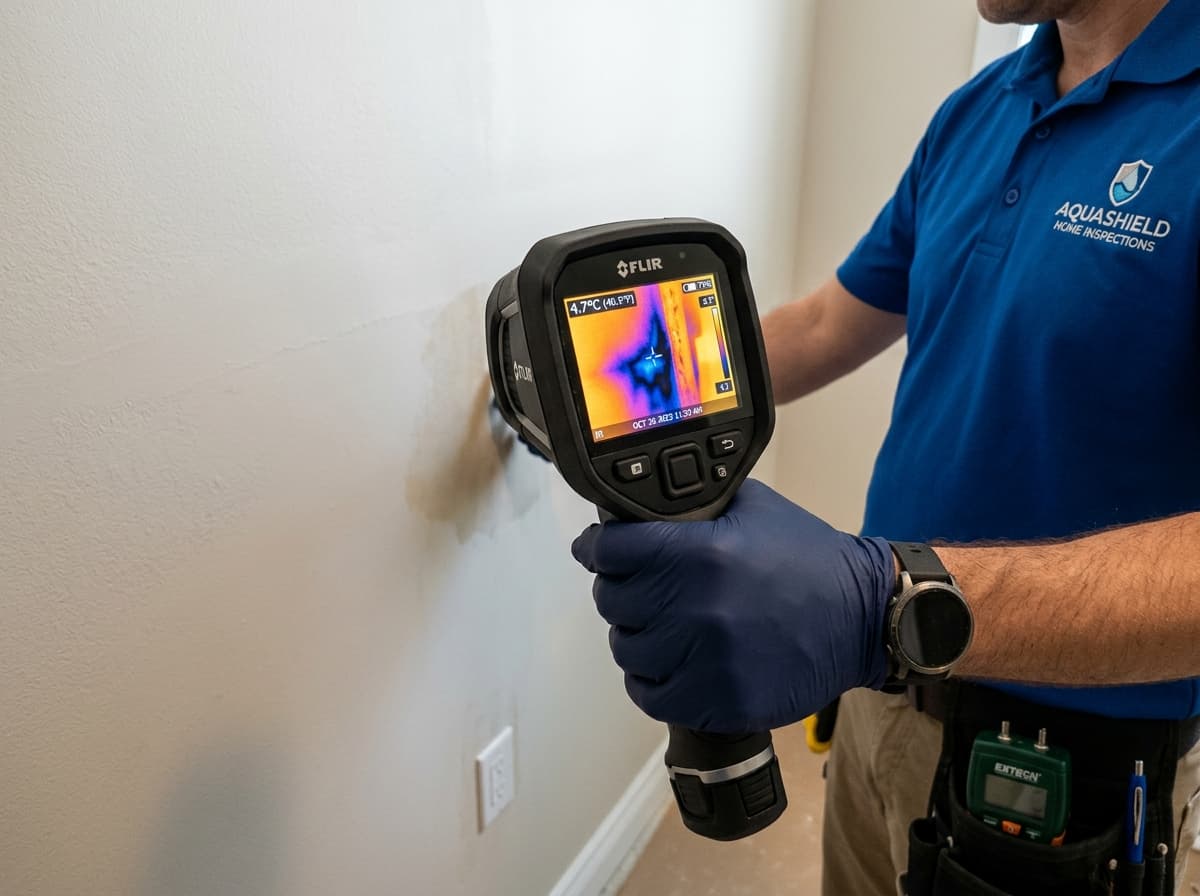
Signs of Water Damage in Walls: How to Detect Hidden Moisture
Water leaks inside wall cavities often remain concealed until peeling paint, warped baseboards, or persistent musty odors reveal hidden moisture. Here is how to diagnose wall leaks before mold and structural rot take hold.