
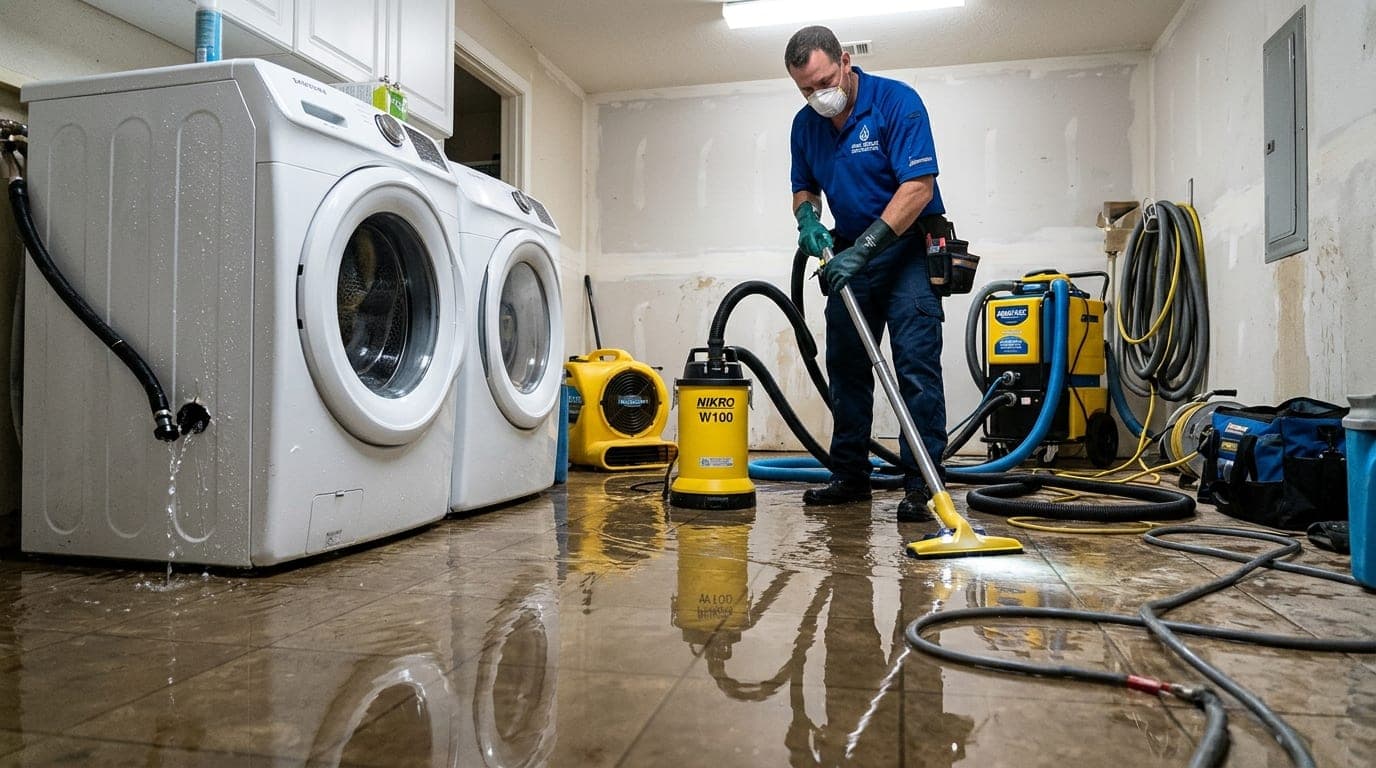
When a washing machine supply line bursts, immediately shut off the dual hot and cold laundry water valves located directly behind the machine (or shut off the home's main water supply valve if valves are stuck or inaccessible). Avoid stepping into standing water if electrical outlets or appliances are submerged until power to the laundry room circuit breaker is disconnected. Next, contact an IICRC-certified restoration crew for emergency truck-mounted water extraction. Immediate mechanical extraction within 24 hours prevents subfloor swelling, stops sheetrock ceilings below from collapsing, and eliminates the risk of rapid black mold colonization.
- Massive Flow Rate: A standard 3/4-inch washing machine supply hose discharges 6 to 10 gallons per minute, flooding an entire home with over 500 gallons in under two hours.
- The Second-Floor Laundry Multiplier: Upper-level laundry room floods cause 300% more property damage by penetrating multiple ceilings, wall cavities, and finished basements below.
- Rubber Hose Degradation: Basic black rubber hoses oxidize and develop weak spots from hot-water expansion and water hammer pressure spikes, bursting within 3 to 5 years.
- The Stainless Steel Upgrade: Braided 304 stainless-steel hoses withstand up to 1,500 PSI burst pressure, virtually eliminating sudden catastrophic blowouts.
- Emergency Power Precaution: If standing water reaches electrical baseboard heaters, wall receptacles, or washing machine cords, shut off the circuit breaker before entering.
Dealing with Active Water Intrusion?
Reading guides takes time—standing water causes framing damage within hours. Speak directly with a local Boise specialist.
1. The Physics of a Washing Machine Flood: Why Water Volume Escalates Rapidly
Unlike small plumbing drips that give warning signs, washing machine supply line failures are violent, full-flow catastrophic blowouts.
In residential homes across [Boise](/) and Meridian, washing machines are connected directly to dual hot and cold municipal water lines. Unlike bathroom sink faucets, which use small 3/8-inch lines, washing machines use wide 3/4-inch internal diameter hoses to fill wash tubs quickly.
When an ordinary rubber hose ruptures, there is no flow restriction. Under Boise's average municipal water pressure of 60 PSI, water erupts from the severed line at a rate of 8 to 10 gallons per minute. Within 30 minutes, 250 to 300 gallons of clean water have inundated the laundry room. Within two hours, over 600 gallons—the equivalent of 10 full bathtubs—have migrated throughout the house.
Water rapidly flows outward under doors, soaks into hallway carpeting, penetrates subfloor expansion gaps, and travels down through interior wall cavities. Prompt professional water extraction services are mandatory within the first few hours to stop water from destroying structural framing.
Electrical Shock Hazard
Never wade through standing water to reach the laundry shutoff valve if the water level has reached electrical cords, wall outlets, or washing machine base plugs. Always switch off the main electrical panel breaker for the laundry circuit first.
2. The Second-Floor Laundry Room: A Modern Architectural Hazard
Modern architectural design across the Treasure Valley has shifted laundry rooms from basements to the second floor, dramatically amplifying water damage risks.
In newer master-planned communities across Eagle, Kuna, and Nampa, homebuilders locate laundry rooms on the second story for convenience near master suites and children's bedrooms. While convenient for daily chores, an upstairs washing machine leak turns gravity into your worst enemy.
When a hose ruptures upstairs, water immediately saturates the second-floor OSB or plywood subfloor. Within minutes, gravity pulls the water downward through ceiling light fixtures, ceiling fan junction boxes, HVAC supply registers, and drywall seams into the rooms below.
A second-story flood frequently causes catastrophic ceiling water damage across ground-floor kitchens and living rooms. If the house features a finished basement, the water continues downward through the main floor, creating a multi-level disaster zone requiring coordinated structural cavity drying across all levels.
Drain Pan Imperative
All upper-floor washing machines in Idaho should sit inside a high-impact plastic or stainless-steel drain pan connected to a dedicated 1.5-inch PVC drain line piped directly to the home exterior or plumbing stack.
3. Washing Machine Hose Materials: The Risk Breakdown
The small $15 rubber hoses connecting your washing machine are often the weakest mechanical link in your entire home.
Washing Machine Supply Line Comparison
| Hose Type | Failure Vulnerability & Mechanism | Recommended Service Life & Rating |
|---|---|---|
Basic Black Rubber Hose Rubber becomes brittle and stiff with age, especially on hot water feeds. | Vulnerable to ozone degradation, internal hot-water softening, and water-hammer pressure spikes. Blisters and bursts. | High Risk. Must be replaced every 3 to 5 years. Responsible for over 70% of residential laundry room floods. |
Braided Stainless Steel (304 Mesh) The industry standard recommended by IICRC, insurance adjusters, and master plumbers. | Flexible PVC/EPDM inner core encased in high-tensile braided stainless-steel wire. Prevents expansion blisters. | Low Risk. Service life 5 to 8 years. Burst pressure rating typically exceeds 1,500 PSI. |
Auto-Shutoff Smart Hoses Highly recommended for all second-floor and vacation home laundry installations. | Features an internal mechanical flow-sensor valve that trips shut instantly if hose ruptures or detects runaway flow. | Lowest Risk. Service life 5 to 7 years. Automatically cuts off water flow within 1 second of line severance. |
Corrugated Plastic Discharge Hose Category 2 gray water contamination if discharged on the floor. | Pumps wastewater into standpipe. Vibration shakes hose loose; grease and lint clog can cause backup overflow. | Moderate Risk. Inspect annually. Must be secured to standpipe with a heavy-duty zip tie or metal U-clamp. |
4. Emergency Response Protocol: What to Do in the First 15 Minutes
Taking immediate action the moment you discover a washing machine flood limits secondary structural destruction and saves thousands of dollars.
Stop the Water Flow
Turn off the dual laundry shut-off valves or main household water line.
- Reach behind the washing machine and turn both the red (hot) and blue (cold) oval handles clockwise until tight. If a single lever-action shutoff is installed, push it to the opposite side.
- If the laundry valves are corroded or stuck, immediately go to your main water shut-off valve (near the water heater or in the crawl space) and shut off water to the entire house.
- Emergency plumbing specialists like [Elizabeth Plumbing Pros](http://elizabethplumbingpros.com) recommend testing laundry shutoff valves bi-annually and installing dual quarter-turn ball valves so homeowners can stop sudden pressurized supply floods in seconds.
Eliminate Electrical Hazards
Disconnect power to the laundry area safely.
- Go to your main electrical breaker panel and flip the circuit breaker labeled 'Washer' or 'Laundry' to the OFF position.
- Never unplug a submerged power cord while standing in water.
Contain the Surface Perimeter
Block water from spreading to hardwood floors and carpeted rooms.
- Roll up heavy bath towels or blankets and place them at doorways to dam the water flow.
- If water is leaking through an upstairs ceiling below, place buckets and plastic tarps underneath to catch drips.
Dispatch Professional Extraction Crews
Call a certified 24/7 restoration company equipped with truck-mounted pumps.
- Household shop vacuums hold only 5 to 10 gallons and cannot extract water from deep subfloor wood fibers or wet drywall cavities.
- Certified crews arrive with commercial extraction wands, moisture meters, and structural dehumidification units.
5. Professional Laundry Room Structural Drying & Remediation
Restoring a laundry room flood involves much more than mopping the tile surface; hidden subfloor water must be extracted immediately.
Certified restoration contractors follow an engineered cavity drying protocol governed by IICRC S500 standards to ensure structural safety and healthy indoor air:
Subfloor Moisture Verification
Restoration crews take daily moisture readings using deep-probe pin meters to verify that the plywood or OSB subfloor has dried back down to Boise's baseline standard (8% to 10% moisture content) before signing off.
Phase 1: High-Volume Industrial Extraction
Technicians deploy truck-mounted extraction vacuums and weighted subfloor extraction tools to remove bulk standing water from tile, sheet vinyl, and adjacent carpeting within minutes.
Phase 2: Baseboard Removal & Cavity Venting
Technicians carefully remove baseboards around the laundry room perimeter and drill small, discrete 5/8-inch relief holes through the drywall behind the baseboard line. This allows trapped moisture inside wall cavities to escape without tearing down walls.
Phase 3: High-Velocity Psychrometric Dehumidification
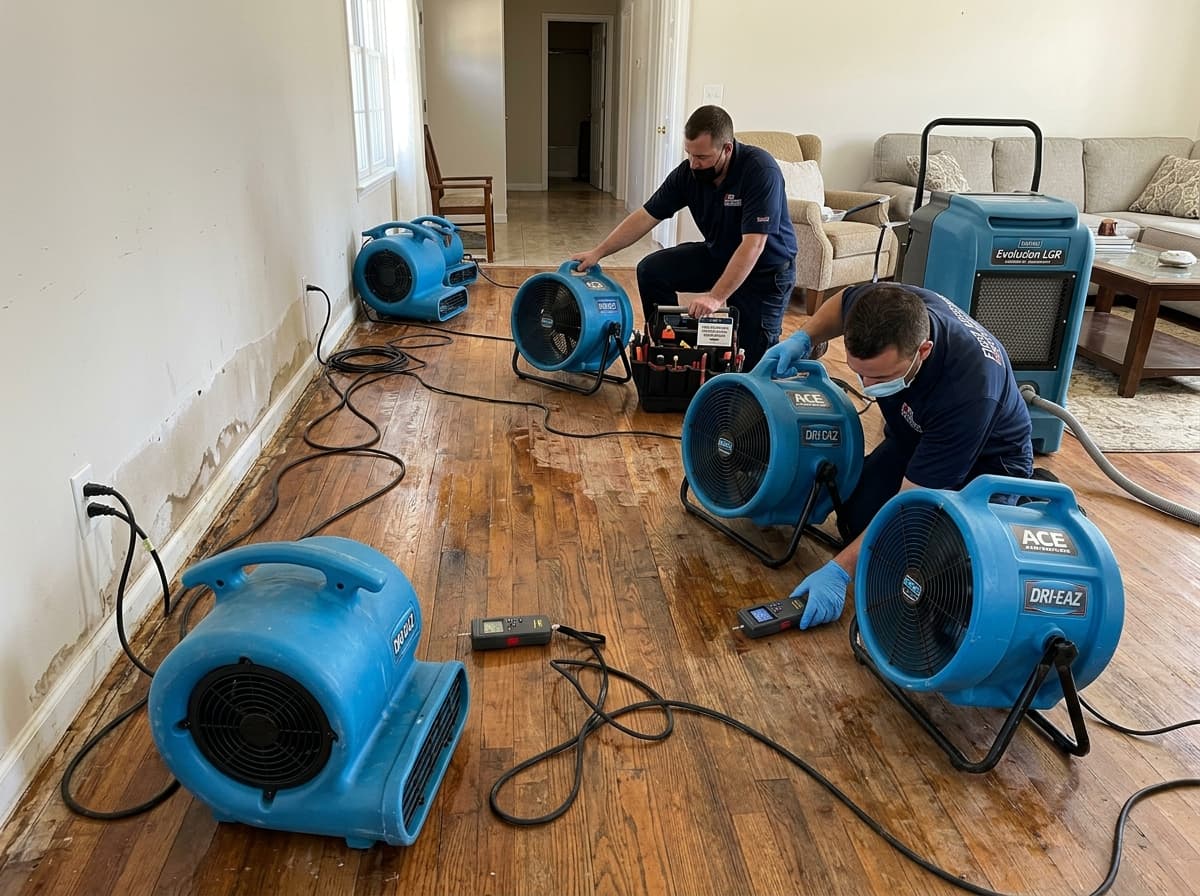
Commercial Low-Grain Refrigerant (LGR) dehumidifiers and high-velocity axial air movers are positioned to create a vortex of warm, low-humidity air across wet subfloors. Specialized structural drying equipment pulls moisture out of thick floor framing joists.
Phase 4: Botanical Antimicrobial Sanitization
Because wash water contains detergents, skin cells, and bacteria (Category 2 gray water), all exposed subfloors and wall cavities are treated with EPA-registered botanical antimicrobials to prevent mold colonization.
Washing Machine Flooded Your Home in Boise?
Do not let hundreds of gallons of water rot your subfloor or collapse ceilings. Our emergency response team arrives within 35 to 45 minutes equipped with high-capacity extraction units.
Related Water Restoration Services in Boise
Water Extraction & Removal
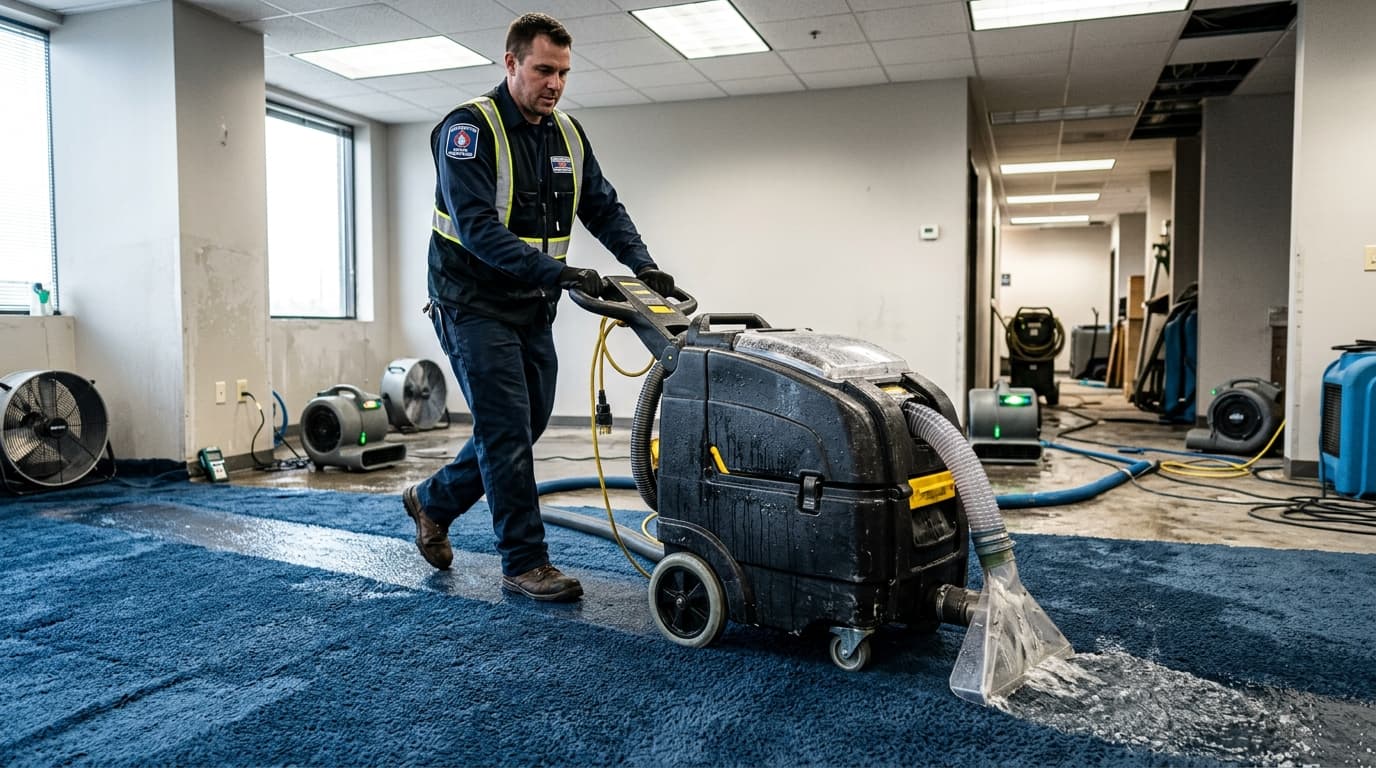
Physical extraction is 1,200 times faster than evaporation. When standing water accumulates on hardwood, tile, carpet, or concrete subfloors, commercial truck-mounted extraction wands and submersible pumps pull thousands of gallons out before deeper structural absorption occurs.
Structural Drying & Dehumidification
Removing standing liquid is only the first step. Microscopic water remains bound inside wooden studs, subfloors, and concrete foundations. Connect with Boise structural drying specialists who deploy industrial LGR dehumidifiers, high-velocity axial air movers, and daily grains-per-pound (GPP) moisture monitoring.
Emergency Water Damage Restoration
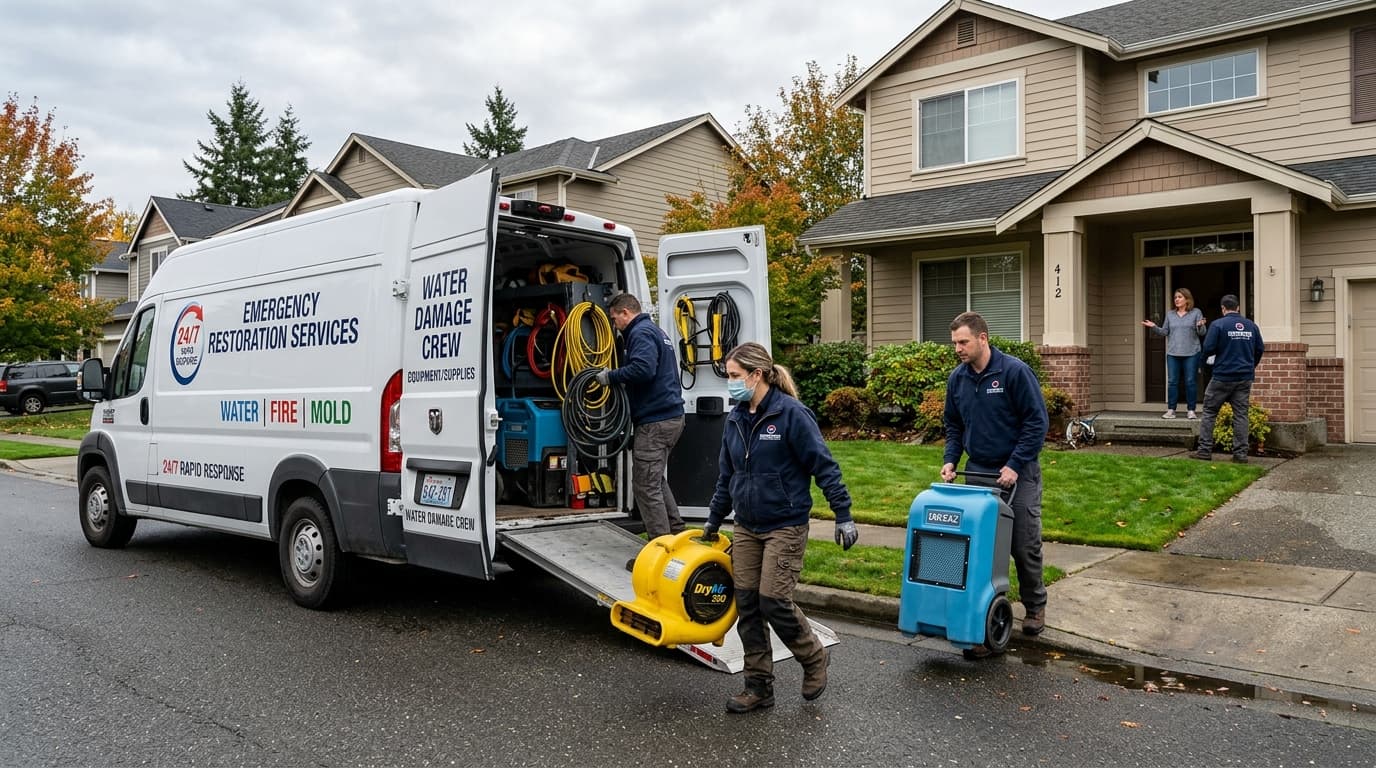
When pressurized plumbing ruptures or violent storms send torrents into your property, every minute counts. Connect with local Boise emergency water restoration crews on-call 24 hours a day, 7 days a week, 365 days a year.
Nearby Treasure Valley Service Areas
Written by Boise Restoration Editorial Team
Emergency Extraction SpecialistsCertified rapid-response mitigation technicians specializing in high-volume water extraction, second-story structural drying, and subfloor recovery across Ada and Canyon counties.
Sources & References
The factual recommendations, contamination categories, and psychrometric principles in this guide are directly grounded in the following official government disaster protocols and ANSI/IICRC restoration standards:
- 1ANSI/IICRC S500 Standard and Reference Guide for Professional Water Damage RestorationInstitute of Inspection, Cleaning and Restoration Certification (IICRC) • 2026
Establishes protocols for Category 1 and Category 2 water extraction and multi-level structural drying.
- 2Washing Machine Hose Failures and Residential Water Loss StudiesInsurance Institute for Business & Home Safety (IBHS) • 2024
Statistical study of residential plumbing claims identifying washing machine hoses as a top flood cause.
- 3Plumbing Fixture Fittings and Flexible Water Connectors (ASME A112.18.6)American Society of Mechanical Engineers (ASME) • 2023
Engineering standards for braided stainless steel burst pressures and tensile strength requirements.
- 4A Brief Guide to Mold, Moisture, and Your HomeUnited States Environmental Protection Agency (EPA) • 2025
Critical parameters on high-volume water extraction and the 48-hour microbial prevention window.
Frequently Asked Questions
Under standard municipal water pressure (60 PSI), a fully severed washing machine supply line discharges between 6 and 10 gallons of water per minute. That equals 360 to 600 gallons every single hour until the water supply valve is turned off.
Continue Learning About Water Damage
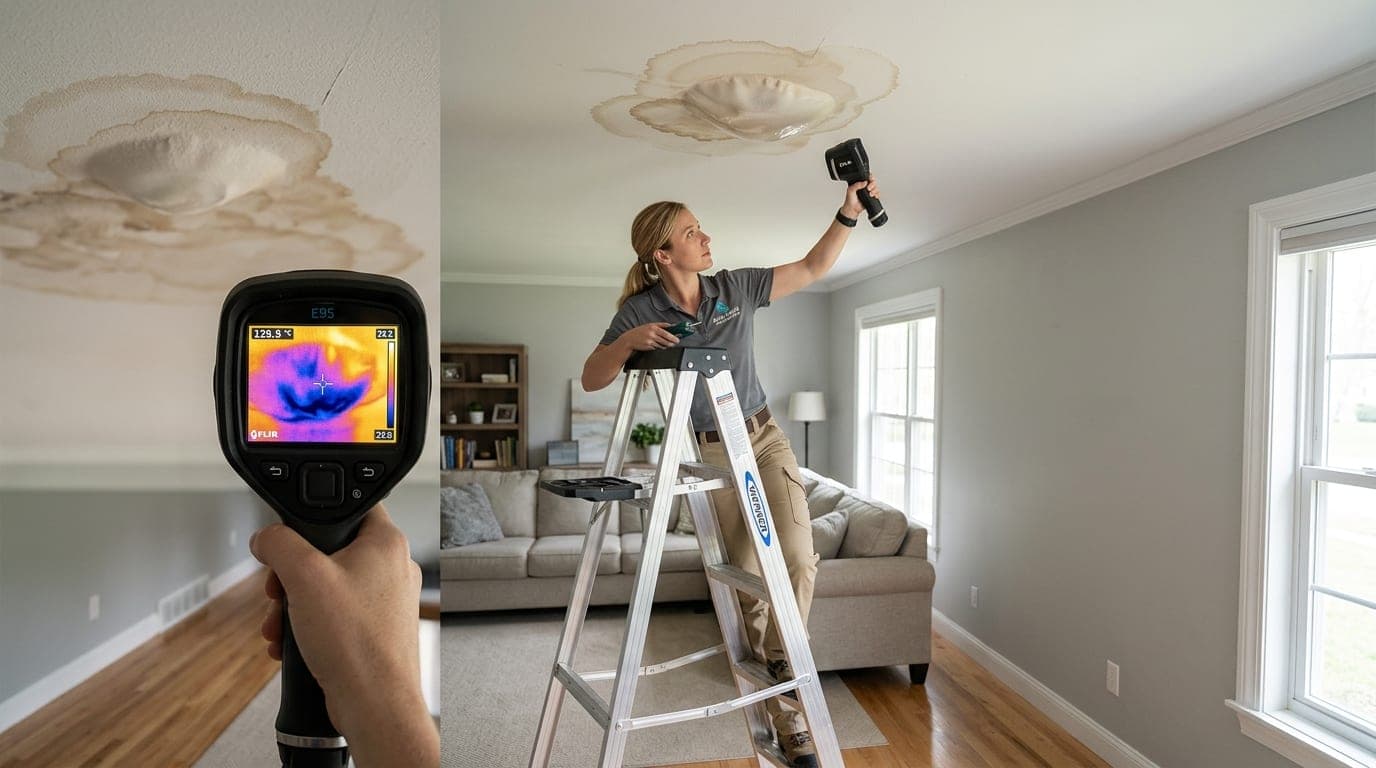
Ceiling Water Damage: Causes, Brown Rings & Immediate Action Steps in Boise, ID
A yellow-brown water ring or sagging bubble on your ceiling indicates active water pooling overhead. Learn the immediate steps to prevent a catastrophic drywall collapse, how to diagnose whether the leak originates from an upstairs bathroom, roof ice dam, or attic HVAC unit, and how certified crews restore ceilings across the Treasure Valley.
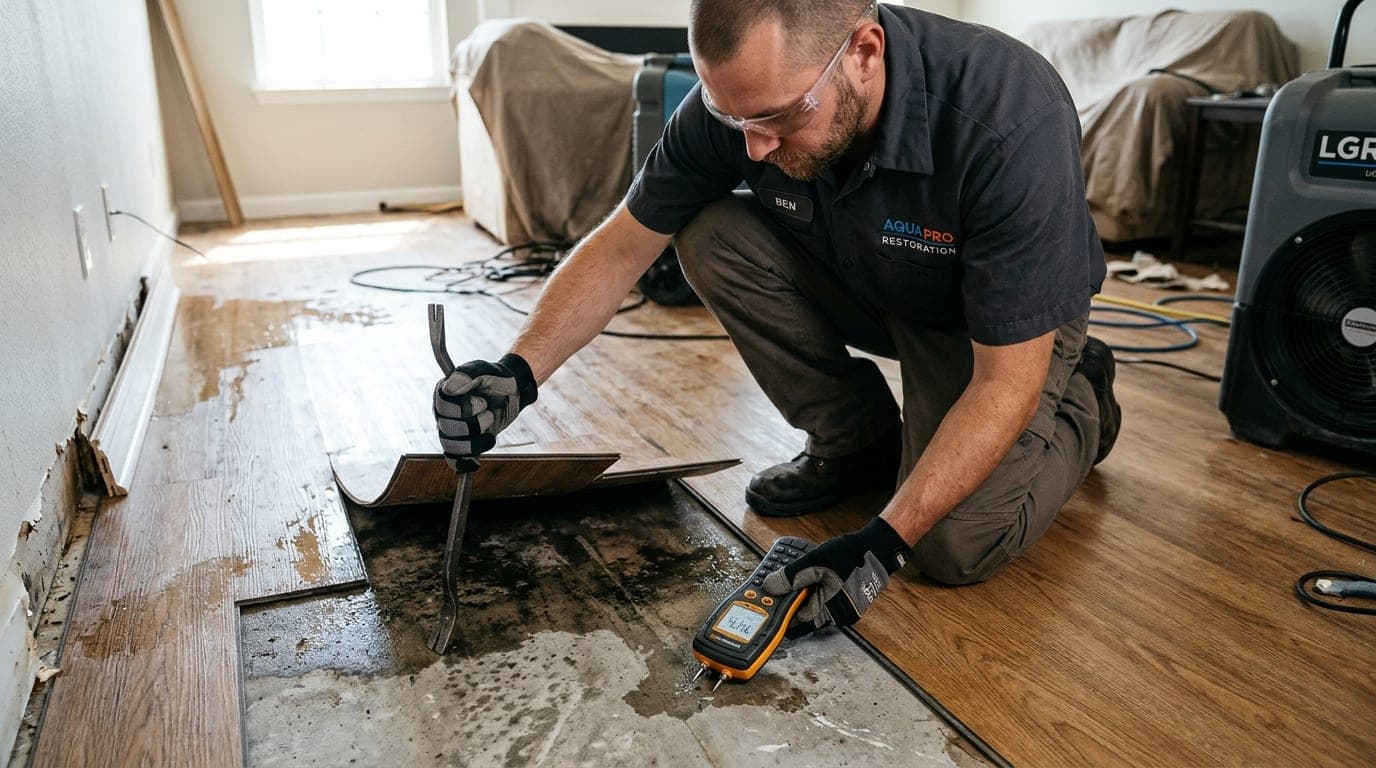
Water Damage Under Luxury Vinyl Plank (LVP) and Laminate Flooring: Trapped Moisture, Mold Risks & Restoration in Boise, ID
Luxury vinyl plank is marketed as 100% waterproof, but what happens when water seeps beneath the planks? Explore the 'sandwich effect', why trapped subfloor moisture breeds black mold, and how professional drying crews save vinyl and laminate floors across the Treasure Valley.
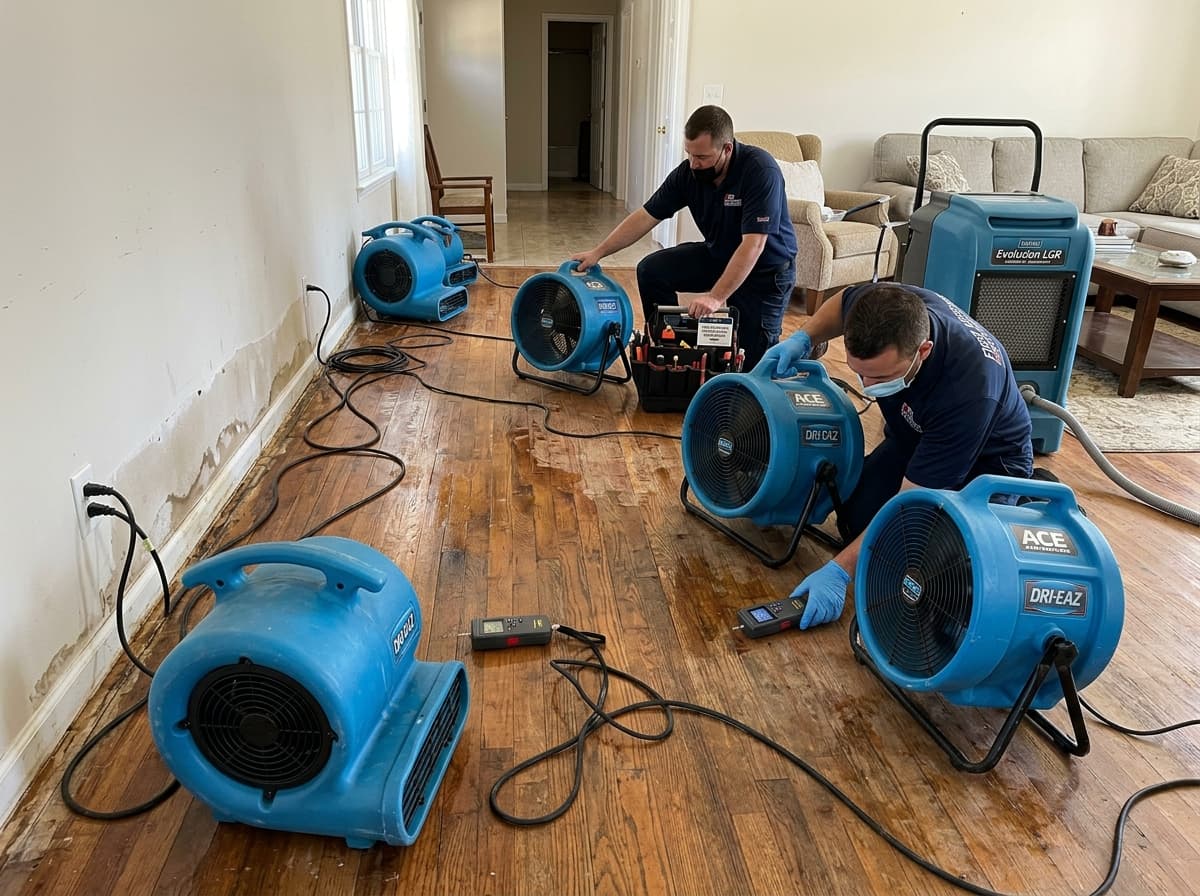
How Long Does Water Damage Take to Dry? Timelines, Science & Factors
While surface water may vanish in 24 hours, deep structural framing, subflooring, and wall cavities require 3 to 5 days under controlled industrial dehumidification. Here is the engineering science behind drying timelines.