
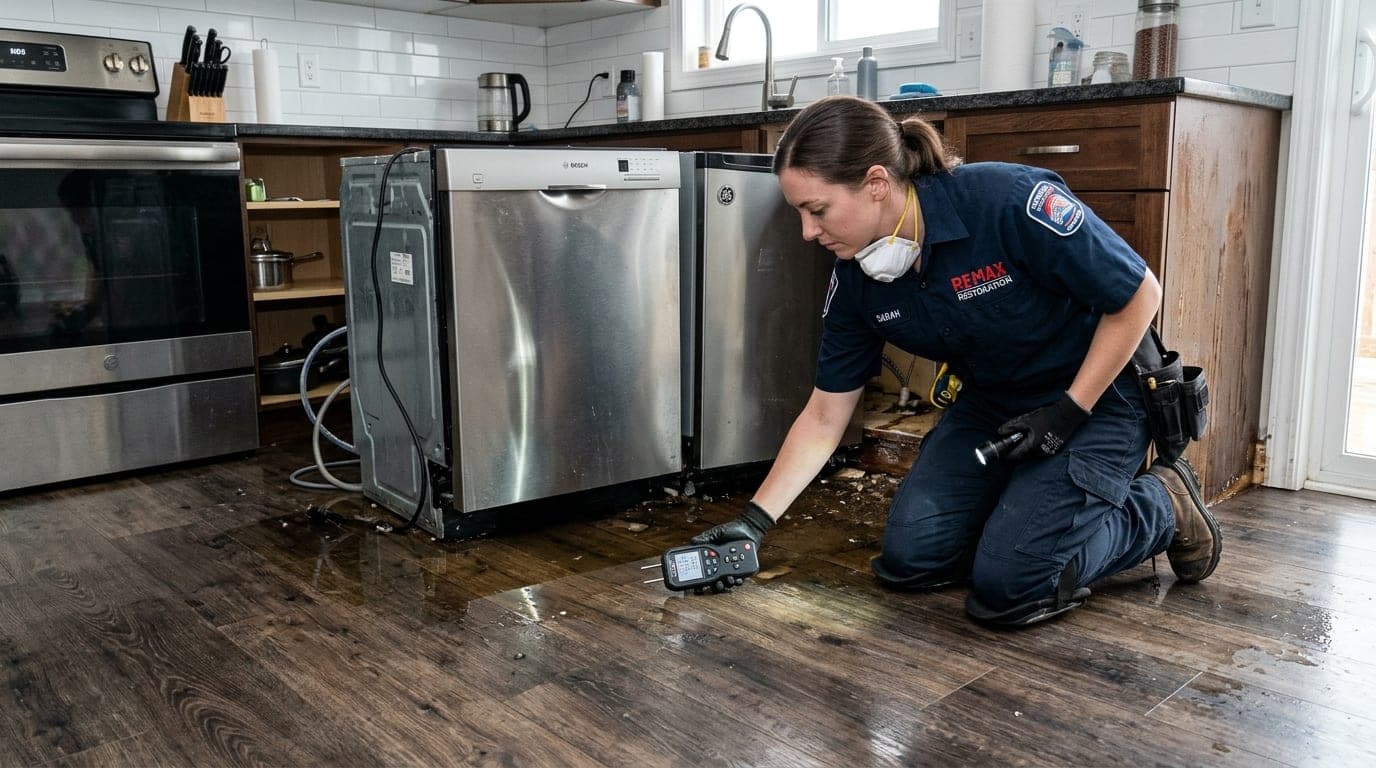
Kitchen appliance leaks from dishwashers and refrigerator ice-maker lines are insidious because water pools out of sight behind cabinetry, absorbing into particleboard cabinet boxes and 3/4-inch subflooring for days or weeks before surfacing. The moment you suspect an appliance leak, pull out the appliance carefully, shut off its dedicated chrome angle-stop valve (usually located under the kitchen sink or behind the fridge), and inspect the floor with a flashlight. If the subfloor or toe-kicks feel damp or spongy, contact an IICRC-certified restoration crew immediately. Using specialized cabinet toe-kick drying systems (such as Injectidry systems) and commercial LGR dehumidifiers, technicians can force dry air beneath cabinets, salvaging expensive granite countertops and custom cabinetry without destructive demolition.
- The Pinhole Plastic Trap: Cheap 1/4-inch clear polyethylene plastic tubing supplied with refrigerators degrades from heat and vibration, developing catastrophic pinhole leaks.
- The Cabinet Sponge Effect: Modern kitchen cabinetry toe-kicks and boxes are made of compressed particleboard (MDF) that absorbs water rapidly, swelling irreversibly within 24 hours.
- Crawl Space Seepage: Kitchen water leaks routinely travel down through oversized plumbing drain cutouts, saturating crawl space joists and insulation beneath the kitchen.
- Toe-Kick Cavity Drying: Certified crews remove only the thin decorative toe-kick skin, inserting small injection tubes to dry the subfloor without pulling out heavy stone countertops.
- Immediate Valve Shutoff: Every refrigerator and dishwasher has a dedicated shut-off valve; knowing its location stops hundreds of gallons from continuing to leak.
Dealing with Active Water Intrusion?
Reading guides takes time—standing water causes framing damage within hours. Speak directly with a local Boise specialist.
1. The Anatomy of a Silent Kitchen Leak: Why Appliances Fail
Unlike a burst winter pipe that sprays water dramatically across your living room, kitchen appliance leaks are slow, stealthy, and far more destructive over time.
In residential properties across [Boise](/) and Meridian, kitchens feature complex plumbing lines running through tight, unventilated spaces. Dishwashers connect to hot water supply lines operating at 120°F to 140°F, while refrigerators pull cold water through 1/4-inch lines to supply ice makers and door water dispensers.
Because these lines operate under continuous municipal water pressure (averaging 55 to 75 PSI in the Treasure Valley), even a microscopic pinhole leak discharges between 20 and 50 gallons of water every 24 hours. However, because appliances sit on top of recessed subfloors and are flanked by sealed cabinetry, the water does not flow out into the open kitchen.
Instead, surface tension and capillary action pull the water backward against the wall and sideways beneath adjacent cabinets. Homeowners often walk across the kitchen for weeks completely unaware that their subfloor is disintegrating into mush beneath their feet. When water finally breaches the toe-kick, professional water damage restoration is required immediately.
The Plastic Tubing Hazard
If your refrigerator ice maker is connected using cheap, translucent white polyethylene plastic tubing, replace it immediately. These lines harden, oxidize from ambient refrigerator compressor heat, and rupture without warning. As recommended by emergency trade specialists like Lancaster Rapid Plumbing, upgrading older appliance lines to commercial braided stainless-steel hoses with solid brass fittings is the single most effective way to prevent catastrophic kitchen cabinet flooding.
2. Ice-Maker & Dishwasher Supply Lines: Materials & Risk Matrix
The type of plumbing line connecting your kitchen appliances dictates your vulnerability to catastrophic water damage.
Kitchen Appliance Supply Line Comparison
| Supply Line Material | Failure Mode & Risk | Service Life & Recommendation |
|---|---|---|
Polyethylene (Plastic PEX) Responsible for over 65% of catastrophic kitchen flood claims. | Becomes brittle from compressor heat; kinks easily when fridge is pushed back; mice chew through it. | High Failure Risk. Service life 3–5 years. Insurance companies frequently cite plastic lines as high-hazard components. |
Soft Copper Tubing (1/4") Must have an expansion coil loop behind the refrigerator to allow movement. | Resistant to rodent gnawing; bends easily. Vulnerable to work-hardening and crimping when appliances are pulled out. | Moderate Failure Risk. Service life 10–15 years. Kinked copper lines develop pinhole fatigue cracks at bends. |
Braided Stainless Steel Includes solid brass compression fittings that prevent thread stripping. | Flexible PVC core reinforced with braided 304 stainless-steel wire mesh. Resists kinks, punctures, and pressure surges. | Lowest Failure Risk. Service life 10–12 years. Industry gold standard recommended by IICRC and master plumbers. |
Dishwasher Corrugated Drain Hose Must have a high loop or air gap to prevent dirty sink water backflow. | Thin plastic ribbed hose. Clamps loosen from pump vibration; grease and food acids degrade plastic seams. | Moderate Risk. Replace every 5 years or whenever installing a replacement dishwasher unit. |
3. How Appliance Leaks Destroy Cabinetry and Subfloors
Kitchen cabinets and subfloors are made of engineered wood products that suffer catastrophic damage when exposed to moisture.
Particleboard & MDF Cabinet Core Swelling
Even in high-end homes in Eagle and Star, while cabinet doors and face frames may be solid maple or cherry, the interior cabinet boxes, shelving, and toe-kicks are constructed from medium-density fiberboard (MDF) or particleboard.
Particleboard is composed of wood sawdust compressed with glue. When water seeps beneath a cabinet, the edges act like thirsty sponges. The wood fibers swell up to 300% of their original thickness. Once particleboard swells, it permanently loses structural integrity. The cabinet bottom sags, screws tear out of drawer slides, and the heavy granite or quartz countertop overhead loses its level support.
Subfloor Migration into the Crawl Space
Beneath the cabinets, builders cut large, irregular holes through the 3/4-inch subfloor to route plumbing pipes, electrical wiring, and HVAC ducts. Trapped water quickly finds these openings, cascading directly down into the crawl space.
The water soaks fiberglass subfloor insulation, runs along framing joists, and pools on the crawl space vapor barrier. This dual-level saturation demands simultaneous kitchen drying and crawl space water damage remediation to stop mold from spreading throughout the home.
4. Warning Signs: How to Spot a Hidden Kitchen Leak
Catching an appliance leak early makes the difference between a simple drying job and a $25,000 complete kitchen remodel.
Telltale Indicators of Kitchen Appliance Water Intrusions
0 of 4 completedWater trapped beneath vinyl or tile dissolves adhesive mastic and softens subflooring, creating soft, flexible spots directly in front of the dishwasher or fridge.
Look closely at the recessed wooden strip beneath your lower cabinets. If the wood is swollen, flaking, or bowing outward, water is actively pooled behind it.
When the dishwasher runs its drying cycle, heat evaporates standing water beneath the unit, pushing humid, sour odors out into the kitchen.
Inspect the ceiling of your basement or crawl space directly beneath the kitchen footprint. Wet joists or hanging insulation confirm an overhead leak.
5. In-Place Cabinet Drying: How Certified Crews Save Granite Counters
Tearing out kitchen cabinets means breaking granite countertops, disconnecting sinks, and displacing homeowners for months. Modern restoration techniques save cabinets in place.
Certified restoration contractors follow an engineered cavity drying protocol governed by IICRC S500 standards to ensure structural safety without destructive cabinet removal:
Countertop Preservation
In-place cabinet injection drying preserves custom quartz and granite slabs. Removing cabinets almost always results in fractured stone seams, adding $6,000 to $12,000 to insurance repair estimates.
Phase 1: Safe Appliance Extraction & Source Isolation
Technicians disconnect the faulty appliance, seal the water supply line, and carefully roll the unit out on protective floor skids to avoid gouging luxury vinyl or hardwood floors.
Phase 2: Surgical Toe-Kick Removal
Rather than tearing out cabinets, technicians use specialized toe-kick saws to make discrete horizontal cuts along the thin decorative kickplate. Removing this faceplate exposes the dark, wet cavity beneath the cabinet boxes without disturbing the structural face frames or stone countertops.
Phase 3: Positive & Negative Air Injection Drying
Specialized high-pressure drying systems (such as Injectidry or Dri-Eaz AirWolf units) are attached to precision manifolds. High-velocity, super-dry air from commercial Low-Grain Refrigerant (LGR) dehumidifiers is forced directly into the cabinet voids, evaporating moisture trapped beneath the subfloor.
Phase 4: Botanical Sanitization & Dry Standard Clearance
All subfloor voids are treated with EPA-registered botanical antimicrobials to neutralize mold spores. Once daily moisture readings confirm the subfloor and framing have reached dry equilibrium (<10% EMC), the toe-kicks are reinstalled with matching trim, leaving your kitchen fully restored without expensive remodeling.
Discovered Water Pooling Around Your Kitchen Cabinets?
Do not let hidden moisture rot your subfloor. Our emergency response team arrives within 35 to 45 minutes with thermal imaging cameras and commercial cabinet drying systems.
Related Water Restoration Services in Boise
Water Damage Restoration
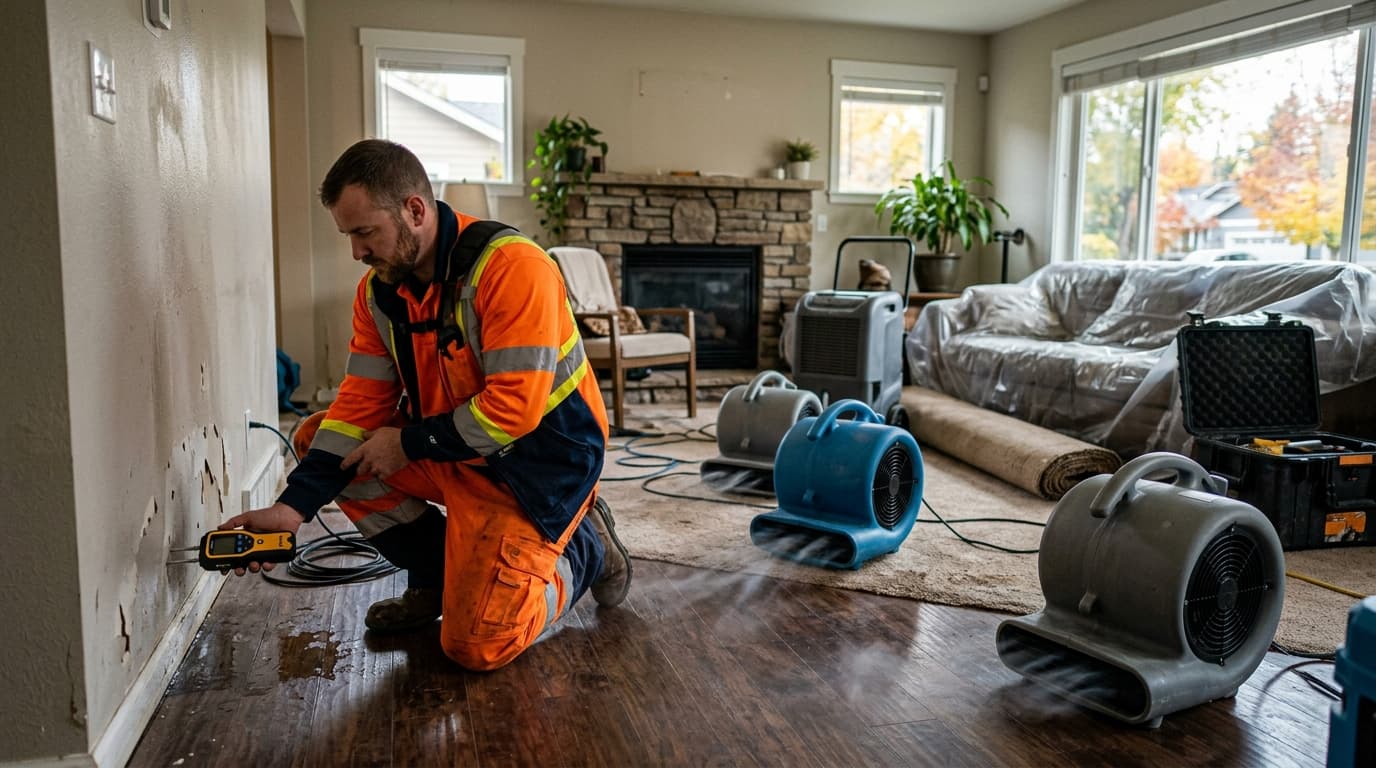
When water compromises your Boise property, full restoration requires more than removing surface liquid. Our network connects Treasure Valley property owners with technicians who handle diagnostic moisture mapping, controlled material removal, structural psychrometric drying, and antimicrobial sanitization.
Structural Drying & Dehumidification
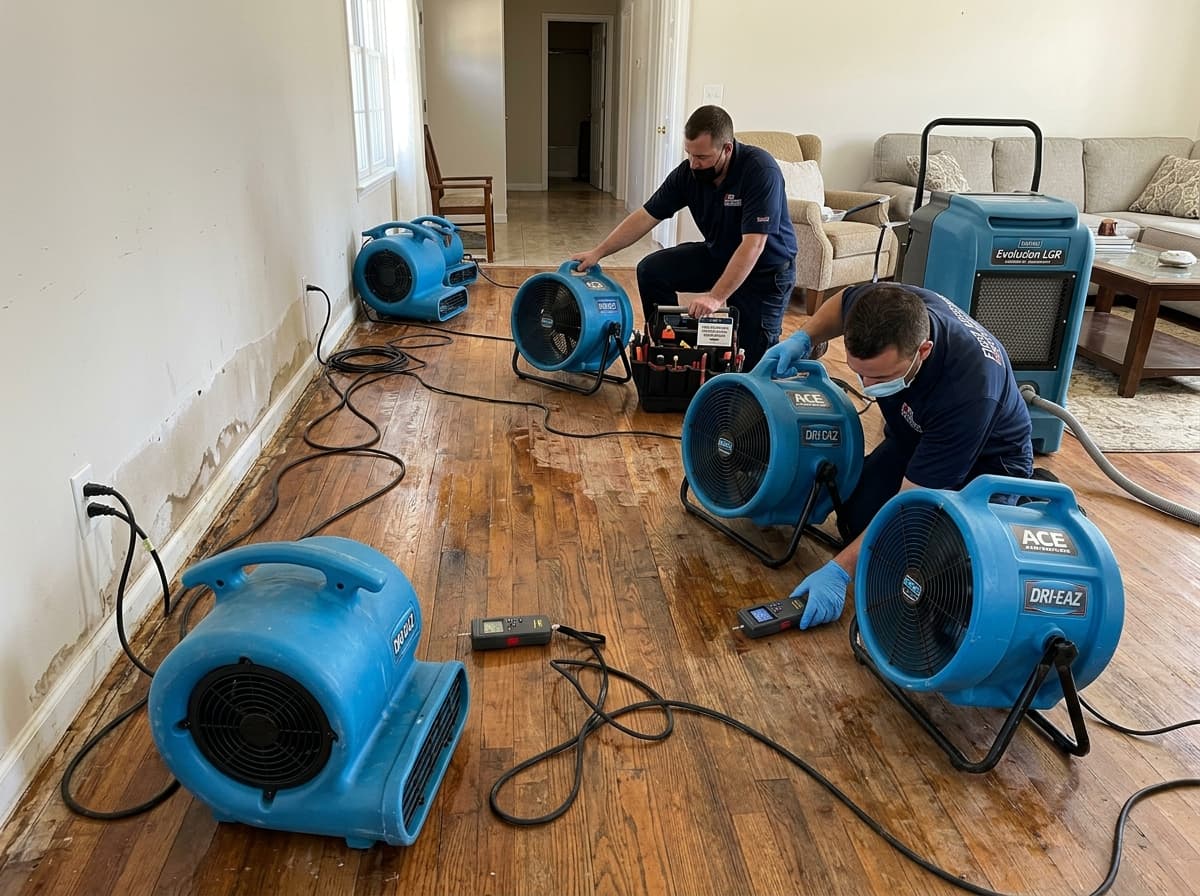
Removing standing liquid is only the first step. Microscopic water remains bound inside wooden studs, subfloors, and concrete foundations. Connect with Boise structural drying specialists who deploy industrial LGR dehumidifiers, high-velocity axial air movers, and daily grains-per-pound (GPP) moisture monitoring.
Crawl Space Water Damage Cleanup
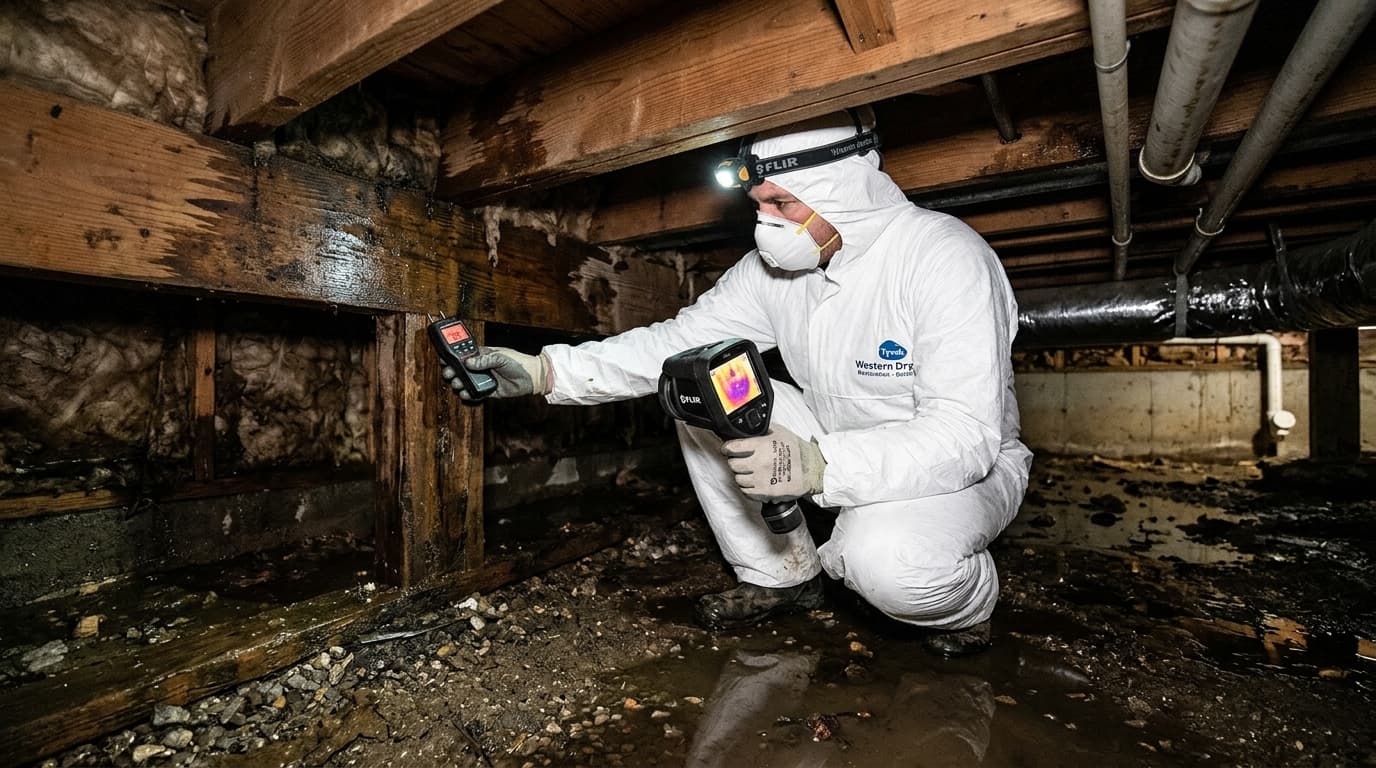
Over 65% of Treasure Valley homes feature raised crawl spaces where essential plumbing runs. When pipes freeze, canals seep, or ground moisture rises, water beneath your home rots floor joists and circulates contaminants into your living rooms through the stack effect. Connect with certified crawl space mitigation specialists across Boise, Meridian, Eagle, and Kuna.
Nearby Treasure Valley Service Areas
Written by Boise Restoration Editorial Team
Kitchen Mitigation & Drying SpecialistsCertified restoration professionals specializing in kitchen cavity drying, cabinet preservation, and precision moisture mapping across Boise and the Treasure Valley.
Sources & References
The factual recommendations, contamination categories, and psychrometric principles in this guide are directly grounded in the following official government disaster protocols and ANSI/IICRC restoration standards:
- 1ANSI/IICRC S500 Standard and Reference Guide for Professional Water Damage RestorationInstitute of Inspection, Cleaning and Restoration Certification (IICRC) • 2026
Establishes technical standards for structural cavity drying, cabinet preservation, and psychrometrics.
- 2Plumbing Supply Line Failures and Water Loss PreventionInsurance Institute for Business & Home Safety (IBHS) • 2024
Statistical analysis of residential appliance supply line ruptures and braided stainless-steel failure rates.
- 3National Standard Plumbing Code (NSPC)Plumbing-Heating-Cooling Contractors Association (PHCC) • 2024
Code standards for appliance shutoff valves, backflow prevention, and residential water line sizing.
- 4A Brief Guide to Mold, Moisture, and Your HomeUnited States Environmental Protection Agency (EPA) • 2025
Critical parameters on enclosed cavity mold amplification and microbial moisture thresholds.
Frequently Asked Questions
Yes. In the majority of clean water losses where particleboard has not fully disintegrated, certified technicians can remove only the thin toe-kick faceplates and deploy specialized high-pressure injection drying systems. This forces heated, dry air directly into the dark void beneath the cabinets, drying the subfloor in place while preserving expensive stone countertops.
Continue Learning About Water Damage
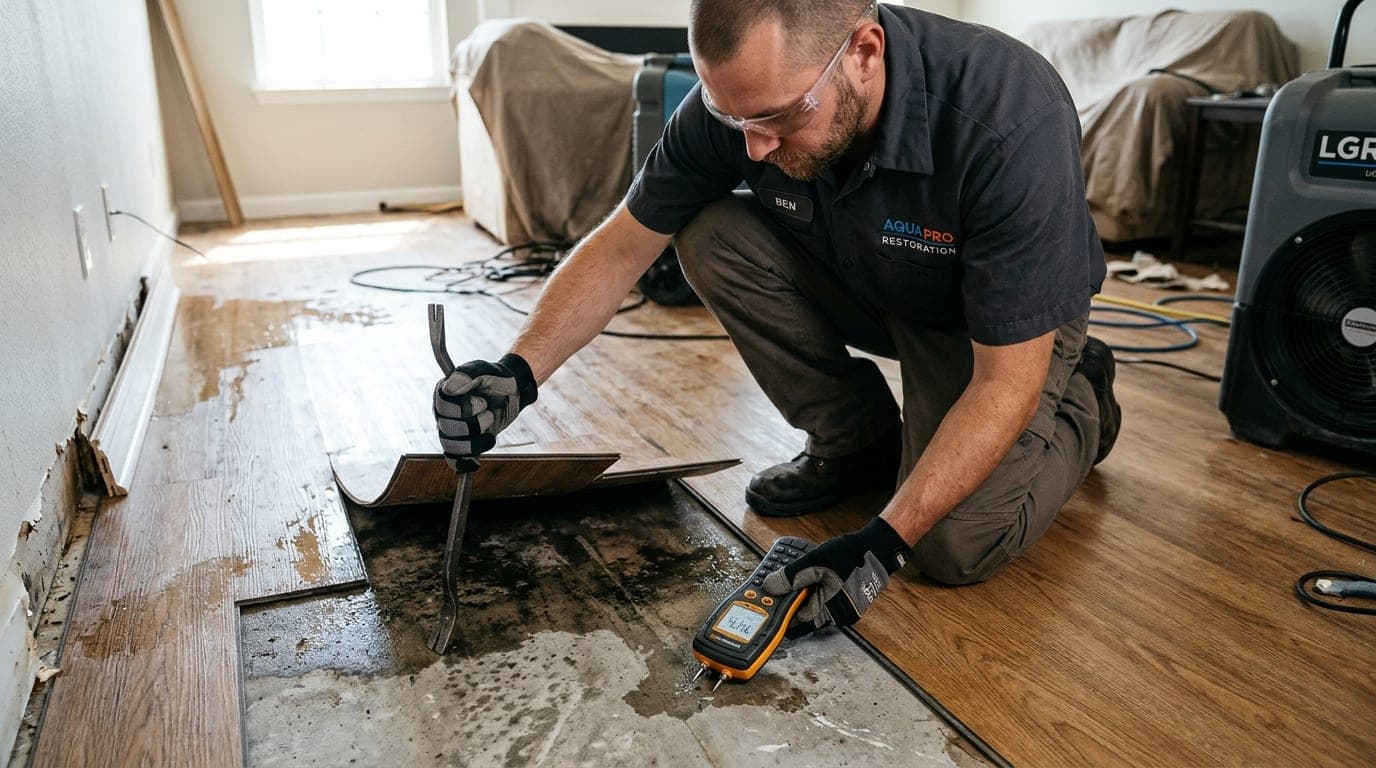
Water Damage Under Luxury Vinyl Plank (LVP) and Laminate Flooring: Trapped Moisture, Mold Risks & Restoration in Boise, ID
Luxury vinyl plank is marketed as 100% waterproof, but what happens when water seeps beneath the planks? Explore the 'sandwich effect', why trapped subfloor moisture breeds black mold, and how professional drying crews save vinyl and laminate floors across the Treasure Valley.
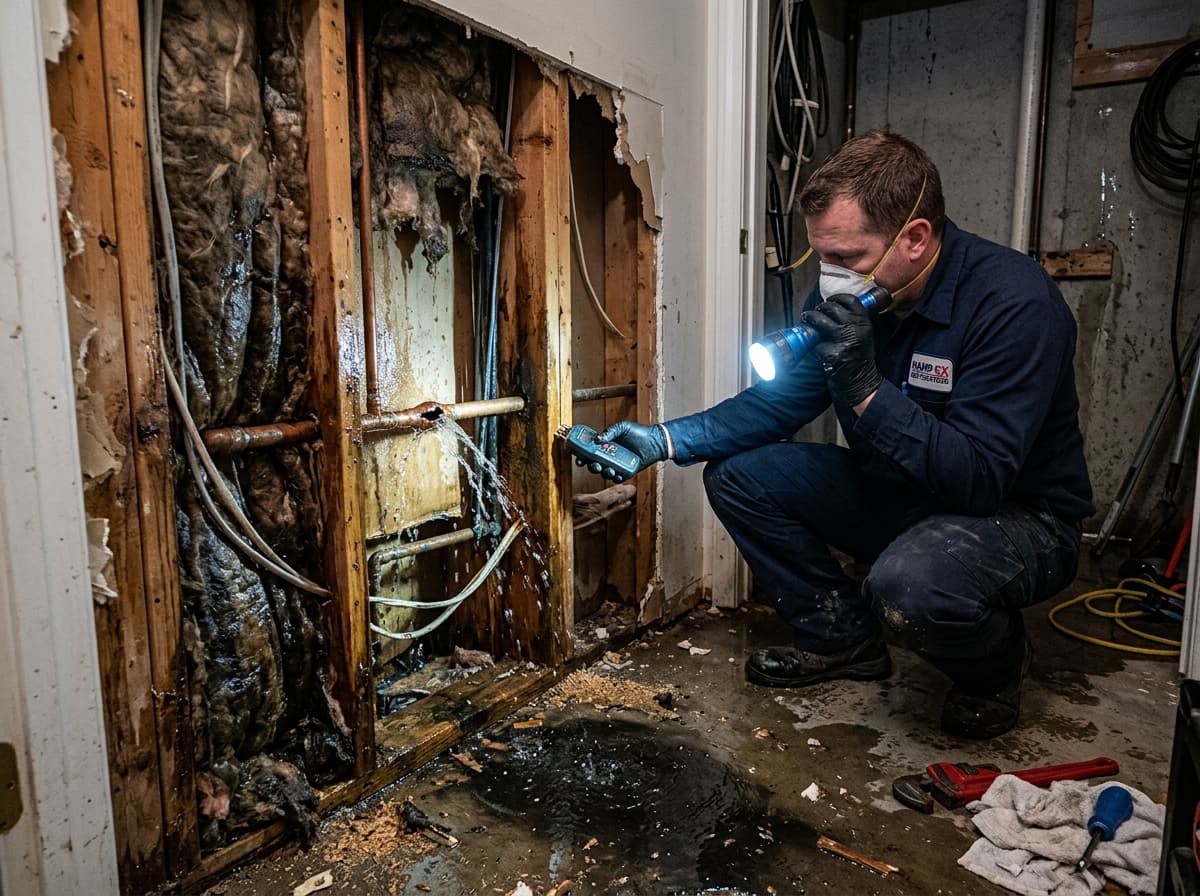
Water Heater Bursts & Appliance Floods in Boise: Emergency Action Guide
Over 50% of residential indoor water claims in Ada County stem from failed household appliances. Learn the immediate emergency shutoff protocol for ruptured water heater tanks, washing machine hoses, and dishwasher overflows.
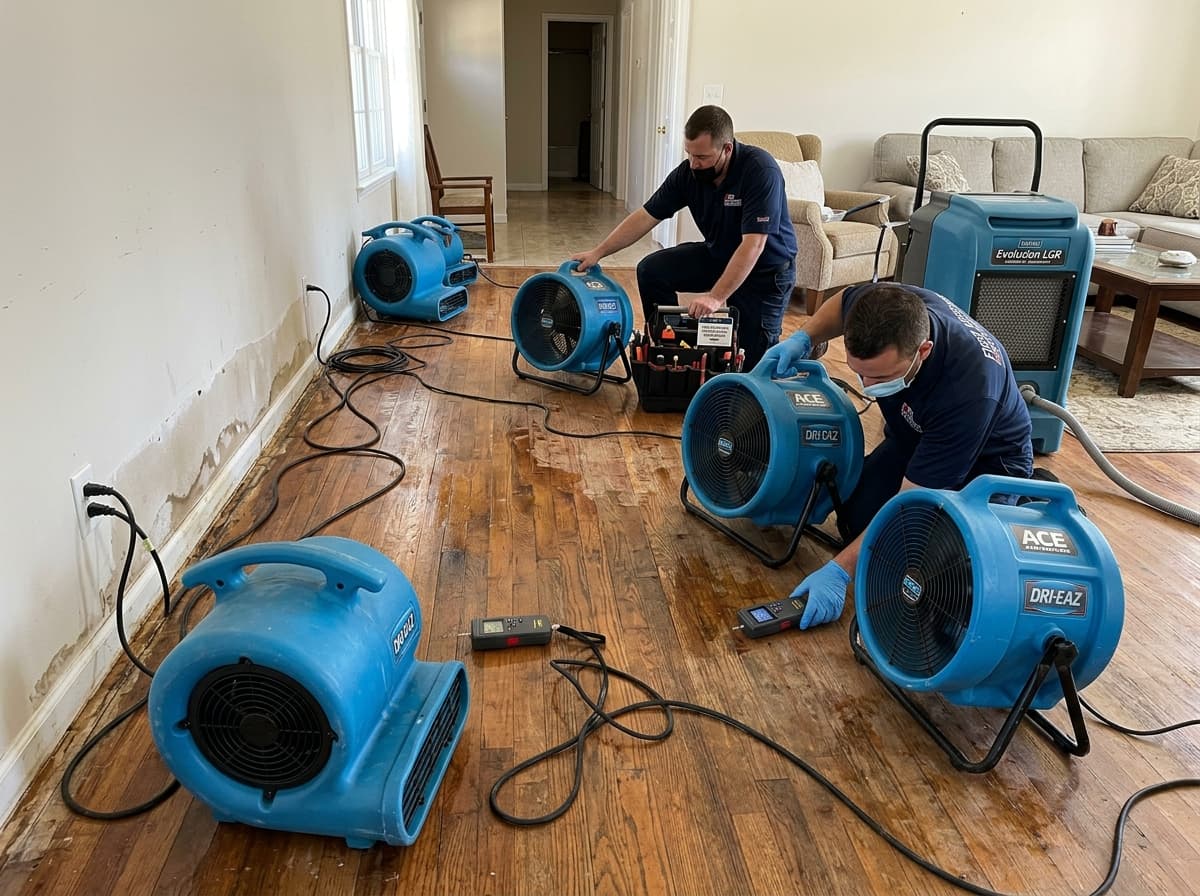
How Long Does Water Damage Take to Dry? Timelines, Science & Factors
While surface water may vanish in 24 hours, deep structural framing, subflooring, and wall cavities require 3 to 5 days under controlled industrial dehumidification. Here is the engineering science behind drying timelines.